Breaking into the information technology field has never been simple, especially for individuals who are just starting out or switching careers. Many people face a familiar challenge: employers expect candidates to have experience, but gaining that experience without first securing a job can feel nearly impossible. This is where foundational certifications play a crucial role, and among them, the CompTIA A+ certification has consistently stood out as one of the most trusted entry points into IT.
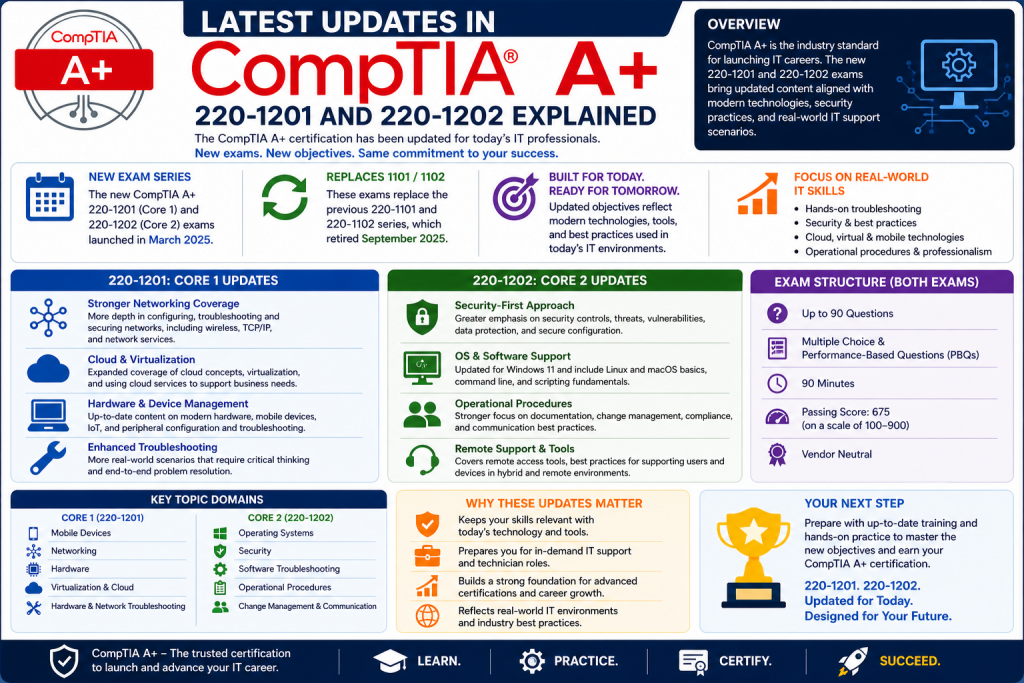
In 2025, CompTIA released updated versions of its A+ certification exams, introducing 220-1201 and 220-1202. These exams replaced the earlier 220-1101 and 220-1102 versions, which were officially retired later that year. The updated certification reflects changes in technology, workplace trends, and employer expectations, ensuring that new IT professionals are equipped with relevant and practical skills.
The purpose of the update is not to reinvent the certification but to keep it aligned with modern IT environments. As technology evolves, so must the knowledge and capabilities of those working within it. The new A+ exams are designed to prepare candidates for real-world challenges, particularly those related to cloud computing, remote support, and increasingly complex systems.
What the CompTIA A+ Certification Is All About
The CompTIA A+ certification is considered a starting point for individuals entering the IT industry. It is vendor-neutral, meaning it does not focus on a specific company’s products or systems. Instead, it teaches a broad range of concepts that apply across multiple technologies and platforms.
This approach makes the certification highly versatile. Whether an organization uses Windows, macOS, Linux, or a combination of systems, the foundational knowledge gained through A+ remains applicable. This flexibility is one of the reasons why employers value the certification so highly.
The A+ certification validates essential IT skills, including hardware installation, software configuration, troubleshooting, and basic networking. It also introduces candidates to security concepts and operational procedures, which are critical for maintaining reliable systems.
To earn the certification, candidates must pass two exams. Each exam focuses on different areas of IT knowledge, ensuring a well-rounded understanding of the field. Together, these exams provide a comprehensive overview of the skills required for entry-level IT roles.
Why the A+ Certification Remains Relevant
Despite rapid technological advancements, the A+ certification continues to be highly relevant. One of the main reasons is its focus on foundational skills. While technologies may change, the core principles of troubleshooting, system management, and user support remain consistent.
For beginners, the certification offers a structured learning path. It helps individuals understand the basics of IT while building confidence in their abilities. For employers, it serves as a reliable indicator that a candidate has the necessary knowledge to perform entry-level tasks.
Another key advantage is its recognition within the industry. Many job postings for roles such as help desk technician or IT support specialist list the A+ certification as a requirement or preferred qualification. This makes it a valuable asset for anyone looking to enter the IT workforce.
Additionally, the certification helps bridge the gap between theoretical knowledge and practical application. It encourages hands-on learning and problem-solving, which are essential skills in real-world IT environments.
Overview of the New Exam Versions
The transition from the 1101/1102 exams to the 1201/1202 versions represents an update rather than a complete overhaul. The structure remains the same, with two exams covering a range of IT topics. However, the content has been adjusted to reflect modern technologies and workplace practices.
The new exams place greater emphasis on areas such as cloud computing, virtualization, and remote support. These topics have become increasingly important as organizations adopt new technologies and work models.
The updates also reflect the growing importance of cybersecurity. As threats become more sophisticated, IT professionals must have a basic understanding of security principles. The new exams include more content related to protecting systems and data.
Overall, the updated exams are designed to ensure that candidates are prepared for the realities of today’s IT landscape.
Focus on Modern IT Environments
One of the most significant changes in the updated A+ certification is its focus on modern IT environments. Traditional office-based setups are no longer the norm, and many organizations now operate in hybrid or fully remote models.
This shift has changed the way IT professionals perform their jobs. Instead of working exclusively on-site, they often need to troubleshoot issues remotely. This requires a different set of skills, including the ability to diagnose problems without direct physical access to devices.
The new A+ exams reflect this change by emphasizing remote support tools and techniques. Candidates are expected to understand how to assist users from a distance, whether through remote desktop applications or other support methods.
Cloud computing is another major focus area. Many organizations have moved their operations to cloud-based platforms, reducing the reliance on physical hardware. Understanding how these systems work is essential for modern IT professionals.
Increased Emphasis on Cloud and SaaS Technologies
Cloud computing and software-as-a-service solutions have transformed the way organizations operate. Instead of relying on locally installed applications and on-premises servers, many businesses now use cloud-based services to manage their operations.
The updated A+ certification includes more content related to these technologies. Candidates learn about cloud concepts, including how services are delivered and managed. They also gain an understanding of how to troubleshoot issues related to cloud-based systems.
SaaS applications are particularly important, as they are widely used in modern workplaces. IT professionals must be able to support users who rely on these applications for daily tasks. This includes resolving access issues, performance problems, and integration challenges.
By including these topics, the new A+ exams ensure that candidates are prepared to work with current technologies rather than outdated systems.
The Role of Virtualization in the New Exams
Virtualization is another key area emphasized in the updated certification. Instead of working with physical machines alone, IT professionals often manage virtual environments that allow multiple systems to run on a single piece of hardware.
Understanding virtualization is important for several reasons. It improves efficiency, reduces costs, and makes it easier to manage resources. However, it also introduces new challenges, such as troubleshooting virtual machines and managing virtual networks.
The new A+ exams include questions related to virtualization concepts and practices. Candidates are expected to understand how virtual systems work and how to address common issues.
This knowledge is particularly valuable in environments where organizations rely heavily on virtual infrastructure.
Practical Skills and Problem-Solving Focus
The A+ certification has always emphasized practical skills, but the updated exams place even greater importance on this aspect. Instead of focusing solely on memorization, candidates are expected to apply their knowledge to real-world scenarios.
Problem-solving is a central theme in the new exams. IT professionals frequently encounter unexpected issues that require quick thinking and effective solutions. The certification aims to prepare candidates for these situations by testing their ability to analyze problems and determine appropriate actions.
This approach aligns with employer expectations. Organizations need individuals who can handle challenges independently and contribute to maintaining system reliability.
Hands-on experience is particularly valuable when preparing for the certification. Practicing with real or simulated environments helps candidates develop the skills needed to succeed in the exams and in their careers.
Breakdown of Core 1 Exam Objectives
The first exam, 220-1201, focuses on the technical and infrastructure aspects of IT. It covers topics such as hardware, networking, mobile devices, virtualization, and cloud computing.
Candidates learn about different types of hardware components and how to install and configure them. They also study networking fundamentals, including how devices communicate and how to troubleshoot connectivity issues.
Mobile devices are another important topic, as they are widely used in modern workplaces. Understanding how to configure and support these devices is essential for IT professionals.
The exam also includes questions related to troubleshooting hardware and network problems. This requires candidates to apply their knowledge in practical situations.
Breakdown of Core 2 Exam Objectives
The second exam, 220-1202, focuses on software, security, and operational procedures. It covers operating systems, including Windows, macOS, and Linux, as well as software troubleshooting techniques.
Security is a major component of this exam. Candidates learn about protecting systems from threats, managing access controls, and implementing basic security measures.
Operational procedures are also covered, including documentation, safety practices, and backup and recovery processes. These topics are important for maintaining organized and efficient IT operations.
Together, the two exams provide a comprehensive understanding of both technical and operational aspects of IT.
Preparing for the Updated A+ Certification
Preparation for the A+ certification requires a combination of study and practical experience. Candidates should begin by reviewing the exam objectives to understand what topics will be covered.
Study resources such as online courses, practice exams, and books can help build foundational knowledge. However, hands-on practice is equally important. Working with real systems or simulations allows candidates to apply what they have learned.
The amount of time required for preparation varies depending on experience level. Beginners may need several months to study, while those with some IT background may be able to prepare more quickly.
Consistency is key to successful preparation. Regular study sessions and practice tests can help reinforce knowledge and identify areas that need improvement.
How the New A+ Supports Career Growth
The A+ certification is not just about passing exams; it is about building a foundation for a career in IT. Once certified, individuals can pursue entry-level roles and gain valuable experience.
From there, they can specialize in areas such as networking, cybersecurity, or system administration. The knowledge gained from the A+ certification serves as a stepping stone for further learning and professional development.
Employers often view the certification as evidence of commitment and capability. It shows that a candidate is serious about their career and willing to invest time and effort into learning.
As technology continues to evolve, the skills learned through the A+ certification remain relevant, providing a strong base for long-term success.
How the Updated A+ Reflects Real-World IT Roles
The updated CompTIA A+ certification is designed to mirror the realities of modern IT job roles more closely than ever before. Entry-level IT professionals are no longer limited to simple hardware fixes or basic troubleshooting tasks. Instead, they are expected to operate in dynamic environments that involve cloud services, remote systems, and diverse device ecosystems.
In many organizations, IT support staff are the first line of defense when technical issues arise. They must quickly identify problems, communicate effectively with users, and implement solutions that minimize downtime. The new A+ exams reflect this responsibility by focusing on practical scenarios that simulate real-world challenges.
For example, rather than simply identifying a faulty component, candidates may need to determine the root cause of a problem that involves multiple systems. This could include diagnosing network connectivity issues that affect cloud-based applications or resolving performance problems in virtual environments. By emphasizing these types of tasks, the certification ensures that candidates are better prepared for the demands of modern IT roles.
The Growing Importance of Remote Troubleshooting
One of the most significant shifts in IT over recent years has been the rise of remote work. Organizations now support employees who work from home, travel frequently, or operate in distributed teams. As a result, IT professionals must be able to provide support without being physically present.
The updated A+ certification places a strong emphasis on remote troubleshooting skills. Candidates are expected to understand how to use remote access tools, guide users through technical steps, and resolve issues efficiently from a distance. This includes diagnosing problems based on user descriptions, system logs, and remote diagnostics.
Remote troubleshooting also requires strong communication skills. IT professionals must be able to explain technical concepts in simple terms and provide clear instructions to users who may not have technical backgrounds. The new exams recognize this by including scenarios that test both technical knowledge and communication abilities.
This focus on remote support reflects the changing nature of the workplace and ensures that A+ certified professionals are equipped to handle modern challenges.
Security Awareness in Entry-Level IT
Security has become a critical concern for organizations of all sizes. Cyber threats are more sophisticated than ever, and even entry-level IT professionals play a role in protecting systems and data. The updated A+ certification reflects this reality by placing greater emphasis on security concepts.
Candidates are expected to understand basic security principles, such as authentication, authorization, and encryption. They must also be familiar with common threats, including malware, phishing attacks, and social engineering tactics. Recognizing these threats is the first step in preventing security breaches.
In addition to identifying threats, candidates learn how to implement basic security measures. This includes configuring firewalls, managing user permissions, and applying security updates. While the A+ certification does not focus on advanced cybersecurity topics, it provides a strong foundation that can be built upon in future certifications.
By incorporating security into the core curriculum, the updated A+ ensures that new IT professionals are aware of the risks and responsibilities associated with managing modern systems.
Operating Systems in a Multi-Platform World
Modern IT environments rarely rely on a single operating system. Instead, organizations often use a combination of platforms, including Windows, macOS, and Linux. Each of these systems has its own features, tools, and management requirements.
The updated A+ certification reflects this diversity by covering multiple operating systems in detail. Candidates are expected to understand how to install, configure, and maintain different platforms. They must also be able to troubleshoot common issues that arise within each environment.
This multi-platform approach is important because IT professionals must be adaptable. They may need to switch between systems, support users with different devices, and ensure compatibility across platforms. The ability to work with multiple operating systems is a valuable skill that enhances employability.
In addition to desktop operating systems, the certification also touches on mobile platforms. Smartphones and tablets are widely used in the workplace, and IT professionals must be able to support these devices as well.
Software Troubleshooting and Application Support
Software issues are among the most common challenges faced by IT professionals. Applications may crash, run slowly, or fail to function as expected. The updated A+ certification places a strong emphasis on software troubleshooting to prepare candidates for these situations.
Candidates learn how to identify the causes of software problems, whether they are related to compatibility, configuration, or system resources. They also study techniques for resolving these issues, such as reinstalling applications, updating drivers, or adjusting system settings.
Application support is another important aspect of this domain. IT professionals often assist users with installing and configuring software, ensuring that it meets their needs and functions correctly. This includes both locally installed applications and cloud-based services.
By focusing on software troubleshooting, the A+ certification ensures that candidates are prepared to handle one of the most common aspects of IT support.
Networking Fundamentals in the New A+
Networking remains a core component of the A+ certification, as it is essential for understanding how devices communicate and share resources. The updated exams continue to cover networking fundamentals while incorporating modern concepts.
Candidates learn about network types, protocols, and devices, as well as how to configure and troubleshoot network connections. They must understand how data flows across networks and how to identify issues that may disrupt communication.
The new A+ also includes more content related to wireless networking and internet connectivity. As more devices rely on wireless connections, IT professionals must be able to ensure reliable performance and security.
Networking knowledge is critical for diagnosing a wide range of issues, from slow internet speeds to connectivity failures. The certification provides a solid foundation in this area, preparing candidates for real-world scenarios.
Hardware and Device Management
Although modern IT environments rely heavily on software and cloud services, hardware remains an important component. The updated A+ certification continues to cover hardware concepts, including components, installation, and maintenance.
Candidates learn about different types of devices, such as desktops, laptops, printers, and mobile devices. They must understand how these devices function and how to troubleshoot common hardware issues.
Device management is another key area. IT professionals are responsible for ensuring that devices are properly configured, updated, and maintained. This includes managing drivers, firmware, and system settings.
The certification also emphasizes safety and best practices when working with hardware. This includes understanding how to handle components safely and avoid damage to equipment.
Operational Procedures and Best Practices
Operational procedures are an essential part of IT work, ensuring that systems are managed efficiently and consistently. The updated A+ certification includes a strong focus on these practices.
Candidates learn about documentation, which is critical for tracking changes, troubleshooting issues, and maintaining records. Proper documentation helps IT teams work more effectively and reduces the risk of errors.
Safety procedures are also covered, including guidelines for handling equipment and responding to emergencies. These practices help protect both IT professionals and the systems they manage.
Backup and recovery processes are another important topic. Candidates must understand how to protect data and restore systems in the event of failures or disasters. This knowledge is essential for maintaining business continuity.
By emphasizing operational procedures, the A+ certification ensures that candidates are prepared to work in professional IT environments.
Study Strategies for Success
Preparing for the updated A+ certification requires a strategic approach. Candidates should begin by familiarizing themselves with the exam objectives and identifying areas where they need improvement.
Using a variety of study resources can be helpful. Online courses, practice exams, and hands-on labs provide different ways to learn and reinforce knowledge. Combining these resources can lead to a more comprehensive understanding of the material.
Hands-on practice is particularly important. Working with real or simulated systems allows candidates to apply their knowledge and develop practical skills. This experience is invaluable for both the exams and future job roles.
Time management is another key factor. Setting a study schedule and sticking to it can help ensure consistent progress. Breaking down topics into manageable sections makes it easier to stay focused and avoid feeling overwhelmed.
The Value of Certification in a Competitive Job Market
The IT job market is competitive, especially for entry-level positions. Having a recognized certification can make a significant difference when applying for jobs.
The A+ certification demonstrates that a candidate has the knowledge and skills required for basic IT tasks. It also shows a commitment to learning and professional development, which employers value highly.
In many cases, the certification can help candidates stand out from others who may not have formal credentials. It provides a level of credibility that can increase confidence during the hiring process.
While the certification alone may not guarantee a job, it is an important step toward building a successful career in IT. Combined with practical experience and strong communication skills, it can open doors to new opportunities.
Building a Path Beyond A+
The A+ certification is often the first step in a larger career journey. Once certified, individuals can explore more specialized areas of IT based on their interests and goals.
Some may choose to focus on networking, pursuing certifications that build on the knowledge gained from A+. Others may be interested in cybersecurity, where they can develop skills related to protecting systems and data.
System administration and cloud computing are also popular paths. The foundational knowledge from the A+ certification provides a strong base for exploring these areas.
Continuing education and certification can lead to higher-level roles and increased earning potential. The A+ certification serves as a starting point, helping individuals build confidence and gain the experience needed to advance.
Exam Difficulty and What to Expect
The updated CompTIA A+ exams are not drastically more difficult than previous versions, but they do require a deeper understanding of concepts and a stronger ability to apply knowledge in practical situations. Candidates should not expect simple memorization questions alone. Instead, the exams are designed to test how well individuals can think through problems and arrive at logical solutions.
Both exams include a mix of multiple-choice questions and performance-based questions. Performance-based questions are particularly important because they simulate real-world tasks. These may involve configuring settings, identifying issues within a system, or choosing the correct steps to resolve a problem. This format ensures that candidates are not only knowledgeable but also capable of applying their knowledge effectively.
The breadth of topics covered in the A+ certification can make it challenging. Candidates must be familiar with hardware, software, networking, security, and operational procedures. While each topic may not be deeply complex on its own, the combined scope requires consistent study and practice.
Understanding the exam format and expectations is a key part of preparation. Candidates who focus on hands-on learning and real-world scenarios are more likely to succeed.
Comparing the New Exams to Previous Versions
The transition from the 1101/1102 exams to the 1201/1202 versions reflects a shift in priorities rather than a complete transformation. The earlier exams focused heavily on traditional IT environments, including on-premises hardware and localized troubleshooting.
In contrast, the new exams incorporate more modern concepts. Remote troubleshooting, cloud-based systems, and virtual environments are given greater importance. This change aligns the certification with current industry practices.
Another difference is the emphasis on adaptability. The new exams encourage candidates to think critically and apply their knowledge in different contexts. This approach prepares them for a wider range of situations in the workplace.
Despite these updates, the core purpose of the certification remains the same. It continues to provide a strong foundation in IT fundamentals, ensuring that candidates are well-prepared for entry-level roles.
Time Required to Prepare for the A+ Certification
The time needed to prepare for the A+ certification varies depending on several factors, including prior experience, study habits, and available resources. For individuals with little or no background in IT, preparation may take several months.
On average, many candidates spend between three to six months studying for the certification. This timeframe allows for a thorough understanding of the material and sufficient practice with exam-style questions. However, those with some IT experience may be able to prepare more quickly, sometimes in as little as six to twelve weeks.
It is important to remember that the A+ certification requires passing two exams. This means that candidates must allocate time for both Core 1 and Core 2 topics. Some individuals choose to study for both exams simultaneously, while others prefer to focus on one exam at a time.
Consistency is more important than speed. Regular study sessions, combined with hands-on practice, can lead to better retention and improved performance on the exams.
Effective Learning Approaches for the New A+
A successful study strategy for the A+ certification involves a combination of different learning methods. Relying on a single resource is rarely sufficient, as the certification covers a wide range of topics.
Structured courses provide a solid foundation by guiding candidates through the exam objectives. These courses often include video lessons, quizzes, and practice exams, making it easier to track progress.
Hands-on practice is equally important. Setting up a home lab or using virtual environments allows candidates to experiment with different configurations and troubleshoot issues. This practical experience reinforces theoretical knowledge and builds confidence.
Practice exams are another valuable tool. They help candidates become familiar with the exam format and identify areas where further study is needed. Reviewing incorrect answers can provide insight into weak points and improve understanding.
Combining these approaches creates a well-rounded study plan that prepares candidates for both the exams and real-world IT tasks.
The Role of Certification in Career Development
The A+ certification plays an important role in shaping an individual’s IT career. It provides a starting point for those entering the field and helps establish credibility with employers.
For many individuals, the certification leads to entry-level positions such as help desk technician, IT support specialist, or desktop support analyst. These roles provide valuable experience and exposure to real-world IT environments.
As individuals gain experience, they can build on the foundation provided by the A+ certification. This may involve pursuing additional certifications or specializing in specific areas of IT. The knowledge gained from A+ serves as a stepping stone for further growth.
Employers often view certification as a sign of dedication and professionalism. It demonstrates that a candidate is willing to invest time and effort into developing their skills. This can be a significant advantage in a competitive job market.
Salary Expectations and Job Opportunities
While the A+ certification is an entry-level credential, it can still lead to a range of job opportunities. Roles associated with the certification typically involve supporting users, maintaining systems, and troubleshooting issues.
Salary expectations vary depending on location, experience, and the specific role. Entry-level positions may offer modest salaries compared to more advanced IT roles, but they provide valuable experience that can lead to higher-paying opportunities in the future.
The real value of the A+ certification lies in its ability to open doors. It provides a pathway into the IT industry, allowing individuals to gain the experience needed to advance their careers.
Over time, professionals can move into more specialized roles, such as network administration, cybersecurity, or cloud computing. These positions often offer higher salaries and greater responsibilities.
The Importance of Continuous Learning
Technology is constantly evolving, and IT professionals must keep up with these changes to remain relevant. The A+ certification is just the beginning of a lifelong learning journey.
Continuous learning involves staying updated on new technologies, tools, and best practices. This may include pursuing additional certifications, attending training sessions, or gaining hands-on experience with new systems.
The updated A+ certification reflects this need by emphasizing adaptable skills and practical knowledge. Candidates are encouraged to develop a mindset of continuous improvement, which is essential for long-term success in IT.
By staying informed and expanding their skill set, IT professionals can remain competitive and take advantage of new opportunities as they arise.
Choosing the Right Study Resources
Selecting the right study resources is an important part of preparing for the A+ certification. With so many options available, it is important to choose materials that align with the exam objectives and learning style.
Not all resources are equally effective for every learner, so understanding how you learn best can make a big difference in your preparation.
For example, some individuals prefer video-based courses because they provide visual explanations and step-by-step demonstrations. Others may find textbooks and written guides more helpful, as they allow for deeper reading and note-taking. Interactive labs and simulations are also highly valuable, as they provide hands-on experience that reinforces theoretical concepts.
It is also important to ensure that the resources being used are up to date with the latest exam versions. Using outdated materials can lead to confusion and gaps in knowledge, especially since the A+ certification evolves to reflect current technologies.
In addition, combining multiple resources can create a more comprehensive learning experience. Using videos for understanding concepts, books for detailed study, and practice exams for assessment can help strengthen overall preparation. This balanced approach increases confidence and improves the chances of success on the certification exams.
Online courses are a popular choice because they offer structured learning and interactive content. Many courses include practice exams and hands-on labs, providing a comprehensive learning experience.
Books and study guides can also be valuable, especially for those who prefer reading and detailed explanations. These resources often cover topics in depth and provide additional context.
Community forums and study groups can offer support and motivation. Engaging with others who are preparing for the same certification can provide new perspectives and helpful tips.
Using a combination of resources can enhance understanding and improve retention, increasing the likelihood of success on the exams.
Common Challenges and How to Overcome Them
Preparing for the A+ certification can present several challenges, particularly for beginners. One common difficulty is the wide range of topics covered in the exams. It can be overwhelming to study hardware, networking, software, and security all at once.
Breaking the material into smaller sections can make it more manageable. Focusing on one topic at a time allows for better understanding and reduces stress.
Another challenge is retaining information. Regular review sessions and practice tests can help reinforce knowledge and improve memory.
Lack of hands-on experience is another common issue. Setting up a home lab or using virtual environments can provide practical experience and build confidence.
Staying motivated throughout the study process is also important. Setting goals, tracking progress, and celebrating small achievements can help maintain focus and momentum.
The Future of the A+ Certification
As technology continues to evolve, certifications like the A+ must adapt to remain relevant. The 2025 update demonstrates CompTIA’s commitment to keeping its certifications aligned with industry trends.
Future updates may include additional focus on emerging technologies such as artificial intelligence, automation, and advanced cybersecurity practices. These areas are becoming increasingly important in the IT industry.
The A+ certification will likely continue to serve as a foundation for new IT professionals, providing the skills needed to navigate an ever-changing landscape.
By staying current and incorporating new technologies, the certification ensures that it remains valuable for both candidates and employers.
Building Confidence Through Certification
Earning the A+ certification is not just about gaining technical knowledge; it is also about building confidence. For many individuals, passing the exams is a significant achievement that validates their skills and abilities.
It provides a clear sense of progress, especially for those who may have started with little to no background in IT. Successfully completing the certification shows that consistent effort and focused learning can lead to real, measurable results.
This confidence often extends beyond technical tasks. Individuals who earn the A+ certification tend to feel more comfortable communicating with colleagues, explaining solutions to users, and taking initiative when problems arise. They are more willing to engage in troubleshooting processes, even when the issue is unfamiliar, because they trust their foundational knowledge.
In addition, achieving the certification can reduce self-doubt that many beginners experience when entering a new field. It serves as proof that they can meet industry standards and handle real-world responsibilities. This mindset shift is important, as confidence plays a major role in career growth. With increased self-assurance, individuals are more likely to pursue advanced certifications, apply for better roles, and continue developing their skills over time.
Confidence is important in IT roles, where professionals must troubleshoot issues, communicate with users, and make decisions under pressure. The knowledge gained through the certification helps individuals approach these tasks with greater assurance.
This confidence can also positively impact career progression. Individuals who believe in their abilities are more likely to pursue new opportunities and take on additional responsibilities.
The A+ certification provides a strong starting point, helping individuals develop both technical skills and the confidence needed to succeed in the IT industry.
Conclusion
The updated CompTIA A+ certification represents a modern and practical approach to entry-level IT training. By incorporating current technologies, real-world scenarios, and a strong focus on problem-solving, it prepares candidates for the challenges of today’s IT environments.
While the certification requires dedication and effort, the benefits are significant. It opens the door to entry-level roles, provides a foundation for further learning, and helps build confidence in technical abilities.
As the IT industry continues to grow and evolve, the importance of foundational certifications like the A+ remains strong. For anyone looking to start or transition into a career in technology, the A+ certification is a valuable and worthwhile investment in their future.
Continue exploring the technologies and certification concepts that matter most to you.