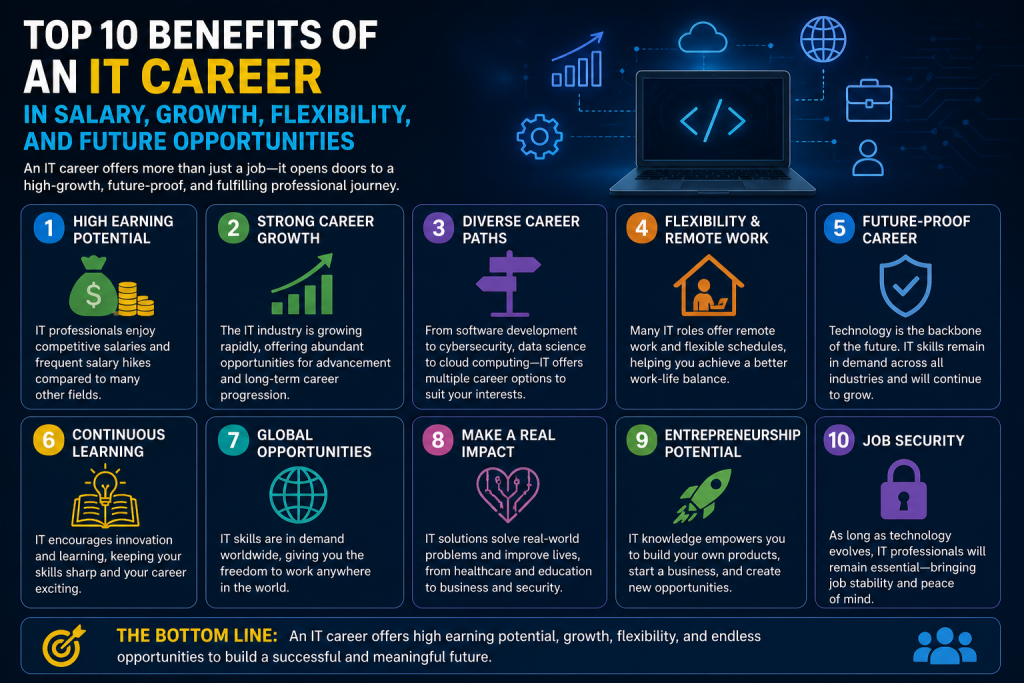
Information technology has become one of the most influential forces shaping the modern world. From communication and healthcare to finance and entertainment, nearly every industry depends on technology to operate efficiently. As digital transformation continues to accelerate, the demand for skilled IT professionals keeps growing. Choosing a career in IT in 2026 is not just about finding a job; it is about entering a field that is dynamic, future-focused, and full of opportunities for personal and professional growth.
This rapid expansion is driven by innovations such as cloud computing, artificial intelligence, big data analytics, and cybersecurity advancements. Organizations are increasingly investing in these technologies to improve efficiency, enhance customer experiences, and stay competitive in a global market. As a result, IT professionals are not only supporting business operations but also playing a strategic role in shaping organizational success.
Another key factor contributing to the importance of IT is the growing reliance on digital platforms in everyday life. From online banking and e-commerce to remote education and telemedicine, technology has become deeply integrated into daily routines. This widespread adoption further increases the need for experts who can design, manage, and secure these systems.
Moreover, IT offers a unique environment where innovation thrives. Professionals are encouraged to think creatively, experiment with new ideas, and develop solutions that can have a real-world impact. This combination of demand, innovation, and versatility makes IT one of the most promising and rewarding career paths in today’s world.
In this first part, we explore several key reasons why IT remains one of the most attractive career choices today, focusing on flexibility, stability, growth, and demand.
Remote Work Opportunities
One of the most significant advantages of pursuing a career in IT is the flexibility it offers in terms of work location. Many IT roles can be performed entirely online, making remote work a standard option rather than an exception. This flexibility has transformed how professionals approach their careers, allowing them to design a lifestyle that balances productivity with personal well-being.
Working remotely eliminates the need for daily commuting, which can be both time-consuming and expensive. Long commutes often lead to fatigue and reduced productivity, but remote work removes this burden. The time saved can be used for more meaningful activities, such as learning new skills, exercising, or spending time with family and friends. This contributes to a healthier and more fulfilling lifestyle.
Another benefit of remote work is financial savings. Without the need to travel to an office every day, professionals can save money on transportation, fuel, vehicle maintenance, and even meals. These savings can add up significantly over time, improving overall financial stability.
Remote work also opens the door to global job opportunities. Instead of being limited to employers in a specific geographic area, IT professionals can work for companies located anywhere in the world. This expands career possibilities and allows individuals to find roles that best match their skills and interests. It also creates opportunities to work with diverse teams and gain international experience.
Additionally, remote work can lead to increased productivity. Many professionals find that they can focus better in a comfortable and personalized environment. Without the distractions of a traditional office, it becomes easier to concentrate on tasks and deliver high-quality work. Employers are increasingly recognizing these benefits, which is why remote IT roles continue to grow in popularity.
Career Stability and Resilience
In an ever-changing economic environment, job stability is a major concern for many individuals. IT stands out as a field that offers strong resilience, even during times of uncertainty. Technology is a fundamental part of modern business operations, and organizations rely on IT systems to function effectively.
This reliance means that even when companies cut costs or restructure, IT roles are often among the last to be reduced and the first to be rehired. Businesses cannot afford prolonged system downtime, data loss, or security breaches, so skilled IT professionals remain essential to daily operations. From maintaining servers and networks to ensuring cybersecurity and supporting remote work infrastructure, IT teams play a critical role in keeping organizations running smoothly.
Another reason for this resilience is the ongoing digital transformation across industries. Companies are continuously investing in new technologies to stay competitive, which creates consistent demand for IT expertise. Even small businesses are adopting digital tools, further increasing the need for knowledgeable professionals.
Additionally, IT skills are highly transferable, allowing professionals to move between industries with relative ease. Whether in healthcare, finance, education, or retail, the core need for technology support remains the same. This flexibility provides a safety net, enabling individuals to adapt quickly to changing market conditions while maintaining steady employment.
Regardless of economic conditions, companies must maintain their networks, protect their data, and ensure that their systems are running smoothly. This ongoing need makes IT professionals essential, reducing the likelihood of job loss compared to many other professions.
Another factor contributing to stability is the widespread use of technology across industries. IT skills are not limited to a single sector; they are valuable in healthcare, education, finance, retail, manufacturing, and more. This versatility allows professionals to move between industries without starting from scratch, providing additional security in their careers.
The rapid pace of technological advancement also ensures that IT roles remain relevant. As new technologies emerge, organizations need skilled professionals to implement and manage them. This constant evolution creates a steady demand for IT expertise, making it easier for individuals to find and maintain employment.
Furthermore, IT professionals often have access to multiple career paths. If one role becomes less desirable or outdated, they can transition into another area within the field. This adaptability enhances long-term career stability and allows individuals to stay relevant in a competitive job market.
Continuous Growth and Advancement
The IT industry is characterized by constant change and innovation. New technologies, tools, and methodologies are introduced regularly, creating endless opportunities for growth and development. For individuals who enjoy learning and improving their skills, IT provides an ideal environment.
Career advancement in IT can be both rapid and rewarding. Entry-level positions often serve as a foundation for more specialized roles. For example, someone starting in technical support can progress to system administration, network engineering, or cybersecurity with the right training and experience. Each step brings new challenges and higher levels of responsibility.
Organizations value employees who are proactive about learning. Acquiring new skills and certifications can significantly enhance career prospects. Many employers support professional development by offering training programs, mentorship, and financial assistance for certifications. This support makes it easier for individuals to advance their careers.
The diversity of roles within IT is another major advantage. The field includes a wide range of career paths, such as software development, data analysis, cloud computing, and IT management. This variety allows individuals to explore different areas and find the one that best aligns with their interests and strengths.
In addition to vertical growth, IT also offers opportunities for lateral movement. Professionals can switch between different roles or specializations without leaving the field. This flexibility helps prevent burnout and keeps the work engaging over time.
High Demand for IT Skills
The demand for IT professionals continues to rise as technology becomes more integrated into everyday life. Businesses rely on digital systems for communication, data management, customer service, and more. As a result, they need skilled individuals who can design, maintain, and improve these systems.
One of the main drivers of demand is digital transformation. Organizations are constantly adopting new technologies to stay competitive, such as cloud computing, automation, and artificial intelligence. These changes require professionals who understand how to implement and manage modern solutions.
As businesses shift from traditional systems to digital platforms, they must redesign their processes to improve efficiency and scalability. This transition involves migrating data to the cloud, integrating new software tools, and ensuring that systems can handle increased workloads. IT professionals play a key role in planning and executing these changes, making sure that everything runs smoothly without disrupting daily operations.
Another important aspect of digital transformation is data management. Companies are generating vast amounts of data, and they need skilled individuals to organize, analyze, and protect this information. Data-driven decision-making has become essential for business success, further increasing the demand for IT expertise.
Security is also a major concern during digital transformation. As organizations adopt new technologies, they become more vulnerable to cyber threats. IT professionals are responsible for implementing security measures, monitoring systems, and responding to potential risks.
Overall, digital transformation is not a one-time process but an ongoing journey. This continuous evolution ensures that the need for skilled IT professionals remains strong and continues to grow over time.
Cybersecurity is another critical area contributing to demand. As cyber threats become more sophisticated, companies must invest in protecting their data and systems. This creates a strong need for cybersecurity experts who can identify vulnerabilities and prevent attacks.
The rise of remote work has also increased the need for IT support. Companies must ensure that employees can securely access systems from different locations, which requires reliable networks and robust security measures. IT professionals play a key role in making this possible.
Another advantage of IT skills is their transferability. The knowledge gained in one role can often be applied to others, making it easier to adapt to new opportunities. This flexibility is particularly valuable in a rapidly changing job market.
For those interested in entrepreneurship, IT offers numerous possibilities. Professionals can start their own businesses, offer consulting services, or develop software products. The ability to work independently and create multiple income streams adds to the appeal of an IT career.
Practical Skills Beyond the Workplace
An IT career provides more than just professional benefits; it also equips individuals with valuable skills that can be used in everyday life. Understanding how technology works allows people to solve problems, improve efficiency, and make better use of digital tools.
For example, IT professionals can set up and manage their own home networks, ensuring fast and secure internet connections. They can troubleshoot issues with devices, install software, and protect their systems from security threats. These abilities can save time and money while providing a sense of independence.
The skills gained in IT can also be applied to personal projects. Individuals can create websites, develop applications, or automate tasks to improve productivity. These projects not only enhance technical abilities but also provide opportunities for creativity and innovation.
In addition, IT knowledge can lead to side income opportunities. Many professionals take on freelance work, helping small businesses or individuals with technical needs. This flexibility allows them to earn extra income while gaining additional experience.
Another important benefit is digital literacy. As technology continues to evolve, having a strong understanding of IT helps individuals stay informed and adaptable. This knowledge is increasingly important in both personal and professional contexts, making it a valuable asset in today’s world.
Creative Problem Solving
Creativity is an essential component of many IT roles. While technical knowledge is important, the ability to think critically and solve problems is what truly sets professionals apart. Every day presents new challenges that require innovative solutions.
Software developers, for example, must design and build applications that meet specific requirements. This often involves finding efficient ways to solve complex problems. There is rarely a single correct answer, which allows developers to experiment and explore different approaches.
IT support professionals and system administrators also rely on creative problem solving. When issues arise, they must quickly identify the cause and implement a solution. This process requires analytical thinking, attention to detail, and the ability to adapt to unexpected situations.
The variety of challenges in IT keeps the work engaging and rewarding. Unlike repetitive jobs, IT roles often involve unique problems that require different solutions. This diversity ensures that no two days are exactly the same.
Creative problem solving also contributes to professional growth. Each challenge provides an opportunity to learn and improve. Over time, professionals develop a deeper understanding of systems and become more confident in their abilities.
No Strict Requirement for a College Degree
One of the most appealing aspects of entering the IT field is that it does not strictly require a traditional college degree. While higher education can certainly provide a strong foundation, it is no longer the only pathway to success in this industry. Many organizations now prioritize practical skills, certifications, and real-world experience over formal academic credentials.
This shift has made IT more accessible to a broader range of individuals. People from different educational backgrounds, age groups, and career stages can enter the field and build successful careers. Whether someone is a recent high school graduate, a career changer, or a self-taught learner, there are multiple entry points into IT.
Certifications play a major role in this alternative pathway. Programs such as networking, cloud computing, and cybersecurity certifications provide targeted knowledge that aligns with industry needs. These certifications demonstrate competency and commitment, often making candidates more attractive to employers than those with only theoretical knowledge.
Another advantage of this approach is the reduced cost and time compared to a traditional degree. Instead of spending several years in university, individuals can focus on learning specific skills and enter the workforce much sooner. This allows them to start earning and gaining experience earlier, which can accelerate career growth.
Self-learning is also a powerful component of IT careers. With countless online resources, tutorials, and practice environments available, individuals can develop their skills independently. This encourages a culture of continuous improvement and personal responsibility, which are highly valued in the industry.
Employers increasingly recognize that talent can come from non-traditional backgrounds. Many successful IT professionals have built their careers through hands-on experience, personal projects, and certifications rather than formal education. This makes IT one of the few fields where determination and skill can outweigh academic credentials.
A Perfect Career for Lifelong Learners
Information technology is an ever-evolving field, making it ideal for individuals who enjoy learning and staying up to date with new developments. Unlike professions that rely on static knowledge, IT requires continuous education and adaptation. This dynamic nature keeps the work engaging and intellectually stimulating.
New technologies emerge regularly, from advancements in artificial intelligence to innovations in cloud computing and cybersecurity. Each development creates new opportunities for professionals to expand their expertise. This constant change ensures that there is always something new to learn, preventing the work from becoming repetitive or stagnant.
For those who are naturally curious, IT provides an environment where learning is not only encouraged but necessary. Professionals often explore new tools, experiment with different solutions, and stay informed about industry trends. This ongoing process of discovery can be highly rewarding and fulfilling.
Certifications and training programs further support lifelong learning. Many organizations offer structured learning paths that allow individuals to specialize in specific areas. These programs help professionals build expertise and stay competitive in the job market.
Learning in IT is not limited to formal education. It often involves hands-on practice, problem-solving, and real-world application. This practical approach helps individuals develop a deeper understanding of concepts and improves their ability to handle complex challenges.
Another benefit of continuous learning is career flexibility. As professionals acquire new skills, they can transition into different roles or specializations. This ability to adapt ensures long-term career growth and reduces the risk of becoming obsolete in a rapidly changing industry.
Opportunities for Side Income and Freelancing
IT is one of the few career fields that naturally supports freelancing and side income opportunities. The skills developed in IT can be applied to a wide range of projects outside of a traditional full-time job. This flexibility allows professionals to diversify their income and explore entrepreneurial ventures.
Freelancing opportunities are abundant in areas such as web development, software engineering, technical support, and cybersecurity. Businesses and individuals often seek skilled professionals for short-term projects, making it easy to find work on a contract basis. This demand creates a steady stream of opportunities for those who want to work independently.
Side projects are another way to generate additional income. IT professionals can develop applications, create websites, or offer consulting services in their spare time. These projects not only provide financial benefits but also help build experience and expand professional portfolios.
The ability to work remotely further enhances freelancing opportunities. Professionals can collaborate with clients from different parts of the world, increasing their earning potential. This global reach makes it possible to access higher-paying markets and work on diverse projects.
Freelancing also provides greater control over work schedules and project selection. Individuals can choose the type of work they enjoy and set their own pace. This level of autonomy is particularly appealing for those who value independence and flexibility.
In addition to financial benefits, freelancing helps develop important skills such as communication, time management, and client relations. These skills are valuable in both independent and traditional work environments, contributing to overall career growth.
Meaningful and Impactful Work
A career in IT offers the opportunity to make a meaningful impact on society. Technology plays a central role in modern life, influencing how people communicate, work, and access information. IT professionals contribute to the development and maintenance of systems that support these activities.
For example, online banking systems allow people to manage their finances conveniently and securely. Healthcare technologies enable doctors to diagnose and treat patients more effectively. Educational platforms provide access to learning resources for individuals around the world. Each of these systems relies on IT professionals to function properly.
Working in IT allows individuals to be part of these important advancements. Whether developing software, managing networks, or securing data, professionals play a crucial role in improving the quality of life for others. This sense of purpose can be highly motivating and fulfilling.
Another aspect of meaningful work is problem-solving. IT professionals often help organizations overcome challenges and improve efficiency. By identifying issues and implementing solutions, they contribute to the success of businesses and institutions.
The impact of IT extends beyond large organizations. Professionals can also make a difference at the community level by supporting small businesses, non-profits, and local initiatives. This ability to create positive change adds depth and significance to an IT career.
As technology continues to evolve, the potential for impact will only increase. Innovations in areas such as artificial intelligence, renewable energy, and digital communication will require skilled professionals to bring them to life. This ensures that IT remains a field where individuals can make a lasting difference.
High Salary Potential and Financial Growth
One of the most compelling reasons to pursue a career in IT is the potential for high earnings. Compared to many other professions, IT roles often offer competitive salaries, even at the entry level. This financial advantage makes it an attractive option for individuals seeking economic stability and growth.
Entry-level positions in IT typically provide salaries that are higher than those in many other fields. As professionals gain experience and develop specialized skills, their earning potential increases significantly. Roles in areas such as cloud computing, cybersecurity, and software development are particularly well-compensated.
The demand for skilled professionals contributes to these high salaries. Organizations are willing to invest in talent to ensure that their systems are efficient, secure, and up to date. This demand creates opportunities for salary negotiation and career advancement.
Certifications and specialized knowledge can further enhance earning potential. Professionals who invest in their education and stay current with industry trends are often rewarded with higher salaries and better job opportunities.
In addition to base salaries, many IT roles offer additional benefits such as bonuses, stock options, and flexible work arrangements. These benefits can significantly increase overall compensation and improve quality of life.
Freelancing and side projects also contribute to financial growth. By taking on additional work, professionals can supplement their income and achieve their financial goals more quickly. This ability to generate multiple income streams is a unique advantage of an IT career.
Financial growth in IT is not limited to short-term gains. The skills and experience acquired over time can lead to leadership roles, consulting opportunities, and even entrepreneurship. This long-term potential makes IT a strong choice for those seeking sustained financial success.
A Future-Proof Career Choice
Choosing a career that remains relevant in the future is a priority for many individuals, and IT stands out as one of the most future-proof options available. As technology continues to advance, the need for skilled professionals will only increase. This ensures that IT careers remain stable and in demand for years to come.
The integration of technology into everyday life is unlikely to slow down. From smart devices and automation to data analytics and artificial intelligence, digital solutions are becoming more essential across all industries. This widespread adoption creates a continuous need for IT expertise.
Future-proofing also comes from adaptability. IT professionals are accustomed to learning new technologies and adjusting to changes. This ability to evolve ensures that they remain relevant even as the industry transforms.
Another factor contributing to long-term stability is the global nature of IT. Technology is a universal language, and skills can be applied in different countries and markets. This opens up opportunities for international careers and remote work.
The rise of emerging technologies further strengthens the future of IT careers. Fields such as machine learning, blockchain, and cloud computing are expected to grow significantly, creating new roles and opportunities. Professionals who stay informed and continue learning will be well-positioned to benefit from these trends.
Ultimately, IT offers a combination of stability, growth, and innovation that is difficult to find in other fields. It provides a solid foundation for building a successful and fulfilling career in an increasingly digital world.
Diverse Career Paths and Specializations
One of the strongest advantages of choosing a career in information technology is the sheer diversity of roles available. Unlike many traditional professions that follow a narrow and predefined path, IT offers a wide spectrum of specializations. This allows individuals to explore different areas and discover what truly aligns with their interests, strengths, and long-term goals.
Within IT, there are technical roles such as software development, network engineering, cybersecurity analysis, and cloud architecture. Each of these fields requires a different set of skills and offers unique challenges. For instance, a software developer focuses on building applications and solving logical problems, while a network engineer ensures seamless communication between systems. Cybersecurity professionals, on the other hand, are tasked with protecting sensitive data and preventing digital threats.
Beyond technical roles, IT also includes positions that combine technology with business strategy. Roles such as IT project managers, business analysts, and IT consultants require both technical understanding and strong communication skills. These professionals act as a bridge between technical teams and business stakeholders, ensuring that technology solutions align with organizational goals.
The availability of multiple career paths means that individuals are not locked into a single role. If someone starts in technical support and later discovers an interest in programming, they can transition into development with the right training. Similarly, a developer who wants to move into leadership can pursue management roles. This flexibility makes IT a dynamic and adaptable career choice.
Another important aspect of specialization is the ability to become an expert in a niche area. As technology evolves, new specializations continue to emerge. Professionals who focus on a specific domain can develop deep expertise and become highly valuable in the job market. This not only enhances career prospects but also leads to greater job satisfaction.
In addition, specialization can lead to recognition within the industry. Professionals who consistently demonstrate expertise in a particular area often become thought leaders, speakers, or contributors to important projects. This visibility can open doors to even greater opportunities, including consulting roles, leadership positions, and collaborations with major organizations.
Global Opportunities and Mobility
Information technology is a truly global industry. The skills developed in IT are not confined to a specific region or country, making it easier for professionals to explore opportunities worldwide. This global reach is one of the key reasons why IT is considered a highly attractive career path.
Many companies operate across multiple countries and require IT professionals who can support their international operations. This creates opportunities for individuals to work with global teams, travel for assignments, or even relocate to different countries. Such experiences can be both professionally and personally enriching.
Remote work has further expanded global opportunities. IT professionals can now work for companies located in different parts of the world without leaving their homes. This not only increases job options but also allows individuals to access higher-paying markets. Working with international clients or organizations also helps develop cross-cultural communication skills, which are valuable in today’s interconnected world.
Global mobility is another significant advantage. Because IT skills are in demand worldwide, professionals can move between countries more easily compared to many other professions. This flexibility provides a sense of freedom and opens doors to new experiences and career growth.
Additionally, exposure to global trends and technologies helps professionals stay ahead in their field. By working with diverse teams and projects, they gain insights into different approaches and best practices. This broad perspective enhances their expertise and makes them more competitive in the job market.
Another important benefit of global exposure is the ability to build an international professional network. Connecting with people from different regions can lead to collaborations, partnerships, and job opportunities that may not be available locally. This global connectivity strengthens career prospects and broadens professional horizons.
Strong Community and Networking Opportunities
The IT industry is known for its strong and supportive community. Professionals in this field often collaborate, share knowledge, and help each other grow. This sense of community is fostered through online forums, social media groups, conferences, and local meetups.
Networking plays a crucial role in career development, and IT provides numerous opportunities to connect with like-minded individuals. By building a strong professional network, individuals can learn about job opportunities, gain insights into industry trends, and receive guidance from experienced professionals.
Open-source projects are a great example of community collaboration in IT. Developers from around the world contribute to shared projects, improving software and solving problems together. Participating in such projects not only enhances skills but also builds a strong professional reputation.
Mentorship is another important aspect of the IT community. Experienced professionals often guide newcomers, helping them navigate their careers and avoid common mistakes. This support system can be invaluable, especially for those just starting out.
Attending industry events, whether in person or online, also provides opportunities to learn and network. Conferences, webinars, and workshops allow professionals to stay updated on the latest technologies and connect with experts in their field. These interactions can lead to collaborations, partnerships, and career advancement.
The collaborative nature of IT fosters a culture of continuous improvement. By sharing knowledge and experiences, professionals contribute to the growth of the entire community. This environment makes IT not just a career, but a field where individuals can thrive together.
Additionally, many communities provide platforms for showcasing skills, such as coding competitions, hackathons, and technical challenges. These events encourage innovation, teamwork, and healthy competition, helping individuals push their limits and gain recognition.
Work Variety and Dynamic Environment
One of the reasons many people find IT careers fulfilling is the variety they offer. Unlike jobs that involve repetitive tasks, IT roles often present new challenges and opportunities every day. This dynamic environment keeps the work interesting and engaging.
Each project in IT is unique, requiring different approaches and solutions. For example, developing a new application involves planning, coding, testing, and deployment. Similarly, managing a network may involve troubleshooting issues, optimizing performance, and implementing security measures. This diversity ensures that professionals are constantly learning and adapting.
The fast-paced nature of the industry also contributes to its appeal. New technologies and tools are introduced regularly, requiring professionals to stay updated and continuously improve their skills. This constant evolution prevents stagnation and encourages growth.
Collaboration is another factor that adds variety to IT work. Professionals often work in teams, interacting with colleagues from different backgrounds and expertise. This collaboration fosters creativity and leads to innovative solutions.
The dynamic environment of IT also provides a sense of accomplishment. Solving complex problems, completing projects, and achieving goals can be highly rewarding. Each success builds confidence and motivates professionals to take on new challenges.
For individuals who enjoy change and excitement, IT offers a career that is anything but monotonous. The combination of variety, innovation, and continuous learning makes it a stimulating and satisfying field.
Moreover, the rapid evolution of tools and technologies ensures that professionals are always exposed to something new. This constant refresh of knowledge keeps the career exciting and prevents it from becoming routine over time.
Opportunity to Shape the Future
Perhaps one of the most inspiring aspects of an IT career is the opportunity to shape the future. Technology is at the forefront of innovation, driving changes that impact every aspect of society. By working in IT, individuals become part of this transformation.
From developing new software to advancing artificial intelligence, IT professionals play a key role in creating solutions that improve lives. Innovations in healthcare, education, transportation, and communication are all powered by technology. Being involved in these advancements allows individuals to contribute to meaningful progress.
Entrepreneurship is another way IT professionals can shape the future. With the skills and knowledge gained in the field, individuals can create their own products, services, or startups. Many successful companies have been founded by IT professionals who identified a problem and developed a technological solution.
The influence of IT extends beyond business and industry. Technology is used to address global challenges such as climate change, resource management, and access to education. Professionals who work in IT have the opportunity to contribute to these efforts and make a positive impact on the world.
Innovation in IT is not limited to large organizations. Individuals can create change through personal projects, open-source contributions, and community initiatives. This accessibility makes it possible for anyone in the field to play a role in shaping the future.
As technology continues to evolve, the possibilities for innovation are endless. Choosing a career in IT means being part of a field that drives progress and creates new opportunities for generations to come.
Additionally, emerging technologies such as automation, machine learning, and smart systems are redefining industries. IT professionals who engage with these advancements are not just adapting to the future; they are actively building it.
Conclusion
A career in information technology offers a unique combination of flexibility, stability, growth, and impact. From remote work opportunities and high demand to diverse career paths and global mobility, IT provides advantages that are difficult to match in other fields. It is a profession that rewards curiosity, creativity, and a willingness to learn.
As the world becomes increasingly digital, the importance of IT will only continue to grow. Professionals in this field are not just supporting technology; they are shaping the future of how people live and work. This makes IT a meaningful and fulfilling career choice for those who want to make a difference.
Choosing IT in 2026 is more than a practical decision. It is an investment in a future that is driven by innovation and possibility. Whether you are just starting out or considering a career change, IT offers a pathway to success that is both accessible and rewarding.
Continue exploring the technologies and certification concepts that matter most to you.