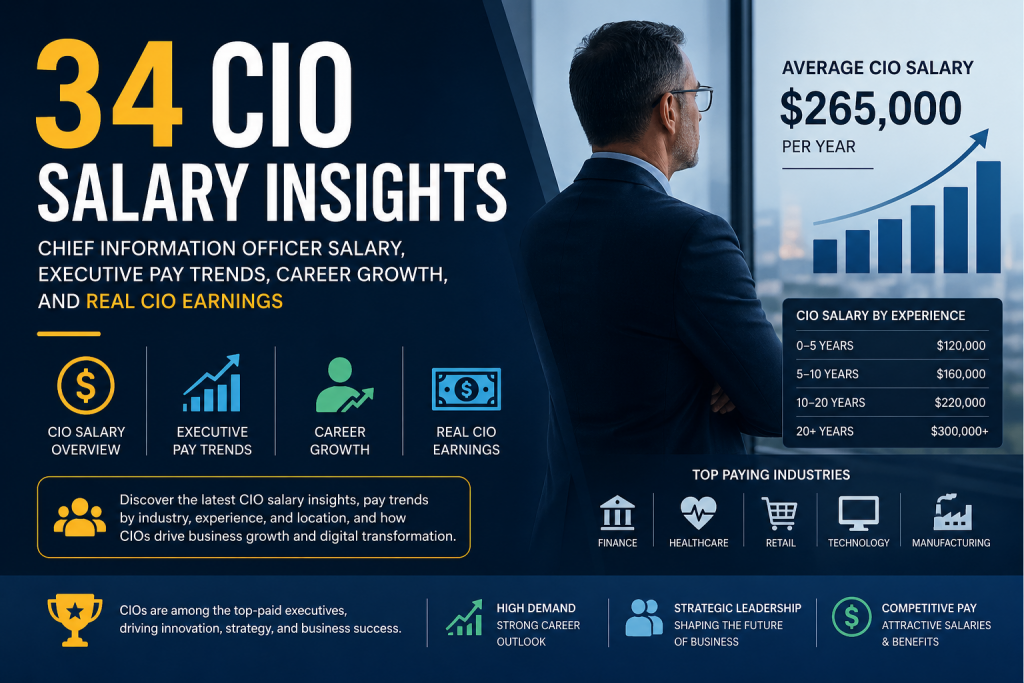
The role of the Chief Information Officer has transformed dramatically over the past decade. Once viewed primarily as a technical leader responsible for maintaining IT systems and infrastructure, the modern CIO now plays a far more strategic and influential role within organizations. Today, CIOs are deeply involved in shaping business direction, driving innovation, and ensuring that technology investments align with long-term organizational goals.
This shift has been driven by the increasing importance of digital transformation across industries. Companies rely on technology not just for operations, but also for competitive advantage, customer engagement, and revenue growth. As a result, CIOs are expected to contribute to high-level decision-making and act as key advisors to executive leadership.
With this growing influence comes increased interest in compensation. Many professionals want to understand how much CIOs earn and what factors contribute to their salaries. While averages provide a general idea, the reality is far more complex. CIO compensation varies widely based on experience, company size, industry, and location.
Understanding the full picture requires a deeper look at the responsibilities of the role, the market demand, and the elements that influence pay.
What Does a Chief Information Officer Do
At its core, the CIO role involves overseeing all aspects of an organization’s technology environment. This includes managing IT infrastructure, ensuring system reliability, and supporting business operations. However, these responsibilities only represent a portion of what modern CIOs handle.
Today’s CIOs are responsible for creating and executing technology strategies that align with business objectives. They evaluate emerging technologies, implement digital solutions, and ensure that systems support growth and efficiency. This often involves leading initiatives such as cloud migration, data analytics adoption, and automation.
CIOs also play a critical role in cybersecurity and risk management. They are responsible for protecting sensitive data, ensuring compliance with regulations, and mitigating potential threats. This requires a deep understanding of both technical systems and governance frameworks.
In addition, CIOs collaborate closely with other executives. They work with finance leaders to manage budgets, with operations teams to improve efficiency, and with marketing departments to enhance customer experiences. This cross-functional involvement highlights the importance of communication and leadership skills in the role.
In smaller organizations, the CIO may take on additional responsibilities, such as overseeing security or innovation initiatives. In larger enterprises, the role becomes more specialized but also more strategic, with a focus on long-term planning and global operations.
National Salary Overview for CIOs
CIO salaries are among the highest in the IT industry, reflecting the complexity and importance of the role. On average, CIOs earn well into six figures, with many positions offering significantly higher compensation depending on various factors.
A typical average salary for a CIO falls in the range of approximately $150,000 to $160,000 per year. However, this figure only provides a baseline. In reality, many CIOs earn much more, particularly those working in large organizations or high-demand industries.
Experienced CIOs often see salaries exceeding $250,000, and in some cases, total compensation can surpass $400,000 when bonuses, stock options, and other incentives are included. These higher figures are usually associated with senior executives who have extensive experience and significant responsibilities.
The wide range in salaries highlights the importance of context. Factors such as geographic location, company size, and industry all play a crucial role in determining compensation.
The Impact of Location on CIO Salaries
Geographic location is one of the most influential factors affecting CIO compensation. Cities with strong technology sectors or large corporate presence tend to offer higher salaries due to increased demand for skilled professionals and higher living costs.
Major cities like San Francisco, New York, and Seattle consistently rank among the highest-paying locations for CIOs. These areas are home to large technology companies, financial institutions, and multinational corporations, all of which require experienced IT leadership.
In these markets, average salaries often exceed $275,000, with top earners reaching well over $400,000. The competition for talent in these regions drives up compensation and creates opportunities for experienced professionals.
Mid-sized cities also offer strong earning potential. Locations such as Austin, Denver, and Minneapolis have growing technology ecosystems and attract companies looking to expand. CIOs in these areas can earn competitive salaries, often ranging from $200,000 to $300,000.
Even in smaller markets, CIOs earn substantial compensation. While salaries may be lower compared to major hubs, they still typically fall within the six-figure range. This demonstrates that the value of IT leadership is recognized across industries and regions.
Salary Differences Within the Same Location
While location plays a major role, it is not the only factor influencing CIO salaries. Even within the same city, there can be significant variation in compensation.
One of the primary reasons for this variation is company size. CIOs working for large enterprises often earn significantly more than those in smaller organizations. Larger companies have bigger budgets, more complex systems, and greater expectations, all of which contribute to higher salaries.
Responsibilities also play a key role. CIOs who are involved in strategic planning, board-level discussions, and major business decisions tend to earn more. Their influence on the organization’s direction increases their value and justifies higher compensation.
Industry is another important factor. CIOs in sectors such as finance, healthcare, and technology often earn more due to the critical role of IT in these industries. These sectors require advanced systems, strict compliance, and continuous innovation.
Experience and track record further contribute to salary differences. CIOs with a history of successful projects, cost savings, or innovation are often rewarded with higher pay and additional incentives.
The Rising Demand for CIO Leadership
The demand for skilled CIOs has grown significantly in recent years. As organizations become more reliant on technology, the need for strong leadership in this area has increased.
Digital transformation is a major driver of this demand. Companies are investing heavily in new technologies to improve efficiency, enhance customer experiences, and stay competitive. CIOs are at the forefront of these efforts, guiding strategy and ensuring successful implementation.
In addition, the growing importance of cybersecurity has elevated the CIO role. Organizations face increasing threats and must protect sensitive data while maintaining compliance with regulations. This requires experienced leaders who can manage risk and implement effective security measures.
The rise of data-driven decision-making has also contributed to the demand for CIOs. Businesses rely on data to inform strategy and improve performance, and CIOs play a key role in enabling these capabilities.
As a result, experienced CIOs are in high demand, and their compensation reflects this. Organizations are willing to invest in leaders who can deliver results and drive innovation.
Why Understanding CIO Salaries Matters
For professionals considering a career as a CIO, understanding salary trends is essential. It provides insight into earning potential and helps set realistic expectations. It also highlights the importance of gaining the skills and experience needed to succeed in the role.
For those already working in IT leadership, salary information can be valuable for career planning and negotiation. Knowing the market rate helps professionals advocate for fair compensation and identify opportunities for growth.
Organizations also benefit from understanding salary trends. Offering competitive compensation is crucial for attracting and retaining top talent. In a competitive job market, companies that fail to offer competitive packages may struggle to find qualified candidates.
Salary transparency also promotes fairness and equity. It helps ensure that compensation reflects the value of the role and reduces disparities within organizations.
Key Insights from Salary Trends
Several important insights emerge when examining CIO salaries. First, the role is highly valued across industries, with compensation reflecting its strategic importance. Second, there is significant variation in salaries based on factors such as location, company size, and experience.
Another key insight is the growing importance of leadership skills. Technical expertise alone is not enough to succeed as a CIO. Strong communication, strategic thinking, and the ability to drive change are essential.
Finally, it is clear that the demand for CIOs will continue to grow. As technology becomes increasingly central to business operations, the need for skilled leaders in this area will only increase.
Setting the Stage for Further Exploration
While this section has focused on understanding the role and salary landscape, there are many other factors that influence CIO compensation. These include company size, board-level influence, specialized skills, and certifications.
Exploring these elements provides a deeper understanding of how CIOs can increase their earning potential and advance their careers. In the next section, the focus will shift to these factors, offering insights into what drives higher salaries and how professionals can position themselves for success.
Understanding the Key Drivers of CIO Compensation
While average salary figures provide a helpful starting point, they only tell part of the story. Chief Information Officer compensation is shaped by a wide range of factors that go far beyond location alone. Elements such as company size, leadership influence, specialization, and proven results all play a major role in determining how much a CIO earns.
Organizations are not simply paying for technical expertise. They are investing in leadership, strategic thinking, and the ability to deliver measurable business outcomes. This means that two CIOs in the same city can have vastly different compensation packages depending on their responsibilities and impact.
Understanding these factors is essential for anyone looking to move into a CIO role or increase their earning potential within the field.
The Impact of Company Size on Salary
One of the most significant factors influencing CIO compensation is the size of the organization. Larger companies typically offer higher salaries due to the scale and complexity of their operations.
In large enterprises, CIOs are responsible for managing extensive IT infrastructures, overseeing large teams, and handling substantial budgets. They may also be involved in global operations, which adds another layer of complexity to their role. These responsibilities require a high level of expertise and leadership, which is reflected in higher compensation.
CIOs working in multinational corporations or publicly traded companies often earn some of the highest salaries in the industry. These roles may include additional benefits such as bonuses, stock options, and long-term incentives.
In contrast, CIOs in smaller organizations may have more limited resources and responsibilities. While they still play a critical role, their compensation is generally lower compared to their counterparts in larger companies. However, smaller organizations may offer other advantages, such as greater flexibility or broader responsibilities.
Ultimately, company size directly affects the scope of the CIO role and, in turn, the level of compensation.
The Role of Board-Level Influence
Another key factor in determining CIO salaries is the level of influence the role has within the organization. CIOs who actively participate in board-level discussions and contribute to strategic decision-making are often compensated at a higher level.
These individuals are not just managing technology; they are shaping the direction of the business. They may be involved in decisions related to mergers and acquisitions, digital transformation strategies, and long-term growth initiatives.
Being part of executive leadership increases a CIO’s visibility and demonstrates their value to the organization. As a result, companies are willing to offer higher salaries to retain individuals who can contribute at this level.
CIOs who report directly to the CEO or regularly present to the board are typically seen as strategic assets. Their ability to align technology with business goals makes them indispensable, which is reflected in their compensation.
Specialization and High-Demand Skills
In today’s rapidly evolving technology landscape, specialization plays a major role in determining CIO salaries. Organizations are increasingly looking for leaders who have expertise in specific areas that are critical to business success.
Cloud computing is one such area. CIOs who have experience with cloud migration and management are in high demand, as companies continue to shift their operations to cloud-based platforms. This expertise can significantly increase earning potential.
Artificial intelligence and data analytics are also highly valued skills. CIOs who can leverage data to drive decision-making and innovation are seen as valuable assets. Their ability to implement advanced technologies can lead to higher compensation.
Cybersecurity is another critical area. With the growing threat of cyberattacks, organizations are prioritizing security more than ever. CIOs with strong backgrounds in risk management and security leadership are often rewarded with higher salaries.
Specialization allows CIOs to stand out in a competitive job market and positions them for higher-paying roles.
The Influence of Education and Certifications
While experience is often the most important factor in determining CIO compensation, education and certifications can also play a significant role. Advanced degrees and professional certifications demonstrate expertise and commitment to the field.
Certifications related to IT governance and security are particularly valuable. They signal that a CIO has the knowledge and skills needed to manage complex systems and ensure compliance with regulations.
Leadership-focused education, such as an executive-level business degree, can also enhance earning potential. These programs help CIOs develop the skills needed to operate at the executive level, including strategic thinking, financial management, and communication.
Although certifications alone may not guarantee higher salaries, they can provide a competitive advantage and open the door to new opportunities.
The Importance of Track Record and Results
A CIO’s track record is one of the most important factors influencing compensation. Organizations value leaders who can deliver results and demonstrate measurable impact.
This includes achievements such as reducing operational costs, improving system efficiency, and driving innovation. CIOs who have successfully led major projects or transformations are often rewarded with higher salaries and additional incentives.
Reputation also plays a role. CIOs who are known for their leadership and ability to execute strategies effectively are more likely to be recruited for high-paying positions.
Consistency is key. A strong track record over time builds credibility and increases earning potential. Organizations are willing to invest in leaders who have proven their ability to deliver results.
How Experience Shapes CIO Salaries
Experience is a critical factor in determining CIO compensation, but it is not just about the number of years in the field. The type of experience and the level of responsibility also play a significant role.
Professionals stepping into a CIO role for the first time typically have a background in IT leadership. They may have served as directors or vice presidents, managing teams and overseeing projects. At this stage, salaries are often in the lower range for CIO positions, reflecting their transition into the role.
As CIOs gain more experience, their responsibilities increase. They may oversee larger teams, manage bigger budgets, and contribute more to strategic planning. This leads to higher salaries and additional benefits.
At the highest level, experienced CIOs operate as true business executives. They lead global initiatives, influence major decisions, and drive organizational growth. Their compensation reflects their level of impact and responsibility.
Experience, combined with proven success, is one of the most powerful drivers of salary growth.
Tools and Technologies Every CIO Should Understand
To succeed in their role, CIOs must be familiar with a wide range of tools and technologies. These tools support operations, enable decision-making, and ensure that systems run smoothly.
Enterprise systems such as resource planning and customer management platforms are essential for managing business processes. CIOs are often responsible for selecting and overseeing these systems to ensure they meet organizational needs.
Data and analytics tools play a crucial role in modern organizations. CIOs must enable data-driven decision-making by implementing platforms that provide insights and support strategic planning.
Cloud platforms are another key area. As organizations move to cloud-based environments, CIOs must understand how to manage and optimize these systems. This includes ensuring security, scalability, and performance.
Security tools are also critical. CIOs must protect sensitive data and ensure compliance with regulations. This requires a deep understanding of security technologies and best practices.
In addition to technical tools, CIOs rely on frameworks and methodologies to manage operations and ensure consistency. These frameworks provide structure and help align IT with business goals.
Governance and Strategic Frameworks
Effective CIOs use governance frameworks to guide their decisions and ensure that IT initiatives align with organizational objectives. These frameworks provide a structured approach to managing technology and risk.
They help CIOs establish policies, monitor performance, and ensure compliance with regulations. This is particularly important in industries with strict regulatory requirements.
Strategic frameworks also support long-term planning. They help CIOs identify opportunities for improvement and ensure that technology investments deliver value.
By using these frameworks, CIOs can create a more organized and efficient IT environment. This contributes to better performance and, ultimately, higher compensation.
Preparing for Higher Earning Potential
For professionals aiming to increase their CIO salary, understanding these factors is essential. It is not enough to focus on technical skills alone. Leadership, strategic thinking, and the ability to deliver results are equally important.
Building experience in high-impact roles, developing specialized skills, and gaining exposure to executive decision-making can all contribute to higher earning potential. Continuous learning and professional development also play a key role.
Making strategic career moves, such as joining a larger organization or entering a high-paying industry, can also have a significant impact on salary.
The Role of Certifications in Advancing a CIO Career
While experience remains the most important factor in becoming a successful Chief Information Officer, certifications can significantly enhance credibility and earning potential. In today’s competitive landscape, organizations look for leaders who not only have practical experience but also demonstrate a strong understanding of governance, security, and strategic management.
Certifications act as proof of expertise. They show that a CIO understands industry standards, follows best practices, and is capable of handling complex challenges. For professionals aiming to move into executive roles, certifications can help bridge the gap between technical knowledge and leadership responsibilities.
They are especially useful for professionals transitioning from mid-level leadership roles into the executive tier. By validating skills in areas such as governance, risk management, and project leadership, certifications make candidates more attractive to employers.
Although certifications alone do not guarantee higher salaries, they often complement experience and contribute to better opportunities and compensation packages.
Governance and Leadership Certifications
Certifications focused on governance and enterprise management are highly valuable for CIOs. These certifications emphasize aligning IT strategy with business goals, managing risk, and ensuring compliance with regulations.
They are particularly important for CIOs who are responsible for overseeing large IT environments and ensuring that systems operate efficiently and securely. Governance certifications demonstrate that a leader can handle these responsibilities while maintaining accountability and transparency.
In many organizations, governance plays a critical role in decision-making. CIOs who understand how to implement and manage governance frameworks are often seen as strategic assets. This recognition can lead to higher salaries and greater influence within the organization.
Security-Focused Certifications and Their Impact
Cybersecurity has become one of the most critical concerns for organizations worldwide. As a result, CIOs with strong security expertise are in high demand. Certifications in this area demonstrate a deep understanding of risk management, threat detection, and compliance.
Security-focused certifications are particularly valuable for CIOs who work closely with security teams or oversee cybersecurity programs. They signal that the CIO can protect the organization’s assets and respond effectively to potential threats.
With the increasing number of cyber incidents, organizations are willing to invest heavily in leaders who can ensure security and resilience. This demand directly impacts salaries, with security-savvy CIOs often earning higher compensation.
In addition to technical knowledge, these certifications highlight leadership capabilities in managing security strategies and coordinating responses to incidents.
Project and Program Management Expertise
Large-scale IT initiatives require strong project and program management skills. CIOs often oversee complex projects that involve multiple teams, significant budgets, and tight deadlines.
Certifications in project and program management demonstrate the ability to plan, execute, and deliver initiatives successfully. They show that a CIO can manage resources effectively and ensure that projects align with business objectives.
These skills are particularly important for CIOs leading digital transformation efforts, system upgrades, or infrastructure changes. Successful project delivery contributes to organizational success and enhances the CIO’s reputation.
Employers value leaders who can consistently deliver results, and this is often reflected in higher salaries and performance-based incentives.
The Value of Business Education for CIOs
In addition to technical and certification-based knowledge, business education plays an important role in a CIO’s career. Many organizations expect CIOs to have a strong understanding of business strategy, finance, and leadership.
Advanced education programs help CIOs develop these skills. They provide insights into how organizations operate and how technology can support business goals. This knowledge is essential for participating in executive-level discussions and making strategic decisions.
CIOs with strong business acumen are better equipped to communicate with other executives and align IT initiatives with organizational priorities. This ability increases their value and often leads to higher compensation.
Business education also helps CIOs transition from technical roles to leadership positions, making it a valuable investment for career growth.
Building a High-Impact Career as a CIO
Increasing earning potential as a CIO requires more than technical expertise. It involves building a career that demonstrates leadership, innovation, and the ability to deliver results.
Organizations are looking for individuals who can translate technology into real business value, not just manage systems. This means taking ownership of outcomes such as improving operational efficiency, reducing costs, enhancing customer experience, or driving new revenue streams through digital initiatives.
To achieve this, CIOs must actively seek opportunities to lead high-impact projects. Successfully delivering initiatives like cloud transformations, enterprise system upgrades, or data-driven strategies shows measurable impact and strengthens professional credibility. Over time, these accomplishments build a strong track record that directly influences compensation.
Innovation is another key element. CIOs who introduce new technologies or modernize outdated processes position themselves as forward-thinking leaders. This ability to adapt and innovate is highly valued in competitive industries.
Leadership development is equally important. Managing teams, mentoring future leaders, and fostering collaboration across departments all contribute to long-term success. CIOs who can inspire teams and align them with business goals are often rewarded with higher salaries and greater responsibilities.
One of the most effective ways to achieve this is by leading high-impact projects. Initiatives such as digital transformation, cloud migration, and system modernization provide opportunities to showcase leadership skills and create measurable value.
Successfully delivering these projects enhances a CIO’s reputation and positions them for higher-paying roles. Organizations recognize the importance of these initiatives and reward leaders who can execute them effectively.
Taking on challenging projects also provides valuable experience and helps CIOs develop new skills. This continuous growth is essential for staying competitive in the field.
Strengthening Expertise in Security and Risk Management
As cybersecurity threats continue to evolve, organizations are placing greater emphasis on security and risk management. CIOs who can demonstrate expertise in these areas are highly valued.
The increasing frequency and sophistication of cyberattacks have made security a top priority at the executive level, pushing CIOs to take a more proactive and strategic role in protecting organizational assets.
Modern CIOs are expected to go beyond basic security measures and develop comprehensive risk management strategies. This includes identifying potential vulnerabilities, implementing robust security frameworks, and ensuring continuous monitoring of systems. They must also stay informed about emerging threats such as ransomware, phishing attacks, and zero-day exploits, adapting their defenses accordingly.
Another critical responsibility involves ensuring regulatory compliance. Many industries operate under strict data protection laws and standards, and CIOs must ensure that their organizations meet these requirements. Failure to comply can result in financial penalties, reputational damage, and legal consequences, making this aspect of the role extremely important.
CIOs also play a key role in building a security-focused culture within the organization. This involves educating employees about best practices, promoting awareness of potential threats, and encouraging responsible behavior when handling sensitive information. Human error remains one of the biggest security risks, so leadership in this area is essential.
In addition, collaboration with other executives, such as security leaders and risk managers, is crucial. CIOs must ensure that security strategies align with overall business goals while maintaining operational efficiency. By effectively managing both risk and security, CIOs not only protect the organization but also enhance their own value, leading to increased trust, influence, and higher earning potential.
Developing skills in risk assessment, compliance, and incident response can significantly enhance a CIO’s career. These capabilities are essential for protecting organizational assets and ensuring business continuity.
Organizations are willing to invest in leaders who can manage these risks effectively. This demand creates opportunities for higher salaries and more influential roles.
By focusing on security and resilience, CIOs can position themselves as critical contributors to organizational success.
Gaining Influence at the Executive Level
One of the most important factors in increasing CIO compensation is gaining influence within the organization. CIOs who are involved in executive decision-making are often compensated at a higher level.
This is because their role extends beyond managing IT operations to shaping business strategy and driving organizational growth. When a CIO becomes a trusted advisor to the executive team, their value increases significantly.
Building this level of influence requires more than technical expertise. CIOs must develop strong business acumen and understand how technology impacts revenue, efficiency, and customer experience. By aligning IT initiatives with broader business goals, they demonstrate their ability to contribute to overall success. This strategic mindset helps position them as key decision-makers rather than support leaders.
Effective communication also plays a crucial role. CIOs must be able to present complex technical concepts in a way that non-technical stakeholders can understand. Clear communication builds trust and ensures that their insights are considered in high-level discussions.
Additionally, taking ownership of major initiatives such as digital transformation or innovation programs can further enhance visibility. As CIOs become more involved in shaping the future of the organization, their influence grows, leading to greater recognition, responsibility, and ultimately, higher compensation.This influence comes from demonstrating the ability to align technology with business strategy. CIOs who can communicate effectively with other executives and contribute to long-term planning are seen as valuable leaders.
Building relationships with other members of the leadership team is also important. Collaboration and communication help CIOs gain visibility and establish their role as strategic partners.
As CIOs become more involved in shaping the direction of the organization, their value increases, leading to higher compensation and greater opportunities.
Staying Ahead of Emerging Technologies
Technology is constantly evolving, and CIOs must stay ahead of these changes to remain effective. Understanding emerging trends such as artificial intelligence, automation, and advanced analytics is essential.
CIOs who embrace innovation and implement new technologies can help organizations stay competitive. This ability to drive innovation is highly valued and often leads to higher salaries.
Continuous learning is key. CIOs must stay informed about industry developments and adapt to new challenges. This proactive approach ensures that they remain relevant and capable of leading change.
By staying ahead of trends, CIOs can position themselves as forward-thinking leaders and increase their earning potential.
Strategic Career Moves for Higher Salaries
Career decisions play a significant role in determining CIO compensation. Moving to a larger organization or a high-paying industry can lead to substantial increases in salary.
These environments often come with greater responsibilities, larger budgets, and more complex systems, all of which justify higher pay. For example, industries such as finance, healthcare, and technology typically offer more competitive compensation because they rely heavily on advanced IT infrastructure and strategic leadership.
In addition to industry choice, timing and positioning are important. Accepting roles that offer greater visibility, such as leading enterprise-wide initiatives or reporting directly to executive leadership, can significantly boost earning potential. These roles not only increase exposure but also demonstrate the ability to handle high-impact responsibilities.
Geographic mobility can also influence salary growth. Relocating to regions with a strong demand for technology leadership can open doors to better opportunities and higher compensation packages. However, it is important to consider cost of living and overall career goals when making such decisions.
Ultimately, being intentional about career moves and seeking opportunities that align with long-term growth can help CIOs maximize both their professional impact and financial rewards.
Industries such as technology, finance, and healthcare often offer higher compensation due to their reliance on complex IT systems. These sectors require experienced leaders who can manage risk and drive innovation.
Geographic relocation can also impact salary. Moving to a city with a strong technology sector may provide access to higher-paying opportunities.
In addition, taking on roles with greater responsibility and visibility can lead to higher compensation. Strategic career moves help CIOs maximize their earning potential and achieve long-term success.
Long-Term Career Growth and Sustainability
Sustaining a successful career as a CIO requires continuous development and adaptability. The role is constantly evolving, and leaders must be prepared to take on new challenges.
In addition to technical knowledge, ongoing development in leadership and communication skills is essential. CIOs are expected to collaborate with executives, lead diverse teams, and translate complex technical ideas into clear business strategies. This requires strong interpersonal skills and the ability to influence decision-making at the highest levels.
Adaptability also means being open to change and willing to rethink existing processes. CIOs must evaluate new tools, frameworks, and methodologies to improve efficiency and drive innovation. They should actively seek feedback, learn from past experiences, and continuously refine their approach.
Networking and professional engagement further support long-term success. Building relationships with peers, attending industry events, and participating in leadership forums can provide valuable insights and opportunities. By embracing lifelong learning and staying flexible, CIOs can maintain their effectiveness and continue growing in an ever-changing technological landscape.
Building a strong network, staying informed about industry trends, and continuously improving skills are all essential for long-term success. CIOs must be proactive in seeking opportunities for growth and development.
Maintaining a balance between technical expertise and leadership skills is also important. Both aspects are necessary for success in the role.
By focusing on continuous improvement, CIOs can ensure that they remain competitive and continue to advance in their careers.
Conclusion
The role of the Chief Information Officer has evolved into one of the most important positions within modern organizations. CIOs are no longer just responsible for managing technology; they are strategic leaders who drive innovation, support business growth, and influence executive decision-making.
Compensation for CIOs reflects this level of responsibility. Salaries vary widely based on factors such as experience, company size, industry, and leadership influence. While technical expertise is essential, it is the ability to deliver results, lead teams, and align technology with business goals that truly drives earning potential.
Certifications, education, and continuous learning all play a role in career advancement. However, the most significant factor is the ability to create value for the organization. CIOs who lead major initiatives, manage risk effectively, and contribute to strategic planning are often rewarded with higher salaries and greater opportunities.
For those aspiring to reach this level, the path involves more than just technical skills. It requires a commitment to leadership, innovation, and lifelong learning. By focusing on these areas, professionals can build successful careers and achieve their full earning potential as Chief Information Officers.
Continue exploring the technologies and certification concepts that matter most to you.