CompTIA Security+ has long been recognized as one of the most trusted and widely accepted certifications in the field of cybersecurity. Since its introduction in 2002, it has helped define the baseline skills required for professionals who want to build careers in information security. Unlike certifications tied to specific vendors or technologies, Security+ focuses on universal concepts that apply across different platforms, systems, and environments. This vendor-neutral approach is one of the reasons it remains relevant across industries and job roles.
Over the years, the cybersecurity landscape has changed dramatically. New types of threats have emerged, technologies have advanced, and organizations have shifted how they manage and secure their infrastructure. To keep up with these changes, CompTIA regularly updates the Security+ exam. These updates are not minor adjustments; they are comprehensive revisions designed to ensure that certified professionals possess current and practical knowledge.
The transition from SY0-601 to SY0-701 represents one of these major updates. It reflects how cybersecurity has evolved over the past few years and highlights the increasing complexity of securing modern systems. Understanding this evolution is essential for anyone planning to pursue the certification.
Why Security+ Remains Important in Cybersecurity
Security+ continues to hold strong value in the cybersecurity industry because it validates essential skills that employers expect from professionals. It serves as a foundation for more advanced certifications and roles, making it a popular starting point for individuals entering the field.
One of the key reasons for its importance is its broad coverage. The certification does not focus on just one aspect of security. Instead, it includes topics such as threat detection, risk management, incident response, and system architecture. This wide scope ensures that candidates develop a well-rounded understanding of cybersecurity.
Another important factor is industry recognition. Many organizations consider Security+ a minimum requirement for security-related roles. It is often listed in job descriptions for positions such as security analyst, network administrator, and systems engineer. In some sectors, especially government and defense, holding this certification may even be mandatory.
The certification also helps bridge the gap between theoretical knowledge and practical skills. Candidates are expected not only to understand concepts but also to apply them in real-world scenarios. This practical focus makes Security+ particularly valuable for those looking to gain hands-on experience.
As cyber threats continue to grow in both number and sophistication, the demand for skilled professionals is increasing. Security+ helps meet this demand by ensuring that individuals entering the field are equipped with the knowledge needed to protect systems and data effectively.
The Lifecycle of Security+ Exams
CompTIA follows a structured approach when updating its certifications. Typically, a new version of the Security+ exam is released every three years. This cycle allows the organization to incorporate new technologies, address emerging threats, and remove outdated content.
Each version of the exam has a defined lifecycle. After a new version is released, the previous version remains available for a limited period. This overlap gives candidates time to complete their preparation and take the exam before it is retired. Once the retirement date passes, the older version is no longer offered.
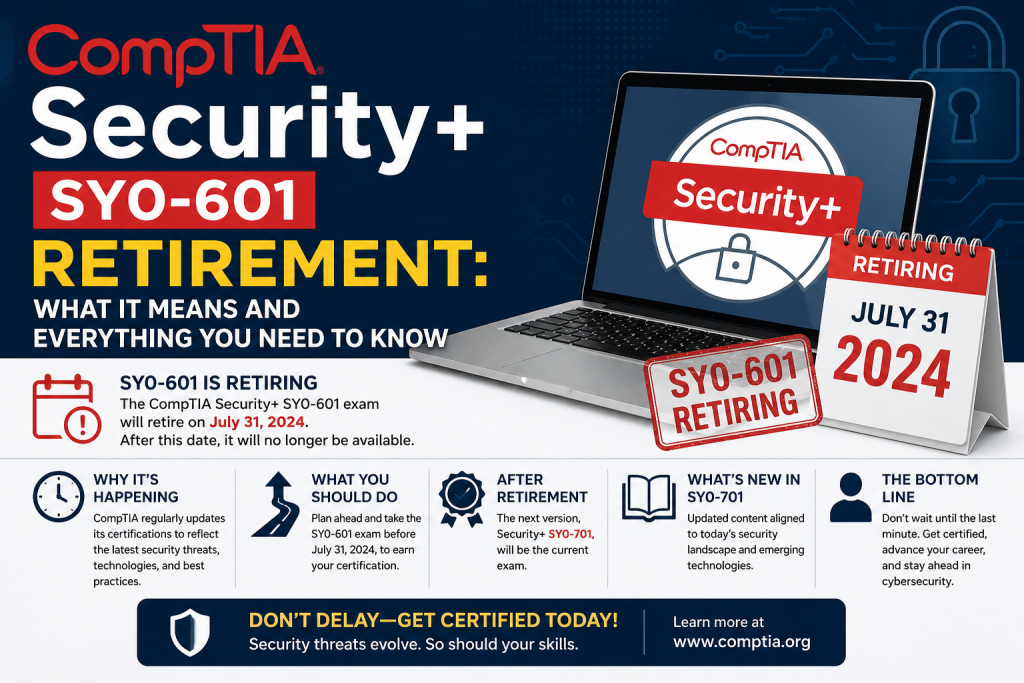
The SY0-601 exam, which was introduced in late 2020, is scheduled to retire on July 31, 2024. After this date, candidates will only be able to take the newer SY0-701 exam. This transition is an important milestone, as it marks the shift to updated content that reflects current industry standards.
For candidates, understanding this lifecycle is crucial. Choosing which version of the exam to take depends largely on timing and preparation. Those who are already well into their studies may prefer to complete the SY0-601 exam before it retires. On the other hand, individuals who are just beginning their preparation may benefit from focusing on the SY0-701 exam instead.
Overview of the SY0-601 Exam Structure
The SY0-601 exam was designed to test a candidate’s ability to identify and address security threats, implement solutions, and manage risk. It was divided into five main domains, each representing a different area of cybersecurity.
The first domain focused on attacks, threats, and vulnerabilities. This section covered various types of cyber threats, including malware, phishing, and social engineering. Candidates were expected to understand how these threats work and how to identify them.
The second domain, architecture and design, emphasized secure system design. It included topics such as network architecture, secure deployment models, and system hardening. This section required candidates to understand how to build systems that are resistant to attacks.
The implementation domain focused on applying security solutions. This included configuring firewalls, managing access controls, and implementing encryption. Candidates needed to demonstrate their ability to put security measures into practice.
Operations and incident response formed another key domain. This section tested the ability to monitor systems, detect incidents, and respond effectively. It also included topics such as logging, monitoring, and forensic analysis.
The final domain, governance, risk, and compliance, covered policies, regulations, and risk management strategies. Candidates were expected to understand how organizations manage security at a strategic level.
Together, these domains provided a comprehensive overview of cybersecurity principles. However, as technology evolved, it became clear that updates were needed to address new challenges.
Introduction to the SY0-701 Exam
The SY0-701 exam represents the next step in the evolution of Security+. It builds upon the foundation established by previous versions while introducing new concepts and areas of focus. The goal of this update is to ensure that certified professionals are prepared to handle modern cybersecurity challenges.
One of the most noticeable changes in the SY0-701 exam is its structure. While it still covers core cybersecurity topics, the domains have been reorganized to reflect current industry priorities. This new structure places greater emphasis on practical skills and real-world application.
The updated exam includes domains such as general security concepts, threats and mitigations, security architecture, security operations, and program management. These domains highlight the importance of understanding both technical and strategic aspects of cybersecurity.
Another key feature of the SY0-701 exam is its focus on modern technologies. Topics such as cloud computing, hybrid environments, and automation are given greater importance. This reflects the reality that organizations are increasingly relying on these technologies.
The exam also emphasizes the importance of proactive security measures. Instead of focusing solely on responding to incidents, candidates are expected to understand how to prevent them. This includes knowledge of threat intelligence, risk assessment, and security planning.
Overall, the SY0-701 exam is designed to be more aligned with current industry needs. It aims to produce professionals who are not only knowledgeable but also capable of applying their skills in complex environments.
Key Differences Between SY0-601 and SY0-701
The differences between the two exam versions go beyond simple updates. They represent a shift in how cybersecurity is approached and practiced. One of the main differences is the increased focus on risk management. While this was already a part of the SY0-601 exam, it has become more central in the SY0-701 version.
Another significant change is the emphasis on cloud and hybrid environments. Modern organizations often use a combination of on-premises and cloud-based systems. Securing these environments requires a different set of skills compared to traditional setups.
The SY0-701 exam also introduces more content related to automation and advanced threat detection. These topics reflect the growing use of technology to enhance security operations. Automation, in particular, plays a crucial role in improving efficiency and response times.
In addition, the updated exam places greater importance on governance and compliance. As regulations become more complex, professionals must understand how to navigate legal and organizational requirements.
The weighting of exam domains has also changed. Some areas, such as security operations, now carry more weight, indicating their increased importance in real-world scenarios.
These differences mean that candidates must adjust their preparation strategies. Studying for one version of the exam may not fully prepare you for the other, making it important to choose the right path from the beginning.
Deciding Which Exam to Take
Choosing between SY0-601 and SY0-701 depends on several factors. One of the most important considerations is time. If you are close to completing your preparation for the SY0-601 exam, it may make sense to take it before the retirement date.
However, if you are just starting your studies, switching to the SY0-701 exam is likely the better option. This ensures that your efforts are aligned with the latest content and reduces the risk of running out of time.
Experience level also plays a role in this decision. Individuals with prior knowledge and hands-on experience may find it easier to complete the SY0-601 exam quickly. On the other hand, beginners may benefit from starting fresh with the updated version.
Another factor to consider is career goals. While both versions result in the same certification, the newer exam may carry additional value due to its focus on current technologies. Employers may view it as a sign that you are familiar with the latest industry trends.
Ultimately, there is no one-size-fits-all answer. The best choice depends on your individual circumstances, including your schedule, experience, and learning preferences.
Study Time and Preparation Considerations
Preparing for the Security+ exam requires careful planning and dedication. The amount of time needed varies from person to person. While some candidates can prepare in a few weeks, others may need several months.
On average, many candidates report spending around two months preparing for the SY0-601 exam. However, this timeline can vary based on factors such as prior experience and study habits. Those with a background in IT or networking may find it easier to grasp the concepts.
The quality of study materials also plays a significant role. Using comprehensive and up-to-date resources can make a big difference in your preparation. Practice exams, video courses, and hands-on labs are all valuable tools.
Consistency is key when studying. Setting a regular schedule and sticking to it can help ensure that you cover all exam objectives. Breaking down topics into smaller sections can make the process more manageable.
For those transitioning to the SY0-701 exam, it is important to focus on the updated content areas. This includes topics such as cloud security, hybrid environments, and risk management. Understanding these areas will be essential for success.
The Importance of Staying Current in Cybersecurity
Cybersecurity is a constantly evolving field. New threats, technologies, and best practices emerge regularly, making it essential for professionals to stay up to date. Certifications like Security+ play a crucial role in this process.
By updating its exams, CompTIA ensures that certified professionals remain relevant in the industry. The transition from SY0-601 to SY0-701 is a reflection of this commitment. It highlights the importance of adapting to change and continuously improving your skills.
Staying current is not just about passing exams. It is about developing a mindset of continuous learning. This includes keeping up with industry news, experimenting with new tools, and gaining hands-on experience.
For aspiring cybersecurity professionals, this means going beyond the basics. While certifications provide a strong foundation, real-world experience is equally important. Combining both can help you build a successful and sustainable career.
The shift to SY0-701 serves as a reminder that cybersecurity is not static. It is a dynamic field that requires ongoing effort and dedication. By embracing these changes, you can position yourself for long-term success.
Understanding the Changing Cybersecurity Landscape
The transition from SY0-601 to SY0-701 is closely tied to the rapid evolution of the cybersecurity landscape. Over the past few years, organizations have undergone major digital transformations, adopting new technologies and expanding their infrastructure beyond traditional boundaries. These changes have introduced new opportunities but also created a broader and more complex attack surface.
Cybersecurity is no longer limited to protecting a single network or a set of internal systems. Today, organizations must secure data and applications across multiple environments, including cloud platforms, remote devices, and interconnected systems. This shift has forced cybersecurity professionals to rethink how they approach security, moving from reactive methods to proactive and adaptive strategies.
The updated SY0-701 exam reflects this transformation by focusing on the skills needed to secure modern environments. It emphasizes not only technical knowledge but also the ability to understand how different systems interact and where vulnerabilities may arise. This broader perspective is essential in a world where cyber threats are constantly evolving.
Increased Focus on Cloud Security
One of the most significant changes in recent years is the widespread adoption of cloud computing. Organizations are increasingly relying on cloud services to store data, run applications, and manage operations. While this shift offers many benefits, it also introduces new security challenges.
Cloud environments differ from traditional infrastructure in several ways. They are often shared among multiple users, dynamically scalable, and accessible from anywhere. These characteristics require a different approach to security. Professionals must understand how to manage access controls, protect data in transit and at rest, and ensure that cloud configurations are secure.
The SY0-701 exam places a strong emphasis on cloud security concepts. Candidates are expected to understand different cloud models, such as public, private, and hybrid environments. They must also be familiar with common risks associated with cloud computing, including misconfigurations, unauthorized access, and data breaches.
In addition, the exam highlights the importance of shared responsibility in cloud security. Service providers are responsible for securing the infrastructure, while customers must secure their data and applications. Understanding this division of responsibility is critical for effective security management.
The Rise of Hybrid Environments
Closely related to cloud adoption is the emergence of hybrid environments. Most organizations no longer operate solely on-premises or entirely in the cloud. Instead, they use a combination of both, creating hybrid systems that integrate different types of infrastructure.
Hybrid environments offer flexibility and scalability, but they also increase complexity. Security professionals must ensure that all components of the environment are protected and that there are no gaps between systems. This requires a deep understanding of how different technologies interact.
The SY0-701 exam reflects this reality by including more content related to hybrid security. Candidates must be able to identify potential vulnerabilities in these environments and implement strategies to mitigate risks. This includes securing communication between systems, managing identities across platforms, and ensuring consistent security policies.
Another challenge in hybrid environments is visibility. With systems spread across multiple locations, it can be difficult to monitor activity and detect threats. Professionals must use tools and techniques that provide comprehensive visibility into the entire environment.
Growth in Cyber Threats and Attack Complexity
Cyber threats have become more frequent and more sophisticated. Attackers are using advanced techniques to exploit vulnerabilities and gain unauthorized access to systems. This has made cybersecurity more challenging and has increased the need for skilled professionals.
The SY0-701 exam addresses this trend by placing greater emphasis on understanding threats, vulnerabilities, and mitigation strategies. Candidates must be able to recognize different types of attacks, such as phishing, ransomware, and advanced persistent threats. They must also understand how these attacks are carried out and how to defend against them.
In addition to traditional threats, the exam covers newer attack methods that target modern technologies. For example, attacks on cloud services, IoT devices, and mobile platforms are becoming more common. Professionals must be prepared to address these emerging risks.
Another important aspect is threat intelligence. This involves gathering and analyzing information about potential threats to anticipate and prevent attacks. The ability to use threat intelligence effectively is a key skill tested in the SY0-701 exam.
Emphasis on Proactive Defense Strategies
In the past, cybersecurity often focused on reacting to incidents after they occurred. However, this approach is no longer sufficient in today’s threat landscape. Organizations must take a proactive approach to security, identifying and addressing risks before they can be exploited.
The SY0-701 exam reflects this shift by emphasizing proactive defense strategies. Candidates are expected to understand how to implement measures that prevent attacks, rather than simply responding to them. This includes techniques such as vulnerability scanning, penetration testing, and continuous monitoring.
Automation also plays a significant role in proactive defense. Security tools can automatically detect and respond to threats, reducing the time it takes to address incidents. Understanding how to use these tools effectively is an important part of modern cybersecurity.
Another key concept is the principle of least privilege. This involves granting users only the access they need to perform their tasks, reducing the risk of unauthorized access. Implementing this principle requires careful planning and ongoing management.
Importance of Zero Trust Architecture
Zero trust is a security model that has gained significant attention in recent years. Unlike traditional approaches that assume users inside a network can be trusted, zero trust requires verification for every access request. This model is particularly relevant in environments where users and devices connect from different locations.
The SY0-701 exam includes content related to zero trust architecture, reflecting its growing importance. Candidates must understand the principles behind this model and how it can be implemented in different environments.
Zero trust involves several key components, including identity verification, device validation, and continuous monitoring. It also requires strong authentication methods, such as multi-factor authentication, to ensure that only authorized users can access resources.
Implementing zero trust can be challenging, especially in large organizations with complex systems. However, it provides a more secure approach to managing access and protecting data.
Expanded Role of Governance, Risk, and Compliance
Governance, risk, and compliance have always been important aspects of cybersecurity, but their role has expanded in recent years. Organizations must now navigate a complex landscape of regulations and standards that dictate how data is handled and protected.
The SY0-701 exam places greater emphasis on these topics, requiring candidates to understand various frameworks and regulations. This includes knowledge of policies, procedures, and best practices for managing risk.
Risk management involves identifying potential threats, assessing their impact, and implementing measures to reduce risk. This process is ongoing and requires continuous evaluation.
Compliance, on the other hand, involves adhering to legal and regulatory requirements. Failure to comply can result in significant penalties and damage to an organization’s reputation.
Governance provides the structure for managing security within an organization. It includes defining roles and responsibilities, establishing policies, and ensuring that security measures are aligned with business objectives.
Advancements in Security Operations
Security operations have become more complex as organizations adopt new technologies and face more sophisticated threats. The SY0-701 exam reflects this by increasing the focus on operational security.
Candidates must understand how to monitor systems, detect anomalies, and respond to incidents. This includes using tools such as security information and event management systems to analyze data and identify potential threats.
Incident response is another critical area. Professionals must be able to quickly identify and contain incidents, minimizing damage and restoring normal operations. This requires a well-defined process and effective communication.
The exam also covers topics such as digital forensics, which involves investigating security incidents to determine their cause and impact. This information can be used to improve security measures and prevent future incidents.
Integration of Automation in Cybersecurity
Automation is playing an increasingly important role in cybersecurity. As the volume of data and number of threats continue to grow, manual processes are no longer sufficient. Automation helps organizations respond more quickly and efficiently.
The SY0-701 exam includes content related to automation, highlighting its importance in modern security operations. Candidates must understand how automated tools can be used to detect and respond to threats.
Automation can be applied in various areas, including vulnerability management, incident response, and threat detection. For example, automated systems can scan for vulnerabilities and apply patches without human intervention.
While automation offers many benefits, it also requires careful management. Professionals must ensure that automated processes are configured correctly and do not introduce new risks.
Security Challenges in IoT and Operational Technology
The increasing use of Internet of Things devices and operational technology has introduced new security challenges. These devices are often connected to networks but may not have strong security measures in place.
The SY0-701 exam addresses these challenges by including content related to securing IoT and operational technology. Candidates must understand the risks associated with these devices and how to protect them.
IoT devices can be vulnerable to attacks due to weak authentication, outdated software, or lack of encryption. Securing these devices requires a combination of technical controls and best practices.
Operational technology, which includes systems used in industries such as manufacturing and energy, also presents unique challenges. These systems often require continuous operation, making it difficult to apply updates or implement changes.
Professionals must balance the need for security with the requirement for reliability, ensuring that systems remain operational while being protected from threats.
Changes in Exam Structure and Weight Distribution
The SY0-701 exam introduces changes in how content is structured and weighted. Some domains have been given more importance, reflecting their relevance in real-world scenarios.
Security operations, for example, now carries a larger percentage of the exam. This highlights the importance of monitoring and responding to threats in modern environments.
Program management and oversight is another area that has gained prominence. This reflects the need for professionals to understand not only technical aspects but also how security is managed at an organizational level.
These changes mean that candidates must allocate their study time accordingly. Focusing on high-weight domains can improve performance and increase the chances of success.
Adapting Study Strategies for SY0-701
Preparing for the SY0-701 exam requires a different approach compared to previous versions. Candidates must focus on understanding concepts in depth and applying them in practical scenarios.
Hands-on experience is particularly important. Setting up lab environments and experimenting with security tools can help reinforce learning and build confidence.
Practice exams are also valuable for identifying areas of weakness and improving test-taking skills. Reviewing incorrect answers can provide insights into gaps in knowledge.
Staying updated with industry trends is another key aspect of preparation. Reading articles, following experts, and participating in online communities can help candidates stay informed.
Time management is essential during preparation. Creating a study plan and sticking to it can ensure that all topics are covered before the exam.
Final Thoughts on Industry Trends and Exam Evolution
The transition to SY0-701 reflects the broader changes taking place in the cybersecurity industry. As technology continues to evolve, so do the challenges associated with securing it.
The updated exam ensures that professionals are equipped with the skills needed to address these challenges. It emphasizes practical knowledge, modern technologies, and proactive strategies.
For candidates, this means embracing a more comprehensive approach to learning. Understanding the underlying principles of security and how they apply in different contexts is essential.
By adapting to these changes and focusing on continuous improvement, aspiring cybersecurity professionals can position themselves for success in a rapidly evolving field.
Preparing for the SY0-701 Exam in a Modern Cybersecurity Environment
Preparing for the SY0-701 version of the Security+ exam requires a more structured and thoughtful approach than previous versions. As cybersecurity continues to evolve, the expectations placed on candidates have increased significantly. The exam now reflects real-world challenges more closely, meaning that preparation must go beyond memorizing concepts and instead focus on understanding how to apply them.
One of the first steps in preparing for the SY0-701 exam is to understand the scope of the content. The updated exam includes a broader range of topics, especially those related to cloud environments, hybrid systems, automation, and risk management. Candidates must be comfortable navigating these areas and understanding how they interconnect.
Creating a study plan is essential. A well-organized schedule helps ensure that all exam objectives are covered within a reasonable timeframe. Instead of trying to study everything at once, breaking down the material into manageable sections allows for more effective learning. Allocating time for revision and practice tests is equally important, as it helps reinforce knowledge and identify areas that need improvement.
Consistency plays a major role in successful preparation. Studying regularly, even for short periods, is often more effective than cramming large amounts of information in a single session. This approach helps improve retention and reduces the likelihood of burnout.
Recommended Experience and Foundational Knowledge
Although there are no official prerequisites for taking the Security+ exam, having prior experience in IT or cybersecurity can make a significant difference. The SY0-701 exam assumes a certain level of familiarity with networking, system administration, and basic security principles.
It is generally recommended that candidates have around two years of experience working in a security-related or systems administration role. This experience provides practical exposure to the concepts covered in the exam and helps candidates understand how they are applied in real-world scenarios.
A strong foundation in networking is particularly important. Many security concepts are built on networking principles, such as how data is transmitted, how devices communicate, and how networks are structured. Without this knowledge, it can be difficult to fully grasp more advanced topics.
Understanding operating systems, access controls, and basic troubleshooting is also beneficial. These skills form the backbone of cybersecurity and are frequently tested in the exam.
For those who lack experience, it is still possible to succeed by dedicating extra time to learning these foundational concepts. Using beginner-friendly resources and practicing hands-on exercises can help bridge the gap.
Effective Study Techniques for Success
Preparing for the SY0-701 exam requires a combination of different study methods. Relying on a single approach is often not enough to fully understand the material. Instead, candidates should use a mix of reading, watching, practicing, and reviewing.
Reading study guides and textbooks provides a solid understanding of theoretical concepts. These resources often cover exam objectives in detail and explain complex topics in a structured way. However, reading alone is not sufficient.
Video courses can complement reading by providing visual explanations and demonstrations. They are particularly useful for understanding technical processes and configurations.
Practice exams are one of the most valuable tools for preparation. They help simulate the actual exam environment and allow candidates to test their knowledge. Reviewing the results of these exams can highlight weak areas that need further study.
Hands-on practice is equally important. Setting up a home lab or using virtual environments allows candidates to experiment with tools and techniques. This practical experience helps reinforce learning and makes it easier to recall information during the exam.
Active learning techniques, such as taking notes, summarizing topics, and teaching others, can also improve understanding. Engaging with the material in different ways helps deepen knowledge and improve retention.
Importance of Hands-On Experience
In modern cybersecurity, theoretical knowledge alone is not enough. Professionals are expected to apply their skills in real-world situations, which is why hands-on experience is so important.
The SY0-701 exam reflects this expectation by including questions that require practical understanding. Candidates must be able to analyze scenarios, identify problems, and choose appropriate solutions.
Hands-on experience can be gained in several ways. Setting up a lab environment using virtual machines is a common approach. This allows candidates to simulate networks, configure security tools, and practice responding to incidents.
There are also online platforms that provide interactive labs and challenges. These platforms offer guided exercises that cover various topics, such as vulnerability scanning, penetration testing, and incident response.
Working on real-world projects, even on a small scale, can also be beneficial. For example, securing a personal network or experimenting with firewall configurations can provide valuable insights.
The more practical experience a candidate has, the more confident they will feel during the exam. This confidence can make a significant difference in performance.
Time Management and Exam Strategy
Time management is a critical factor in both preparation and exam performance. Without proper planning, it is easy to feel overwhelmed by the amount of material covered in the SY0-701 exam.
During preparation, setting realistic goals and deadlines can help keep progress on track. It is important to allocate enough time for each topic while also leaving room for revision.
When it comes to the exam itself, having a strategy can improve performance. Reading questions carefully and understanding what is being asked is essential. Many questions are scenario-based and may include extra information that can be distracting.
Managing time during the exam is also important. Spending too much time on a single question can reduce the time available for others. It is often better to move on and return to difficult questions later.
Practicing under timed conditions can help candidates become more comfortable with the exam format. This reduces anxiety and improves efficiency.
Staying calm and focused during the exam is equally important. Confidence, built through thorough preparation, can help candidates approach questions with a clear mind.
Career Opportunities After Security+ Certification
Earning the Security+ certification can open the door to a wide range of career opportunities. It is often considered a starting point for roles in cybersecurity and IT security.
Common job roles for Security+ certified professionals include security analyst, systems administrator, network administrator, and technical support specialist. These roles involve tasks such as monitoring systems, managing security tools, and responding to incidents.
The certification is also recognized by many employers as a benchmark for foundational security skills. In some cases, it may be required for certain positions, particularly in regulated industries or government sectors.
In addition to entry-level roles, Security+ can serve as a stepping stone to more advanced certifications and career paths. Professionals can build on their knowledge and specialize in areas such as penetration testing, cloud security, or risk management.
The demand for cybersecurity professionals continues to grow, driven by the increasing number of cyber threats and the need to protect sensitive information. This makes Security+ a valuable credential for those looking to enter or advance in the field.
Advantages of Taking the SY0-701 Version
While both SY0-601 and SY0-701 lead to the same certification, there are certain advantages to taking the newer version. One of the main benefits is that it reflects current industry trends and technologies.
The SY0-701 exam includes updated content related to cloud computing, hybrid environments, automation, and modern threat detection. This knowledge is highly relevant in today’s job market and can give candidates an edge.
Employers may view candidates who have passed the newer version as being more up to date with current practices. This can be particularly beneficial when applying for roles that involve modern technologies.
Another advantage is that studying for the latest version ensures that candidates are learning the most relevant information. This can make it easier to apply their knowledge in real-world situations.
However, it is important to note that the certification itself does not indicate which version of the exam was taken. The value lies in the knowledge and skills gained during preparation.
Continuous Learning in Cybersecurity
Cybersecurity is not a field where learning stops after earning a certification. The rapid pace of technological change means that professionals must continuously update their skills and knowledge.
New threats, tools, and best practices emerge regularly, making it essential to stay informed. This can be achieved through various means, such as attending workshops, participating in online courses, and reading industry publications.
Networking with other professionals can also provide valuable insights. Sharing experiences and discussing challenges can help individuals learn from each other and stay updated on current trends.
Certifications like Security+ provide a strong foundation, but they are only the beginning. Building a successful career in cybersecurity requires ongoing effort and a commitment to learning.
Developing a habit of continuous improvement can help professionals adapt to changes and remain competitive in the job market.
Overcoming Challenges in Preparation
Preparing for the SY0-701 exam can be challenging, especially for those who are new to cybersecurity. The breadth of topics and the depth of knowledge required can feel overwhelming.
One common challenge is understanding complex concepts. Breaking these concepts into smaller parts and studying them step by step can make them more manageable. Using multiple resources can also provide different perspectives and improve understanding.
Another challenge is staying motivated. Long study periods can lead to fatigue and loss of focus. Setting small goals and celebrating progress can help maintain motivation.
Time constraints can also be an issue, especially for those balancing work or other responsibilities. Creating a flexible study plan and making use of available time can help address this challenge.
Seeking support from online communities or study groups can provide encouragement and additional resources. Learning with others can make the process more engaging and less isolating.
Final Preparation Tips Before the Exam
As the exam date approaches, it is important to focus on revision and practice. Reviewing key concepts and taking practice exams can help reinforce knowledge and build confidence.
It is also helpful to revisit weak areas identified during practice tests. Strengthening these areas can improve overall performance.
Getting adequate rest before the exam is important. Being well-rested can improve concentration and reduce stress.
On the day of the exam, arriving early and being prepared can help create a calm and focused mindset. Bringing necessary identification and understanding the exam procedures can prevent last-minute issues.
Staying positive and confident is key. Trusting the preparation process and approaching the exam with a clear mind can make a significant difference.
Conclusion
The SY0-701 version of the Security+ exam represents a significant step forward in cybersecurity certification. It reflects the evolving nature of the industry and the increasing demands placed on professionals. With its focus on modern technologies, proactive security strategies, and real-world application, it prepares candidates for the challenges they will face in today’s digital environment.
Preparing for this exam requires dedication, planning, and a willingness to learn. By building a strong foundation, gaining practical experience, and staying consistent in their efforts, candidates can successfully achieve certification.
Beyond the exam, Security+ serves as a gateway to a rewarding career in cybersecurity. It opens up opportunities, validates skills, and provides a platform for further growth. However, it is only the beginning. Continuous learning and adaptation are essential for long-term success in this dynamic field.
By embracing these principles and staying committed to improvement, aspiring professionals can not only pass the SY0-701 exam but also thrive in the ever-changing world of cybersecurity.