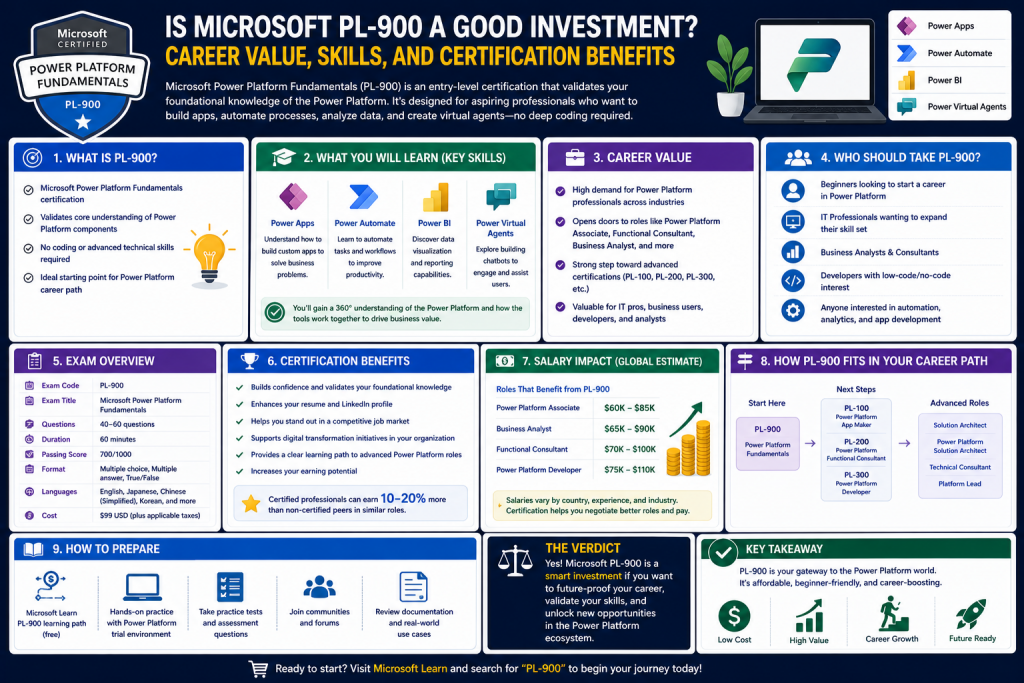
The Microsoft Power Platform has grown into one of the most influential collections of business productivity tools in the modern digital landscape. Originally positioned as a supporting component within Dynamics 365, the platform has evolved into a standalone ecosystem that empowers organizations to build solutions quickly without relying heavily on traditional software development.
At its core, the Power Platform is designed to enable users to analyze data, create applications, automate workflows, and even build intelligent chatbots. It includes widely used tools such as Power BI for data visualization, Power Apps for app development, and Power Automate for workflow automation. Each of these tools serves a distinct purpose, yet they are deeply interconnected, allowing organizations to create comprehensive solutions that address complex business challenges.
The rapid adoption of these tools has been driven by the increasing need for agility in business operations. Organizations today must respond quickly to changing market conditions, customer expectations, and internal demands. Traditional development methods often struggle to keep up with this pace, which is where low-code and no-code platforms like the Power Platform come into play.
The Rise of Low Code and No Code Development
One of the defining characteristics of the Power Platform is its emphasis on low-code and no-code development. This approach allows individuals with little or no programming experience to create functional applications and automate processes. Instead of writing extensive lines of code, users can rely on visual interfaces, drag-and-drop components, and pre-built templates.
This shift has fundamentally changed how organizations approach software development. Previously, creating a custom application required a team of developers, significant time, and substantial financial investment. Now, business users themselves can build solutions tailored to their specific needs. This democratization of technology has opened the door for innovation at all levels of an organization.
The PL-900 certification plays a crucial role in this transformation. It introduces candidates to the principles of low-code development and helps them understand how to leverage these tools effectively. By focusing on accessibility and practical usage, the certification ensures that a wide range of professionals can benefit from the Power Platform.
What Is the PL-900 Certification
The PL-900 exam is the gateway to earning the Microsoft Certified Power Platform Fundamentals credential. It is designed as an entry-level certification that validates a candidate’s understanding of the Power Platform and its capabilities. Unlike many other certifications, it does not require prior experience or technical expertise, making it an ideal starting point for beginners.
The purpose of the PL-900 is to provide a comprehensive overview of the platform. It covers key concepts such as business value, core components, and the capabilities of individual tools. By passing the exam, candidates demonstrate that they have a solid foundation in how the Power Platform can be used to solve business problems.
Another important aspect of the certification is its focus on bridging the gap between technical and non-technical users. In many organizations, business professionals and IT teams operate in separate domains, which can lead to communication challenges. The PL-900 helps address this issue by equipping individuals with a shared understanding of the platform.
Evolution of the PL-900 Exam
When the PL-900 exam was first introduced, it placed a strong emphasis on understanding the business value of the Power Platform. Candidates were expected to recognize how the tools could improve productivity and support organizational goals. While this focus remains important, the exam has evolved to include more practical elements.
The updated version of the exam requires candidates to demonstrate an understanding of how the tools work in real-world scenarios. This includes identifying use cases, recognizing features, and understanding how different components interact. The shift reflects the growing importance of hands-on knowledge in today’s technology landscape.
Another significant change is the inclusion of artificial intelligence capabilities within the Power Platform. Microsoft has integrated AI features into many of its tools, enabling users to build intelligent solutions without requiring specialized expertise. The PL-900 ensures that candidates are aware of these capabilities and understand how they can be applied.
Core Components of the Power Platform
To fully appreciate the value of the PL-900 certification, it is essential to understand the core components of the Power Platform. These components form the foundation of the ecosystem and enable the creation of integrated solutions.
One of the key elements is data connectivity. The platform includes a wide range of connectors that allow users to integrate with various services and data sources. This makes it possible to bring together information from different systems and create unified solutions.
Another important component is the data platform itself, often referred to as the underlying data service. It provides a structured environment for storing and managing data, ensuring consistency and reliability across applications.
Security and governance are also critical aspects of the platform. Organizations need to ensure that their data is protected and that users have appropriate access levels. The Power Platform includes features that support these requirements, making it suitable for enterprise use.
Understanding Power BI and Data Insights
Power BI is one of the most widely recognized tools within the Power Platform. It enables users to transform raw data into interactive visualizations and reports. This capability is essential for organizations that rely on data-driven decision-making.
With Power BI, users can connect to multiple data sources, create dashboards, and share insights with stakeholders. The tool is designed to be intuitive, allowing even non-technical users to generate meaningful reports. This aligns with the overall philosophy of the Power Platform, which prioritizes accessibility and ease of use.
The PL-900 certification introduces candidates to the basic concepts of data visualization and analytics. It helps them understand how Power BI can be used to identify trends, monitor performance, and support strategic planning.
Building Applications with Power Apps
Power Apps is another key component of the Power Platform. It allows users to create custom applications that address specific business needs. These applications can range from simple forms to complex systems that integrate with multiple data sources.
One of the main advantages of Power Apps is its flexibility. Users can choose between different types of apps, such as canvas apps and model-driven apps, depending on their requirements. This versatility makes it suitable for a wide range of use cases.
The PL-900 exam covers the basic principles of app development within the Power Platform. Candidates learn how to identify scenarios where Power Apps can be used and understand the general process of building and deploying applications.
Automating Workflows with Power Automate
Power Automate focuses on workflow automation. It enables users to create automated processes that reduce manual effort and improve efficiency. For example, tasks such as sending notifications, updating records, or synchronizing data can be automated using this tool.
Automation is a critical aspect of modern business operations. By eliminating repetitive tasks, organizations can save time and resources while minimizing errors. Power Automate provides a user-friendly interface that makes it easy to create workflows without extensive technical knowledge.
The PL-900 certification ensures that candidates understand the value of automation and how it can be applied in different scenarios. This knowledge is particularly valuable for professionals who want to optimize processes within their organizations.
The Role of Artificial Intelligence in the Platform
Artificial intelligence has become an integral part of the Power Platform. Microsoft has introduced features that allow users to incorporate AI into their solutions without requiring specialized skills. This includes capabilities such as predictive analysis, text recognition, and chatbot development.
These features enhance the functionality of the platform and open up new possibilities for innovation. For example, organizations can use AI to analyze customer feedback, automate decision-making, or provide personalized experiences.
The PL-900 exam includes questions related to these AI capabilities, ensuring that candidates are aware of their potential and understand how they can be used effectively.
Accessibility and Learning Curve
One of the most appealing aspects of the PL-900 certification is its accessibility. Unlike many technical certifications, it does not require a deep understanding of programming or system architecture. This makes it an excellent choice for individuals who are new to technology or looking to expand their skill set.
The learning curve is manageable, especially for those who take the time to explore the platform and practice using its tools. Microsoft provides a range of resources, including documentation and training materials, to support candidates in their preparation.
Why the PL-900 Matters in Today’s Job Market
In today’s competitive job market, having a recognized certification can make a significant difference. The PL-900 demonstrates that you have a foundational understanding of one of the most widely used business platforms. This can enhance your resume and increase your attractiveness to potential employers.
As organizations continue to adopt digital transformation strategies, the demand for professionals who understand tools like the Power Platform is likely to grow. The PL-900 positions you to take advantage of these opportunities and build a career in this evolving field.
Skills Measured in the PL-900 Exam
The PL-900 certification is structured around a set of clearly defined skills that reflect how the Microsoft Power Platform is used in real business environments. Rather than focusing purely on theory, the exam evaluates whether candidates understand how the platform delivers value and how its tools can be applied in practical situations.
A significant portion of the exam is dedicated to describing the business value of the platform. This involves recognizing how organizations use digital tools to improve efficiency, reduce manual effort, and enable better decision-making. Candidates are expected to understand common scenarios such as automating repetitive tasks, building custom applications, and analyzing large datasets.
Another important skill area involves identifying the foundational components of the platform. This includes understanding how different services connect and interact with each other. Concepts such as connectors, environments, and data integration play a key role in enabling seamless workflows across systems.
The exam also evaluates knowledge of individual tools and their capabilities. Instead of requiring deep technical expertise, it focuses on awareness and practical understanding. Candidates should be able to identify which tool is best suited for a specific task and explain how it contributes to a solution.
Understanding Business Value in Real Scenarios
The ability to describe business value is central to the PL-900 exam. Organizations invest in technology to solve problems, and the Power Platform is designed to address a wide range of challenges. Candidates must understand how these tools can be used to streamline operations and support strategic goals.
For example, many organizations struggle with inefficient processes that rely on manual input. By using automation tools, these processes can be simplified and accelerated. Similarly, businesses often deal with large volumes of data that are difficult to interpret. Visualization tools make it easier to identify patterns and insights.
Understanding business value also involves recognizing the broader impact of digital transformation. The Power Platform enables organizations to become more agile, respond to changes , and innovate more effectively. Candidates should be able to explain how these benefits translate into real-world outcomes.
Exploring Core Components of the Platform
The Microsoft Power Platform is built on a set of core components that enable its functionality. These components provide the foundation for building applications, automating workflows, and analyzing data.
One of the most important components is the data layer. This is where information is stored, managed, and accessed. A well-structured data environment ensures that applications and workflows operate efficiently and reliably.
Another key component is the concept of connectors. Connectors allow the platform to interact with external services and data sources. This makes it possible to integrate different systems and create unified solutions. For example, data from a customer relationship management system can be connected to a reporting tool to generate insights.
Environments are also an essential part of the platform. They provide a way to organize and manage resources, ensuring that applications and data are separated based on purpose or department. This helps maintain security and control within an organization.
Capabilities of Power BI in Data Analysis
Power BI plays a central role in the Power Platform by enabling users to analyze and visualize data. It transforms raw information into interactive dashboards and reports that can be easily understood by stakeholders.
One of the key strengths of Power BI is its ability to connect to multiple data sources. This allows users to combine information from different systems and create a comprehensive view of their operations. The tool also supports real-time data updates, ensuring that insights are always current.
Visualization is another important feature. Charts, graphs, and dashboards make it easier to identify trends and patterns. This is particularly useful for decision-makers who need to quickly understand complex data.
The PL-900 exam focuses on the basic capabilities of Power BI. Candidates are expected to understand how it supports data-driven decision-making and how it can be used to share insights across an organization.
Capabilities of Power Apps in Application Development
Power Apps enables users to create custom applications tailored to their specific needs. These applications can be used to solve a wide range of business problems, from managing inventory to tracking customer interactions.
One of the main advantages of Power Apps is its low-code approach. Users can build applications using visual tools and pre-built components, reducing the need for traditional programming. This makes app development accessible to a broader audience.
There are different types of applications that can be created within Power Apps. Canvas apps offer flexibility in design, allowing users to create interfaces that match their requirements. Model-driven apps, on the other hand, focus on data and provide a structured approach to application development.
The PL-900 exam introduces these concepts and ensures that candidates understand when and how to use Power Apps. This knowledge is essential for creating effective solutions within the Power Platform.
Capabilities of Power Automate in Workflow Automation
Power Automate is designed to automate repetitive tasks and streamline workflows. It connects different services and triggers actions based on specific conditions, reducing the need for manual intervention.
Automation can take many forms, from simple notifications to complex multi-step processes. For example, a workflow can be created to automatically send an email when a new record is added to a database. More advanced workflows can involve multiple systems and decision points.
One of the key benefits of Power Automate is its ease of use. The interface is designed to be intuitive, allowing users to create workflows without extensive technical knowledge. This aligns with the overall goal of the Power Platform, which is to empower users at all levels.
The PL-900 exam ensures that candidates understand the value of automation and how it can improve efficiency. This includes recognizing common use cases and understanding the basic structure of workflows.
Introduction to Power Pages and External Solutions
Power Pages is a relatively new addition to the Power Platform. It allows users to create external-facing websites that can be accessed by customers, partners, or other stakeholders.
These websites can be used for a variety of purposes, such as providing information, collecting data, or enabling self-service options. The ability to create secure and scalable web solutions without extensive coding is a significant advantage.
Although this area represents a smaller portion of the PL-900 exam, it highlights the expanding capabilities of the Power Platform. Candidates should have a basic understanding of what Power Pages does and how it fits into the overall ecosystem.
Understanding AI Features in the Power Platform
Artificial intelligence is becoming increasingly important in modern business solutions, and the Power Platform incorporates several AI-driven features. These features allow users to build intelligent applications and automate decision-making processes.
For example, AI can be used to analyze text, recognize images, and predict outcomes based on data. This opens up new possibilities for innovation and efficiency. Users can create chatbots, automate customer support, and gain deeper insights into their operations.
The PL-900 exam includes questions related to these AI capabilities. Candidates are expected to understand how they enhance the platform and how they can be applied in real-world scenarios.
Who Should Consider Taking the PL-900
The PL-900 certification is designed for a wide range of professionals. One of its key strengths is its accessibility, making it suitable for both technical and non-technical individuals.
Business users are among the primary audience for this certification. These individuals often work with existing tools but may not fully understand how they are built or how they can be customized. The PL-900 provides the knowledge needed to take a more active role in creating solutions.
Developers who are new to the Power Platform can also benefit from this certification. It provides an overview of the ecosystem and helps them understand how different components work together. This can serve as a foundation for more advanced learning.
Technical leads may find value in the certification as well. Even if they already have experience, the PL-900 ensures that they have a well-rounded understanding of the platform. It also demonstrates a commitment to staying current with industry trends.
Benefits for Developers and Technical Professionals
For developers, the PL-900 certification offers an opportunity to expand their skill set. While it may not cover advanced programming concepts, it introduces them to a new way of building solutions.
The low-code approach of the Power Platform complements traditional development methods. By combining these approaches, developers can create solutions more efficiently and address a wider range of requirements.
The certification also enhances credibility. Having a recognized credential from Microsoft can strengthen a developer’s profile and increase their appeal to employers and clients.
Benefits for Business Users and Non Technical Roles
Business users often face challenges when trying to adapt technology to their needs. The PL-900 certification helps bridge this gap by providing a clear understanding of how the Power Platform works.
With this knowledge, users can move beyond simply using existing tools. They can start creating their own solutions, automating processes, and improving workflows. This not only increases productivity but also encourages innovation.
The certification also empowers individuals to collaborate more effectively with technical teams. By understanding the platform, they can communicate their requirements more clearly and contribute to the development process.
Preparing for the PL-900 Exam
Preparation for the PL-900 exam involves a combination of study and practical experience. Reviewing the official exam objectives is an important first step. This helps candidates understand what topics will be covered and where to focus their efforts.
Hands-on experience is equally important. Exploring the Power Platform and experimenting with its tools can significantly improve understanding. Building simple applications, creating workflows, and analyzing data are all valuable activities.
There are also training resources available that provide structured guidance. These resources can help candidates learn the material more effectively and gain confidence in their abilities.
Challenges and Common Misconceptions
One common misconception about the PL-900 is that it is purely theoretical. While it does include conceptual knowledge, the exam also requires an understanding of practical applications. Candidates should not underestimate the importance of hands-on experience.
Another challenge is the breadth of the material. The Power Platform includes multiple tools, each with its own features and capabilities. Candidates need to have a general understanding of all these areas, which can be overwhelming for beginners.
However, with proper preparation and a clear study plan, these challenges can be overcome. The key is to focus on understanding how the tools work together and how they can be used to solve real problems.
The Growing Importance of Power Platform Skills
As organizations continue to embrace digital transformation, the demand for skills related to the Power Platform is increasing. Businesses are looking for professionals who can create solutions and adapt to changing requirements.
The PL-900 certification provides a starting point for developing these skills. It introduces key concepts and tools that are essential for working in this environment. From there, individuals can continue to build their expertise and pursue more advanced certifications.
luating the Overall Value of the PL-900 Certification
The value of the PL-900 certification depends heavily on your professional goals, current experience, and the role you play within your organization. As a foundational certification, it is not designed to position someone as an expert, but rather to establish a baseline understanding of how the Microsoft Power Platform works and how it can be applied in business environments.
For individuals who are completely new to the ecosystem, the certification offers a structured way to learn the basics. It introduces key concepts, explains the purpose of each tool, and provides insight into how organizations use the platform to solve real problems. This makes it an excellent entry point for those who want to explore low-code technologies.
On the other hand, for experienced IT professionals or developers, the PL-900 may feel too basic. The content does not go deeply into technical implementation, coding, or architecture. However, even in these cases, the certification can still provide value by offering a broader perspective on how business users interact with technology.
When the PL-900 Is Worth Pursuing
There are several scenarios where pursuing the PL-900 certification makes clear sense. One of the most common is when an individual is working directly with tools like Power BI, Power Apps, or Power Automate and wants to formalize their knowledge.
In such cases, the certification acts as validation. It shows employers and colleagues that you understand not just how to use the tools, but also how they fit into a broader business strategy. This can be particularly useful when seeking promotions or new job opportunities.
Another situation where the PL-900 is valuable is when transitioning into a new role. For example, someone moving from a purely administrative position into a more technical or analytical role can use the certification to demonstrate their readiness for the change.
Students and early-career professionals can also benefit significantly. Since the certification does not require prior experience, it provides an accessible way to build credibility and gain a competitive edge in the job market.
When the PL-900 May Not Be the Best Choice
While the PL-900 has many advantages, it is not always the best option for everyone. Professionals who already have extensive experience with the Power Platform may find that the certification does not add much to their skill set.
For these individuals, pursuing more advanced certifications may be a better investment. Higher-level credentials often focus on specialized skills, such as advanced app development, data modeling, or system integration. These certifications can have a more direct impact on career progression.
Additionally, individuals who do not plan to work with the Power Platform may not see significant benefits from earning the PL-900. While the knowledge gained can still be useful, it may not justify the time and effort required to prepare for the exam.
The Role of the PL-900 in Career Development
The PL-900 certification can play an important role in career development, particularly for those who are building a foundation in technology. It introduces key concepts that are relevant across many roles and industries, making it a versatile credential.
For business analysts, the certification provides a deeper understanding of how technology can be used to improve processes and support decision-making. This knowledge can enhance their ability to identify opportunities for improvement and propose effective solutions.
For project managers, the PL-900 offers insight into the capabilities of the Power Platform. This can help them plan and manage projects more effectively, ensuring that the right tools are used to achieve the desired outcomes.
For consultants, the certification adds credibility and demonstrates a commitment to staying current with industry trends. It also expands their ability to offer solutions that leverage the Power Platform.
Impact on Business Users and Organizational Growth
One of the most significant benefits of the PL-900 certification is its impact on business users. These individuals often rely on pre-built tools and processes, which can limit their ability to innovate. By learning the fundamentals of the Power Platform, they gain the skills needed to create their own solutions.
This shift can have a profound effect on organizational growth. When employees are empowered to solve problems independently, it reduces the burden on IT departments and accelerates the pace of innovation. Teams can respond more quickly to challenges and adapt to changing conditions.
The certification also promotes a culture of continuous improvement. As more individuals become familiar with the platform, they are more likely to identify opportunities for optimization and efficiency. This leads to better outcomes and a more dynamic work environment.
The Importance of Understanding Business Use Cases
A key strength of the PL-900 certification is its focus on business use cases. Rather than emphasizing technical details, it highlights how the Power Platform is used to address real-world challenges.
This approach is particularly valuable because it aligns with the needs of modern organizations. Technology is not an end in itself; it is a means to achieve specific goals. By understanding how tools can be applied in practical scenarios, professionals can deliver more effective solutions.
For example, automation can be used to streamline approval processes, reducing delays and improving productivity. Data visualization can help leaders make informed decisions by providing clear and actionable insights. Custom applications can address unique business requirements that are not met by off-the-shelf software.
Cost Versus Return on Investment
The PL-900 certification is relatively inexpensive compared to many other professional credentials. This makes it an attractive option for individuals who want to enhance their skills without making a significant financial commitment.
In terms of return on investment, the certification offers several benefits. It can improve job prospects, increase earning potential, and open up new career opportunities. It also provides valuable knowledge that can be applied immediately in the workplace.
However, the return on investment ultimately depends on how the certification is used. Individuals who actively apply what they have learned and continue to build their skills are more likely to see meaningful benefits.
Preparing for Long Term Growth in the Power Platform Ecosystem
The PL-900 certification is just the beginning of a broader journey within the Power Platform ecosystem. Once the fundamentals are mastered, individuals can explore more advanced topics and pursue additional certifications.
These may include certifications focused on app development, data analysis, or automation. Each of these areas offers opportunities for specialization and career advancement. By building on the foundation provided by the PL-900, professionals can develop expertise in specific domains.
Continuous learning is essential in the technology field. The Power Platform is constantly evolving, with new features and capabilities being introduced regularly. Staying up to date ensures that your skills remain relevant and valuable.
The Role of Certification in Building Professional Credibility
Certifications play an important role in establishing professional credibility. They provide a standardized way to demonstrate knowledge and skills, making it easier for employers and clients to assess your capabilities.
In a competitive job market, having recognized credentials can help differentiate you from other candidates who may have similar experience but lack formal validation of their expertise.
Beyond initial impressions, certifications also signal a commitment to continuous learning and professional development. They show that you are willing to invest time and effort into staying current with industry trends, tools, and best practices. This is especially important in fast-evolving fields where technologies and methodologies change frequently.
Certifications can also improve confidence, both for the individual earning them and for those who rely on their expertise. When you hold a certification, you are more likely to trust your own knowledge and decision-making abilities. At the same time, employers and clients gain reassurance that you meet a certain standard of competence.
Additionally, certifications often open doors to new opportunities, including promotions, higher salaries, and specialized roles. Many organizations use them as benchmarks for hiring and advancement, making them a valuable asset for long-term career growth.
The PL-900 certification, while foundational, still carries the recognition of Microsoft. This association adds value and enhances your professional profile. It signals that you have invested time and effort into learning the platform and that you meet a recognized standard.
For individuals who work with non-technical stakeholders, certifications can be particularly important. They provide assurance that you have the expertise needed to deliver results and can help build trust in your abilities.
Addressing Common Doubts About the PL-900
Some individuals question whether a foundational certification is worth pursuing. This is a valid concern, especially for those who are already experienced in technology. However, it is important to consider the broader context.
The PL-900 is not intended to replace advanced certifications or extensive experience. Instead, it complements them by providing a holistic understanding of the Power Platform. Even experienced professionals can benefit from this perspective.
Another common doubt is whether the certification has real-world value. The answer depends on how the knowledge is applied. Those who actively use the platform and continue to develop their skills are more likely to see tangible benefits.
The Future of Low Code Platforms and Career Opportunities
Low-code and no-code platforms are becoming increasingly important in the modern workplace. As organizations seek to improve efficiency and reduce costs, they are turning to solutions that enable rapid development and deployment.
These platforms allow teams to build applications, automate workflows, and manage data with minimal reliance on traditional programming. This shift reduces the pressure on IT departments and empowers business users to take a more active role in creating solutions that meet their needs.
Another key advantage is speed. Projects that once took months to design, develop, and deploy can now be completed in a fraction of the time. This agility helps organizations respond quickly to changing market conditions and customer demands. In addition, low-code tools often come with pre-built templates and integrations, which further streamline the development process and reduce complexity.
Collaboration is also improved through these platforms. Teams from different departments can work together more effectively, as the visual interfaces make it easier to understand and contribute to development efforts. This leads to better alignment between business goals and technical solutions.
Finally, low-code and no-code platforms support continuous innovation. Employees are encouraged to experiment, test ideas, and refine processes without significant risk or investment. As a result, organizations can foster a culture of creativity and adaptability while maintaining control over their digital transformation initiatives.
The Microsoft Power Platform is at the forefront of this trend. Its combination of accessibility, flexibility, and integration capabilities makes it a powerful tool for businesses of all sizes.
As demand for these skills grows, professionals who understand the platform will be well-positioned to take advantage of new opportunities. The PL-900 certification provides a starting point for entering this field and building a successful career.
Conclusion
The PL-900 certification offers a valuable introduction to the Microsoft Power Platform and its role in modern business environments. While it may not be essential for everyone, it provides a strong foundation for those who want to understand how low-code tools can be used to solve real-world problems.
For beginners, it serves as an accessible entry point into the world of technology. For business users, it opens the door to innovation and самостоятельность in problem-solving. For experienced professionals, it adds a broader perspective that enhances their existing skills.
Ultimately, the worth of the PL-900 depends on how it aligns with your goals and how you choose to use the knowledge it provides. By combining this certification with practical experience and continuous learning, you can unlock new opportunities and contribute to the evolving landscape of digital transformation.
Continue exploring the technologies and certification concepts that matter most to you.