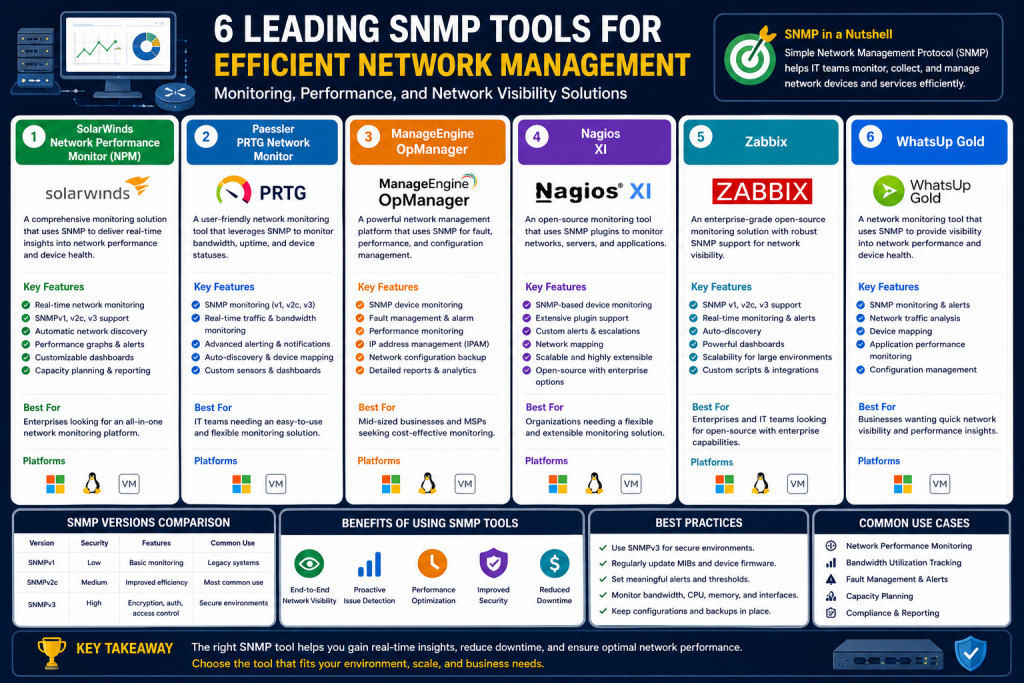
In today’s highly connected world, networks form the backbone of almost every organization. From small businesses to global enterprises, the need for reliable and efficient network performance is more critical than ever. As digital transformation accelerates, networks are becoming more complex, incorporating cloud services, remote users, and a growing number of connected devices. In this evolving landscape, monitoring and managing network performance is not just important but essential.
Simple Network Management Protocol, commonly known as SNMP, plays a central role in helping network professionals achieve this goal. It is a widely adopted protocol that allows administrators to monitor and manage network devices such as routers, switches, servers, and printers. SNMP provides a standardized way to collect and organize information about network performance, making it easier to identify issues and maintain optimal operations.
The importance of SNMP lies in its simplicity and effectiveness. It enables communication between a central management system and various network devices. These devices, equipped with SNMP agents, collect performance data and send it back to the management system. This data is then analyzed to provide insights into network health, performance trends, and potential issues.
As organizations continue to expand their networks, the role of SNMP becomes even more significant. It allows for centralized monitoring, reducing the need for manual intervention and enabling proactive management. This ensures that networks remain stable, secure, and efficient, even as they grow in size and complexity.
How SNMP Works in Network Monitoring
To understand the value of SNMP tools, it is essential to first understand how SNMP itself operates. At its core, SNMP uses a manager-agent architecture. The SNMP manager is typically a software application that runs on a central server. It is responsible for querying network devices, collecting data, and presenting it in a meaningful way.
On the other side are SNMP agents, which are installed on network devices. These agents gather information about the device’s performance, such as CPU usage, memory utilization, network traffic, and uptime. The data is stored in a structured database known as the Management Information Base, or MIB. Each piece of information in the MIB is identified by an Object Identifier, or OID, which allows the manager to retrieve specific data points.
Communication between the manager and agents occurs through SNMP messages. These messages can be used to request information, send updates, or trigger alerts. One of the key features of SNMP is its ability to send unsolicited messages known as traps. Traps are alerts generated by devices when certain conditions are met, such as a device failure or a sudden spike in traffic. This allows administrators to respond quickly to potential issues.
Over time, SNMP has evolved to include multiple versions, each offering different levels of security and functionality. Earlier versions focused on simplicity, while newer versions introduced features such as authentication and encryption to enhance security. This evolution has made SNMP a reliable and secure protocol for modern network environments.
The Growing Need for SNMP Tools
As networks become more complex, relying solely on basic SNMP capabilities is no longer sufficient. This is where SNMP tools come into play. These tools build upon the foundation of SNMP, providing advanced features that make network monitoring more efficient and effective.
One of the primary reasons for using SNMP tools is the sheer volume of data generated by modern networks. With hundreds or even thousands of devices, manually analyzing SNMP data becomes impractical. SNMP tools automate this process, collecting and analyzing data in real time and presenting it in an easy-to-understand format.
Another important factor is the need for visibility. Network administrators must have a clear view of their entire infrastructure to ensure smooth operations. SNMP tools provide dashboards and visualizations that highlight key performance metrics, making it easier to identify trends and detect anomalies.
Automation is another key advantage of SNMP tools. These tools can be configured to perform routine tasks, such as data collection and alerting, without human intervention. This not only saves time but also reduces the risk of human error.
In addition, SNMP tools support proactive monitoring. Instead of reacting to issues after they occur, administrators can set thresholds and receive alerts when performance metrics exceed acceptable limits. This allows for early detection and resolution of problems, minimizing downtime and improving overall network reliability.
Essential Features of SNMP Monitoring Tools
When evaluating SNMP tools, it is important to consider the features that will have the greatest impact on network management. While different tools offer different capabilities, there are several key features that are essential for effective monitoring.
One of the most critical aspects is scalability, as the tool must be capable of handling an increasing number of devices and data points without performance degradation. As networks grow, the monitoring system should expand seamlessly without requiring a complete overhaul.
Another important feature is real-time monitoring and alerting. The ability to receive instant notifications about performance issues or device failures allows administrators to respond quickly and minimize downtime. This should be complemented by customizable alert thresholds, ensuring that notifications are meaningful and not overwhelming.
Ease of use is also a major consideration. A well-designed interface with clear dashboards and visualizations helps administrators quickly interpret data and make informed decisions. Tools that offer drag-and-drop customization and intuitive navigation can significantly improve operational efficiency.
Integration capabilities are equally important. SNMP tools should work smoothly with other IT management systems such as ticketing platforms, security tools, and cloud services. This creates a more unified and automated workflow.
Finally, strong reporting and analytics features enable organizations to analyze historical data, identify trends, and plan for future capacity needs. These insights are essential for maintaining long-term network performance and reliability.
Beyond these core features, reliability and stability of the monitoring tool itself should not be overlooked. A monitoring system that frequently crashes or produces inconsistent results can create more problems than it solves. Administrators rely on accurate and continuous data collection, so the tool must operate consistently under varying workloads. High availability options, such as failover support and distributed monitoring, can further enhance reliability in large environments.
Another valuable feature is automation. Modern SNMP tools increasingly include automation capabilities that reduce manual workload. Tasks such as device discovery, configuration backups, and performance checks can be automated, allowing IT teams to focus on strategic initiatives instead of repetitive tasks. Automation also helps reduce human error, which is a common cause of network issues.
Security is another essential consideration. Since SNMP tools access sensitive network information, they must include strong security features such as encryption, role-based access control, and secure credential storage. Support for newer SNMP versions with enhanced security mechanisms is particularly important in protecting data from unauthorized access.
Flexibility and customization also play a major role in tool selection. Every network environment has unique requirements, so the ability to tailor dashboards, reports, and monitoring policies is crucial. Custom scripts, plugins, and APIs can extend the functionality of SNMP tools, enabling organizations to adapt the system to their specific needs.
Additionally, vendor support and community resources can significantly influence the effectiveness of a tool. Access to documentation, technical support, and user communities can help resolve issues more quickly and improve overall user experience. For open-source tools, active community engagement is especially important for ongoing updates and improvements.
Lastly, cost and licensing models must be carefully evaluated. Some tools charge based on the number of devices, while others use sensor-based or subscription pricing. Organizations should consider both initial costs and long-term expenses to ensure that the solution remains sustainable as the network grows.
By taking all of these factors into account, organizations can select an SNMP tool that not only meets their current needs but also supports future expansion and evolving network demands.
Scalability is one of the most important features to look for. As networks grow, the monitoring tool must be able to handle an increasing number of devices and data points. A scalable solution ensures that the tool remains effective as the network evolves.
User interface and usability are also critical factors. A well-designed interface makes it easier for administrators to navigate the tool, access information, and perform tasks. Intuitive dashboards and clear visualizations can significantly improve efficiency and reduce the learning curve.
Customization is another important feature. Every network is unique, and administrators need the ability to tailor the tool to their specific requirements. This includes customizing dashboards, alerts, and reports to focus on the most relevant information.
Integration capabilities are also essential. Many organizations use multiple tools for IT management, and the ability to integrate SNMP tools with other systems can enhance overall efficiency. This allows for better data sharing and more coordinated workflows.
Security features should not be overlooked. SNMP tools often handle sensitive network data, so it is important to choose a solution that supports secure communication and robust authentication mechanisms.
Finally, reporting and analytics capabilities are crucial for long-term network management. Detailed reports and historical data analysis can provide valuable insights into network performance and help with capacity planning.
SolarWinds Network Performance Monitor
One of the most well-known SNMP tools in the industry is Network Performance Monitor, developed by SolarWinds. This tool is widely used by network professionals for its comprehensive monitoring capabilities and user-friendly interface.
Network Performance Monitor is designed to provide real-time visibility into network performance. It uses SNMP to collect data from network devices and presents this data through interactive dashboards. These dashboards provide a clear overview of network health, making it easy to identify issues and track performance metrics.
A key feature of this tool is its ability to automatically discover network devices. This simplifies the setup process and ensures that all devices are included in the monitoring system. Once discovered, devices are mapped into a visual topology, allowing administrators to see how different components are connected.
The tool also offers advanced alerting capabilities. Administrators can set custom thresholds for various metrics and receive notifications when these thresholds are exceeded. This allows for proactive monitoring and quick response to potential issues.
Another advantage of Network Performance Monitor is its scalability. It is suitable for medium to large organizations with complex network environments. The tool can handle a large number of devices and provide detailed insights into each one.
In addition to monitoring, SolarWinds provides training and certification programs that help professionals develop expertise in using its tools. This makes it a valuable resource for both organizations and individuals looking to enhance their network management capabilities.
Benefits of Using SNMP Tools in Network Management
SNMP tools offer a wide range of benefits that make them essential for modern network management. One of the most significant advantages is improved network visibility. By providing real-time data and visualizations, these tools enable administrators to gain a clear understanding of network performance.
Another benefit is faster troubleshooting. When issues arise, SNMP tools provide detailed information that helps administrators identify the root cause. This reduces the time required to resolve problems and minimizes disruption to users.
SNMP tools also support better resource management. By analyzing usage patterns, organizations can optimize their infrastructure and allocate resources more efficiently. This can lead to cost savings and improved performance.
In addition, SNMP tools enable proactive monitoring. By setting thresholds and receiving alerts, administrators can detect potential issues before they become serious problems. This helps maintain network stability and reduces downtime.
Finally, SNMP tools provide valuable insights into long-term trends. By analyzing historical data, organizations can make informed decisions about capacity planning and future investments.
Challenges of Implementing SNMP Monitoring
While SNMP tools offer many benefits, there are also challenges to consider. One of the main challenges is the complexity of setup and configuration. Although many tools have simplified this process, initial deployment can still require technical expertise.
In many environments, administrators must carefully configure device credentials, define monitoring scopes, and ensure that SNMP agents are properly enabled and secured on each device. This process can become time-consuming, especially in large networks with hundreds or thousands of endpoints. Misconfigurations at this stage may lead to incomplete data collection or inaccurate monitoring results, which can reduce the effectiveness of the entire system.
Another aspect of this complexity is the need to understand different SNMP versions and their security implications. Choosing between versions, configuring authentication methods, and implementing encryption settings require a solid understanding of networking concepts. Without proper planning, organizations may inadvertently expose sensitive network data or create vulnerabilities.
Additionally, integrating SNMP tools with existing IT infrastructure can present challenges. Compatibility issues with legacy systems, firewalls, or cloud services may require additional adjustments and testing. Administrators also need to fine-tune alert thresholds and reporting settings to avoid overwhelming notifications while still capturing critical events. All of these factors contribute to the overall complexity, making proper training and planning essential for successful implementation.
Another challenge is managing the large volume of data generated by SNMP monitoring. Without proper filtering and analysis, it can be difficult to extract meaningful insights from this data.
Security is also a concern, particularly with older versions of SNMP. Organizations must ensure that they use secure versions of the protocol and implement appropriate safeguards to protect sensitive data.
Despite these challenges, the advantages of SNMP tools make them an essential part of modern network management. With the right approach and proper implementation, organizations can overcome these challenges and fully leverage the benefits of SNMP monitoring.
vanced SNMP Monitoring Tools for Modern Networks
As network infrastructures continue to evolve, the demand for more advanced monitoring capabilities has increased significantly. Traditional monitoring methods are no longer sufficient for environments that span multiple locations, cloud platforms, and hybrid systems. This is where advanced SNMP tools step in, offering deeper visibility, enhanced analytics, and more intelligent monitoring capabilities.
These tools go beyond simple data collection. They provide context to the data, helping administrators understand not just what is happening in the network, but why it is happening. This level of insight is essential for maintaining performance, ensuring security, and planning for future growth.
Modern SNMP tools also focus heavily on user experience. They are designed to present complex data in a way that is easy to understand, often through visual dashboards, graphs, and network maps. This allows administrators to quickly identify issues and take appropriate action.
Another important aspect of advanced SNMP tools is their ability to integrate with other systems. Whether it is cloud platforms, security tools, or IT service management solutions, integration ensures that all aspects of network management work together seamlessly. This creates a more efficient and cohesive environment.
Cisco ThousandEyes and Deep Network Visibility
One of the most powerful tools for network monitoring is Cisco ThousandEyes. This platform is known for its ability to provide deep visibility into network performance, extending beyond traditional boundaries to include internet paths and cloud services.
ThousandEyes uses SNMP along with other monitoring techniques to track the performance of network paths in real time. This includes monitoring latency, packet loss, and route changes. By analyzing this data, the tool can identify performance issues that may not be visible through traditional monitoring methods.
A key feature of ThousandEyes is its ability to map network topology. It provides a visual representation of how different components are connected, including external dependencies such as internet service providers and cloud platforms. This makes it easier to identify points of failure and understand how issues in one part of the network can impact other areas.
This tool is particularly useful for organizations with hybrid or multi-cloud environments. In such setups, network traffic often passes through multiple external systems, making it difficult to pinpoint issues. ThousandEyes simplifies this process by providing end-to-end visibility.
Another advantage of ThousandEyes is its focus on user experience. It allows administrators to see how network performance affects end users, providing insights into application performance and availability. This helps organizations ensure that their services meet user expectations.
F5, Inc. BIG-IP and Integrated Monitoring
Another powerful solution in the SNMP monitoring space is offered by F5, Inc. through its BIG-IP platform. This solution is designed to provide not only network monitoring but also advanced application delivery and security capabilities.
The BIG-IP platform uses SNMP to monitor network devices and collect performance data. However, its capabilities extend far beyond basic monitoring. It includes features such as load balancing, application security, and distributed denial-of-service protection.
One of the main strengths of the BIG-IP platform is its integration. All components of the system work together seamlessly, providing a unified approach to network and application management. This integration allows administrators to manage performance and security from a single interface.
The platform also offers advanced analytics and reporting capabilities. It provides detailed insights into network traffic, application performance, and security events. This helps administrators identify trends, detect anomalies, and make informed decisions.
Another important feature is automation. The BIG-IP platform can automate many routine tasks, such as traffic management and security enforcement. This reduces the workload on administrators and ensures consistent performance.
This solution is particularly well-suited for enterprise environments where application performance and security are critical. It provides the tools needed to manage complex networks and ensure that applications are delivered efficiently and securely.
The Importance of Network Topology Visualization
One of the key features of modern SNMP tools is network topology visualization. This feature provides a graphical representation of the network, showing how different devices and systems are connected. It is an essential tool for understanding the structure and behavior of the network.
Topology visualization helps administrators quickly identify issues such as broken links, overloaded devices, or misconfigured connections. Instead of manually tracing network paths, they can simply look at the visual map to see where the problem lies.
This feature is particularly valuable in large networks with many interconnected components. In such environments, understanding the relationships between devices can be challenging. Visualization simplifies this process and provides a clear overview of the network.
Another benefit of topology visualization is its role in troubleshooting. When an issue occurs, administrators can use the map to trace the path of network traffic and identify the source of the problem. This speeds up the troubleshooting process and reduces downtime.
In addition, topology visualization supports better planning and optimization. By understanding how the network is structured, administrators can make informed decisions about upgrades, expansions, and resource allocation.
Real-Time Monitoring and Alerting Capabilities
Real-time monitoring is a critical feature of SNMP tools. It allows administrators to track network performance as it happens, providing immediate insights into the state of the network. This is essential for maintaining performance and preventing issues.
SNMP tools collect data continuously and update dashboards in real time. This allows administrators to see changes in performance metrics as they occur. For example, they can monitor bandwidth usage, device status, and application performance in real time.
Alerting is another important aspect of real-time monitoring. SNMP tools can be configured to send alerts when certain conditions are met. These alerts can be based on thresholds, such as high CPU usage or low disk space, or on specific events, such as a device going offline.
Alerts can be delivered through various channels, including email, SMS, and mobile notifications. This ensures that administrators are notified promptly, even if they are not actively monitoring the system.
The combination of real-time monitoring and alerting enables proactive network management. Instead of reacting to issues after they occur, administrators can take action as soon as a problem is detected. This helps minimize downtime and maintain network stability.
Scalability and Flexibility in SNMP Tools
As organizations grow, their networks become more complex. SNMP tools must be able to scale to meet these changing demands. Scalability is a key factor in choosing a monitoring solution, as it determines whether the tool can handle future growth.
Modern SNMP tools are designed with scalability in mind. They can monitor thousands of devices and handle large volumes of data without compromising performance. This ensures that the tool remains effective as the network expands.
Flexibility is another important consideration. Networks are constantly changing, with new devices being added and configurations being updated. SNMP tools must be able to adapt to these changes and provide accurate monitoring.
Many tools offer modular designs that allow organizations to add features as needed. This makes it easier to customize the tool to meet specific requirements. It also ensures that organizations only pay for the features they need.
Cloud-based SNMP tools offer additional flexibility. They can be accessed from anywhere and do not require on-premises infrastructure. This makes them ideal for organizations with distributed teams or remote work environments.
Enhancing Network Security with SNMP Monitoring
Security is a major concern in modern network environments. SNMP tools play an important role in enhancing network security by providing visibility into potential threats and vulnerabilities.
By monitoring network traffic and device performance, SNMP tools can detect unusual activity that may indicate a security issue. For example, a sudden spike in traffic or repeated failed login attempts could signal an attack.
SNMP tools can also be integrated with security systems to provide a more comprehensive approach to threat detection. This allows organizations to respond quickly to potential threats and minimize their impact.
Another important aspect of security is access control. SNMP tools should support secure authentication and encryption to protect sensitive data. This is especially important when monitoring critical infrastructure.
Regular monitoring also helps ensure compliance with security policies and regulations. By keeping track of network activity, organizations can identify and address potential issues before they become serious problems.
Challenges in Advanced SNMP Tool Implementation
While advanced SNMP tools offer many benefits, implementing them can be challenging. One of the main challenges is the complexity of modern network environments. Integrating multiple systems and ensuring compatibility can be difficult.
Another challenge is the learning curve associated with advanced tools. While they offer powerful features, they can also be complex to use. Proper training is essential to ensure that administrators can fully utilize the tool’s capabilities.
Cost is another consideration. Advanced SNMP tools often come with higher price tags, especially for enterprise-level solutions. Organizations must carefully evaluate their needs and budget when selecting a tool.
Data management is also a challenge. Large networks generate vast amounts of data, which must be stored, processed, and analyzed. Effective data management strategies are essential to ensure that the tool remains efficient.
Despite these challenges, the benefits of advanced SNMP tools make them a valuable investment for organizations looking to improve their network monitoring and management capabilities.
Additional SNMP Tools for Effective Network Monitoring
As organizations continue to expand their digital infrastructure, the importance of selecting the right SNMP tools becomes even more apparent. While earlier solutions focus heavily on deep visibility and enterprise-grade capabilities, there are several other tools that offer flexibility, affordability, and customization. These tools cater to a wide range of use cases, from small businesses to large-scale enterprise networks.
Each SNMP tool brings a unique approach to monitoring and management. Some prioritize ease of use and cost-effectiveness, while others focus on modularity and extensibility. Understanding these differences allows network administrators to choose a solution that aligns with their operational goals and technical requirements.
In this section, we explore additional SNMP tools that play a significant role in modern network monitoring. These solutions highlight how SNMP continues to evolve and adapt to the changing needs of network environments.
ManageEngine OpManager and Cost-Effective Monitoring
ManageEngine OpManager is widely recognized as a powerful yet cost-effective SNMP monitoring solution. It is designed to provide comprehensive network monitoring capabilities without the high costs often associated with enterprise-grade tools.
One of the standout features of OpManager is its ability to monitor a wide range of network devices. Using SNMP, it collects performance data such as bandwidth usage, CPU utilization, and memory consumption. This data is then presented through intuitive dashboards that make it easy to assess network health.
OpManager also offers strong reporting capabilities. Administrators can generate detailed reports that provide insights into network performance over time. These reports are useful for identifying trends, planning capacity upgrades, and ensuring compliance with service-level agreements.
Another advantage of OpManager is its integration with other IT management tools. It works seamlessly with help desk systems, asset management tools, and security solutions. This integration creates a unified approach to IT management, improving efficiency and collaboration.
The platform also includes automated alerting features. Administrators can set thresholds for various metrics and receive notifications when those thresholds are exceeded. This ensures that issues are addressed promptly, reducing downtime and improving reliability.
OpManager is particularly well-suited for small to medium-sized businesses. It provides a balance between functionality and affordability, making it an attractive option for organizations with limited budgets.
Paessler AG PRTG Network Monitor and Modular Flexibility
Another highly regarded SNMP tool is PRTG Network Monitor, developed by Paessler AG. This solution is known for its modular design and flexible licensing model, which allows organizations to tailor the tool to their specific needs.
PRTG uses a system of sensors to monitor different aspects of the network. Each sensor is responsible for tracking a specific metric, such as bandwidth usage, server performance, or device availability. This modular approach makes it easy to customize the monitoring setup and focus on the most critical areas.
One of the key benefits of PRTG is its ease of deployment. The tool comes with preconfigured sensors that can be quickly set up, reducing the time required for implementation. This makes it an excellent choice for organizations that need a fast and efficient monitoring solution.
PRTG also offers powerful visualization features. It provides interactive dashboards and maps that give administrators a clear view of network performance. These visualizations help identify issues quickly and make it easier to understand complex network structures.
Another important feature is its scalability. PRTG can be used in networks of all sizes, from small setups to large enterprise environments. Its flexible licensing model allows organizations to expand their monitoring capabilities as their network grows.
The tool also includes mobile access, enabling administrators to monitor their network from anywhere. This is particularly useful for organizations with remote teams or distributed infrastructure.
Nagios XI and Open-Source Customization
Nagios XI is one of the most well-known open-source-based SNMP monitoring solutions. It is valued for its flexibility, extensive plugin ecosystem, and high level of customization.
Nagios XI builds on the foundation of the Nagios Core engine, adding a user-friendly interface and additional features. It uses SNMP to collect data from network devices and provides detailed insights into performance and availability.
One of the main strengths of Nagios XI is its extensibility. The platform supports a wide range of plugins that can be used to monitor different types of devices and services. This allows administrators to customize the tool to meet their specific requirements.
The tool also offers customizable dashboards. Administrators can create views that focus on the most relevant metrics, making it easier to monitor network performance. This level of customization is particularly valuable for organizations with unique monitoring needs.
Another advantage of Nagios XI is its strong community support. As an open-source solution, it benefits from a large community of users and developers who contribute plugins, documentation, and support resources.
However, this flexibility comes with a trade-off. Nagios XI can be more complex to set up and manage compared to other tools. It requires a certain level of technical expertise to fully utilize its capabilities.
Despite this, it remains a popular choice for organizations that prioritize customization and control over their monitoring environment.
Comparing SNMP Tools Based on Use Cases
Choosing the right SNMP tool depends largely on the specific needs of the organization. Different tools are designed to address different challenges, and understanding these differences is key to making an informed decision.
For organizations that require deep visibility into network paths and cloud environments, tools like Cisco ThousandEyes are highly effective. They provide end-to-end monitoring and help identify issues beyond the internal network.
For enterprises focused on application delivery and security, F5 BIG-IP offers a comprehensive solution that integrates monitoring with advanced security features.
Mid-sized organizations looking for a balance between functionality and usability often turn to SolarWinds Network Performance Monitor. It provides robust monitoring capabilities with an intuitive interface.
Small to medium-sized businesses may prefer ManageEngine OpManager due to its affordability and ease of use. It offers essential monitoring features without the complexity of enterprise solutions.
Organizations that need flexibility and scalability may choose PRTG Network Monitor. Its modular design allows for customization and growth.
Finally, those who prioritize customization and open-source solutions often opt for Nagios XI. It provides extensive flexibility but requires more technical expertise.
Best Practices for Implementing SNMP Monitoring Tools
Successfully implementing SNMP tools requires careful planning and execution. One of the first steps is to define monitoring objectives. Organizations should identify what they want to achieve, whether it is improving performance, enhancing security, or reducing downtime.
Device discovery is another important step. Ensuring that all relevant devices are included in the monitoring system is essential for comprehensive coverage. Many tools offer automatic discovery features that simplify this process.
Setting appropriate thresholds is also critical. Alerts should be configured to reflect realistic performance limits. Setting thresholds too low can result in excessive alerts, while setting them too high may cause important issues to be missed.
Regular maintenance is necessary to ensure that the monitoring system remains effective. This includes updating the tool, reviewing configurations, and optimizing performance.
Training is another key factor. Administrators should be familiar with the tool’s features and capabilities to fully leverage its potential. This can significantly improve efficiency and effectiveness.
Finally, organizations should continuously evaluate their monitoring strategy. As networks evolve, monitoring requirements may change. Regular reviews help ensure that the system continues to meet organizational needs.
The Future of SNMP and Network Monitoring
The field of network monitoring is constantly evolving, and SNMP continues to play a vital role in this evolution. However, new technologies and approaches are emerging that complement and enhance traditional SNMP monitoring.
One of the key trends is the integration of artificial intelligence and machine learning. These technologies enable more advanced analytics, allowing tools to predict issues before they occur. This shifts network management from a reactive approach to a proactive and even predictive one.
Another trend is the increasing use of cloud-based monitoring solutions. These tools offer greater flexibility and scalability, making them ideal for modern network environments. They also reduce the need for on-premises infrastructure.
Automation is also becoming more prominent. Modern tools can automate routine tasks, reducing the workload on administrators and improving efficiency. This allows IT teams to focus on more strategic activities.
Despite these advancements, SNMP remains a foundational technology. Its simplicity, reliability, and widespread adoption ensure that it will continue to be an essential part of network monitoring for years to come.
Conclusion
SNMP tools are essential for maintaining network performance, availability, and security in today’s complex environments. From enterprise-grade solutions to cost-effective and open-source options, there is a wide range of tools available to meet different needs.
Solutions such as ManageEngine OpManager, Paessler PRTG Network Monitor, and Nagios XI demonstrate the diversity of SNMP tools. Each offers unique features and benefits, allowing organizations to choose the one that best fits their requirements.
Selecting the right tool involves considering factors such as network size, budget, technical expertise, and specific monitoring goals. By carefully evaluating these factors, organizations can implement a solution that provides maximum value.
As networks continue to grow and evolve, the importance of effective monitoring will only increase. SNMP tools provide the visibility and control needed to manage this complexity, ensuring that networks remain reliable, efficient, and secure.
In the end, investing in the right SNMP monitoring solution is not just about technology. It is about enabling organizations to operate more effectively, respond to challenges بسرعة, and support long-term growth in an increasingly connected world.
Continue exploring the technologies and certification concepts that matter most to you.