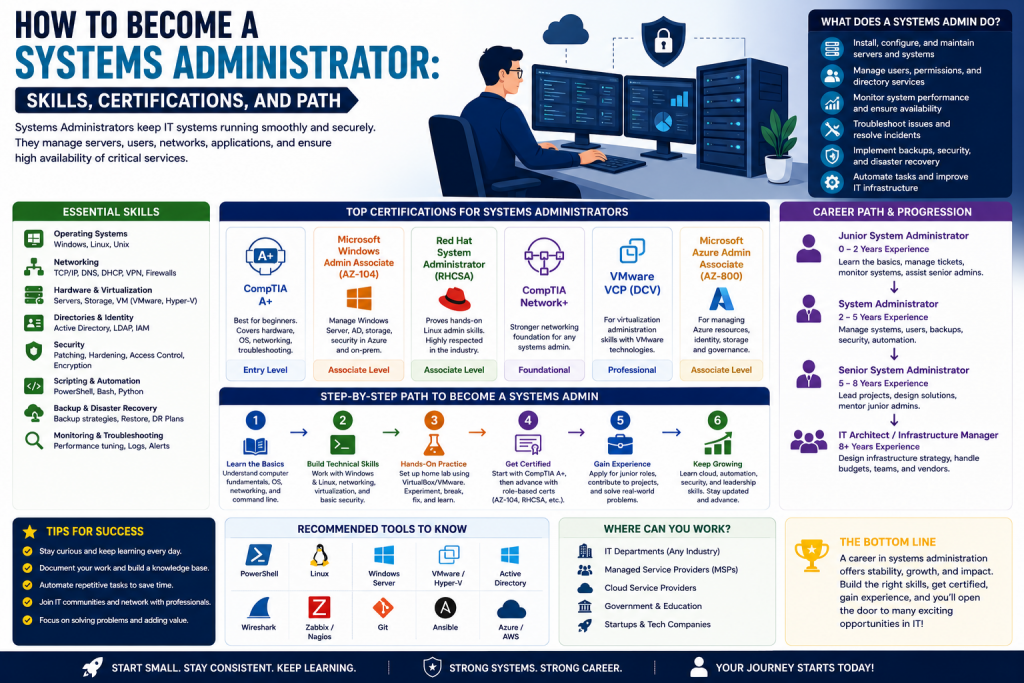
A systems administrator is one of the most important roles in the IT industry. This professional is responsible for maintaining, configuring, and ensuring the reliable operation of computer systems and networks within an organization. If systems go down, businesses can suffer downtime, financial loss, and productivity issues. Because of this, systems administrators play a critical role in keeping technology environments stable and secure.
Becoming a systems administrator is not an overnight process. It requires a combination of education, hands-on experience, continuous learning, and often professional certifications. Most people do not start directly in this role. Instead, they build their careers step by step, starting from entry-level IT positions and gradually moving upward. With the right approach, anyone with dedication and curiosity about technology can work toward this career path.
Understanding the Role of a Systems Administrator
Before pursuing this career, it is important to understand what the job actually involves. A systems administrator works behind the scenes to ensure that an organization’s IT infrastructure runs smoothly. This includes managing servers, installing and updating software, monitoring system performance, and troubleshooting technical problems.
They are also responsible for maintaining user accounts, managing permissions, ensuring data security, and sometimes handling backup and recovery systems. In many organizations, systems administrators also support cloud environments and virtual machines.
The job requires a mix of technical knowledge and problem-solving ability. Since issues can arise at any time, systems administrators often need to respond quickly and efficiently to prevent disruptions.
Starting Your Journey in Information Technology
Most systems administrators begin their careers in entry-level IT positions. These roles help build foundational skills that are essential for future advancement. Common starting positions include help desk support, technical support specialist, or desktop support technician.
In these roles, you typically assist users with everyday technical issues such as software installation, password resets, hardware troubleshooting, and basic network problems. While these tasks may seem simple, they provide valuable exposure to real-world IT environments.
This stage is important because it helps you develop communication skills, problem-solving abilities, and technical confidence. You also begin to understand how IT systems are used in a business environment.
Building Technical Skills Through Learning
Education and training are essential for anyone aiming to become a systems administrator. While a formal degree in computer science or information technology can be helpful, it is not always required. Many professionals enter the field through certifications and self-paced learning.
At the beginning of your journey, focus on core IT concepts. These include operating systems, networking fundamentals, hardware components, and basic security principles. Understanding how Windows and Linux systems work is especially important since these are widely used in enterprise environments.
Practical training is just as important as theoretical knowledge. Setting up virtual labs at home can help you practice real-world tasks such as configuring servers, managing networks, and troubleshooting system issues. This hands-on experience can significantly improve your skills and confidence.
The Importance of Certifications
Certifications are a key part of building credibility in the IT industry. They demonstrate that you have verified knowledge and skills in specific areas, which can make it easier to secure your first job and advance your career.
One of the most widely recognized entry-level certifications focuses on general IT support skills. It covers topics such as hardware installation, operating system configuration, troubleshooting, and basic networking. This certification is often recommended for beginners because it builds a strong foundation.
Another important certification focuses on Windows environments and endpoint management. It includes skills related to system configuration, security settings, cloud integration, and device management. This type of certification is particularly useful for those planning to work in organizations that rely heavily on Microsoft technologies.
Networking certifications are also highly valuable. They cover how data moves across networks, how routers and switches function, and how to secure network communication. Understanding networking is essential for systems administrators since almost every IT system depends on network connectivity.
Security certifications are becoming increasingly important as well. They teach how to protect systems from cyber threats, manage risks, and implement security best practices.
Gaining Real-World Experience
Experience is one of the most important factors in becoming a systems administrator. Employers often prefer candidates who have worked in real IT environments rather than those with only theoretical knowledge.
As you work in entry-level roles, try to go beyond basic job responsibilities. Take initiative to learn how systems are configured and maintained. Ask questions, observe senior technicians, and volunteer for more complex tasks whenever possible.
Working closely with experienced professionals can help you understand advanced concepts such as server management, virtualization, and system automation. This exposure prepares you for more advanced responsibilities in the future.
Learning from Mentorship and Collaboration
Having a mentor in the IT field can significantly accelerate your growth. A mentor is usually an experienced systems administrator or IT professional who can guide you, answer questions, and provide career advice.
Mentorship allows you to learn practical insights that are not always covered in training courses. You can observe how experienced professionals handle complex situations, manage systems, and make technical decisions.
In addition to mentorship, teamwork is also important. IT environments often require collaboration between different teams such as network engineers, security specialists, and developers. Learning how to work effectively with others will improve your ability to succeed in larger organizations.
Advancing Toward a Systems Administrator Role
Once you have gained experience in entry-level IT positions and developed your technical skills, you can start preparing for a systems administrator role. At this stage, it is important to continue expanding your knowledge.
Focus on advanced topics such as server administration, cloud computing, network infrastructure, and system security. Many organizations now use cloud platforms, so understanding cloud services is becoming increasingly important.
You should also become comfortable with scripting and automation tools. These tools help systems administrators perform repetitive tasks more efficiently and manage large environments more effectively.
Certifications at this stage can include more advanced networking, security, and cloud-focused credentials. These certifications demonstrate that you are capable of handling more complex IT responsibilities.
Specializing in a Technical Area
As you grow in your career, you may choose to specialize in a specific area of systems administration. Specialization can help you develop deeper expertise and increase your career opportunities.
One common specialization is networking. Network administrators focus on managing and maintaining organizational networks, ensuring connectivity, and optimizing performance.
Another specialization is database administration. This involves managing data systems, ensuring data integrity, and optimizing database performance.
Cybersecurity is another highly in-demand field. Security specialists focus on protecting systems from cyber threats, monitoring vulnerabilities, and implementing security measures.
Cloud computing is also a rapidly growing area. Cloud specialists manage cloud-based systems and ensure that services remain scalable, reliable, and secure.
Choosing a specialization often depends on your interests and career goals. Many professionals naturally move toward a specialization after gaining general experience.
Career Growth Beyond Systems Administration
Becoming a systems administrator is not the end of the journey. There are several advanced career paths available for those who want to continue growing.
One option is becoming a systems engineer. This role focuses more on designing and building IT systems rather than maintaining them. Systems engineers often work on implementing new technologies and improving infrastructure. They are involved in planning how different components of an IT environment will work together, including servers, networks, storage systems, and cloud platforms. Unlike systems administrators who mainly focus on day-to-day operations and troubleshooting, systems engineers take a more strategic and design-oriented approach.
In many organizations, systems engineers are responsible for evaluating business requirements and translating them into technical solutions. This may include selecting appropriate hardware, designing system architectures, and ensuring that systems are scalable and efficient. They also play an important role in testing new technologies before they are deployed into production environments. This helps reduce risks and ensures smooth integration with existing systems.
Systems engineers often collaborate with different IT teams, including network engineers, security specialists, and software developers. Strong communication skills are important because they must explain technical solutions in a way that aligns with business goals. They also need a solid understanding of performance optimization, system reliability, and disaster recovery planning.
As technology environments become more complex, the demand for systems engineers continues to grow. Organizations rely on them to build stable, secure, and high-performing infrastructures that support long-term business needs.
Another advanced role is systems architect. This position involves designing large-scale IT systems and making high-level decisions about technology infrastructure. It requires deep technical knowledge and strong planning skills.
Both of these roles typically come with higher responsibilities and better compensation, but they also require significant experience and expertise.
Continuous Learning and Professional Growth
The IT industry evolves rapidly, which means continuous learning is essential. Technologies, tools, and security threats are constantly changing. A successful systems administrator must stay updated with new developments.
This can be achieved through ongoing training, certifications, reading technical resources, and practicing new skills. Many professionals also participate in online communities and technical discussions to stay informed.
The most successful IT professionals are those who never stop learning. As long as you continue developing your skills, you will always have opportunities for growth.
Conclusion
Becoming a systems administrator is a journey that requires dedication, patience, and continuous learning. It begins with foundational IT knowledge and entry-level support roles, followed by hands-on experience and certification development. Over time, with consistent effort, you can progress into a full systems administration role.
The key to success is building a strong technical foundation, gaining real-world experience, and staying committed to professional growth. With persistence and the right mindset, a career as a systems administrator can lead to long-term stability and advanced opportunities in the IT industry.
Continue exploring the technologies and certification concepts that matter most to you.