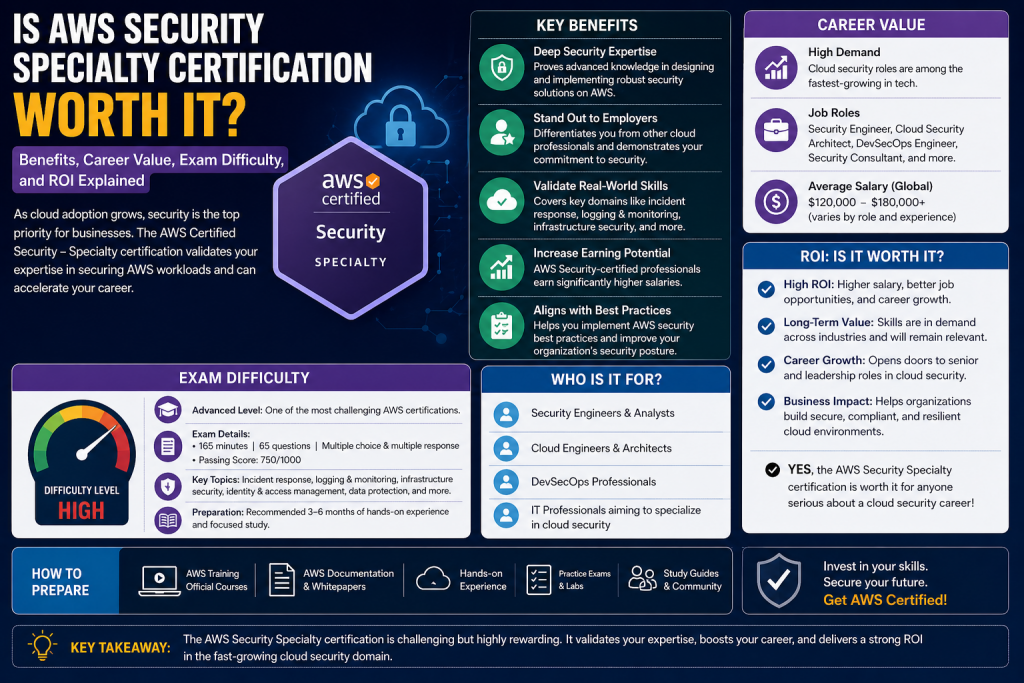
Determining whether a certification is worth pursuing depends on several factors, including your current skill level, career goals, and the demand for those skills in the job market. In the field of information technology, certifications often act as proof of knowledge and competence. They help employers quickly assess whether a candidate possesses the required expertise for a specific role.
However, not all certifications carry the same weight. Some are designed for beginners and help individuals break into the industry, while others are more advanced and focus on specialization. Certifications related to cloud computing and cybersecurity tend to be among the most valuable because these areas are experiencing rapid growth and constant innovation.
Cloud platforms have become the backbone of modern IT infrastructure. Organizations of all sizes rely on cloud services to store data, run applications, and scale operations efficiently. With this widespread adoption comes an increased need for security. Protecting cloud environments is not just a technical requirement but a business necessity. This is where specialized certifications like the AWS Security Specialty come into play.
Overview of the AWS Security Specialty Certification
The AWS Certified Security Specialty certification is designed for professionals who want to demonstrate their expertise in securing cloud environments within Amazon Web Services. It focuses specifically on security-related tasks and responsibilities, making it different from general cloud certifications.
This certification is considered mid-to-advanced level. It assumes that candidates already have experience working with AWS services and understand basic cloud concepts. Instead of teaching foundational knowledge, it validates a deeper understanding of how to implement and manage security controls effectively.
The certification covers a wide range of topics related to cloud security. These include protecting sensitive data, managing access controls, monitoring systems for suspicious activity, and responding to security incidents. It also emphasizes the importance of balancing security with cost and operational efficiency.
As cloud environments become more complex, the need for specialized security knowledge increases. The AWS Security Specialty certification addresses this need by focusing on real-world scenarios and practical skills.
Key Concepts and Focus Areas
One of the most important aspects of the AWS Security Specialty certification is its focus on practical knowledge. Candidates are expected to understand how to apply security principles in real-world situations rather than simply memorizing theoretical concepts.
Data protection is a central theme throughout the certification. This involves understanding how to classify data based on sensitivity and applying appropriate security measures to protect it. Encryption plays a major role here, both for data stored in the cloud and data being transmitted between systems.
Identity and access management is another critical area. Controlling who has access to resources and what actions they can perform is essential for maintaining security. Candidates must be able to design and implement policies that enforce least privilege access, reducing the risk of unauthorized activity.
Infrastructure security focuses on protecting the underlying systems and networks that support cloud applications. This includes configuring firewalls, securing virtual networks, and ensuring that resources are not exposed to unnecessary risks. Understanding how to design secure architectures is a key skill in this area.
Monitoring and logging are also emphasized. Being able to detect unusual behavior and respond quickly to potential threats is crucial in a cloud environment. This requires familiarity with tools that collect and analyze logs, as well as the ability to interpret that data effectively.
Governance and compliance round out the core areas. Organizations must adhere to various regulations and standards when handling data. The certification requires an understanding of how to implement controls that meet these requirements while maintaining operational efficiency.
Recommended Experience and Prerequisites
Before attempting the AWS Security Specialty certification, it is important to have a solid foundation in both cloud computing and cybersecurity. This is not an entry-level certification, and candidates without prior experience may find it challenging.
Hands-on experience with AWS services is particularly important. Candidates should be comfortable working with services such as compute instances, storage solutions, and networking components. More importantly, they should know how to secure these services using AWS tools and best practices.
Experience with security concepts outside of AWS is also valuable. This includes knowledge of encryption methods, network security, access control mechanisms, and threat detection. Having a broad understanding of cybersecurity principles makes it easier to apply them within a cloud environment.
It is generally recommended that candidates have at least a couple of years of experience working with AWS security features. Additionally, several years of general IT experience can provide a strong foundation for understanding complex security scenarios.
Practical experience is especially important because the certification exam focuses on real-world applications. Candidates are expected to analyze situations and choose the best course of action based on multiple factors.
Understanding the Exam Structure
The AWS Security Specialty exam is designed to test both knowledge and practical skills. It consists of multiple-choice and multiple-answer questions that cover a wide range of topics related to cloud security.
Candidates are given a set amount of time to complete the exam, which requires efficient time management. The questions are often scenario-based, meaning that candidates must carefully read and analyze each situation before selecting an answer.
The exam does not rely heavily on memorization. Instead, it focuses on the ability to apply knowledge in practical situations. This includes understanding how different AWS services interact and how to secure them effectively.
Another important aspect of the exam is decision-making. Candidates may be presented with multiple valid solutions and must choose the one that best meets the requirements of the scenario. This often involves considering factors such as cost, performance, and security.
The inclusion of advanced topics, such as securing modern applications and handling sensitive data, reflects the evolving nature of cloud security. Candidates must stay up to date with current best practices to perform well on the exam.
Cost and Investment Considerations
The cost of the AWS Security Specialty certification exam is higher than many entry-level certifications. This reflects its advanced nature and the level of expertise required to pass.
While the initial cost may seem significant, it is important to view it as an investment in your career. Certifications can lead to better job opportunities, higher salaries, and increased job security. For many professionals, the long-term benefits outweigh the upfront cost.
In addition to the exam fee, candidates may also invest in study materials, training courses, and practice exams. These resources can help improve understanding and increase the chances of passing the exam on the first attempt.
Time is another important factor to consider. Preparing for the certification requires a significant commitment, especially for those balancing work and other responsibilities. However, the knowledge gained during this process can be valuable even beyond the certification itself.
The Role of Cloud Security in Modern IT
Cloud security has become one of the most important aspects of modern IT infrastructure. As organizations move their operations to the cloud, they must ensure that their data and applications are protected from threats.
Unlike traditional on-premises environments, cloud security operates on a shared responsibility model. This means that while the cloud provider is responsible for securing the underlying infrastructure, the customer is responsible for securing their own data and applications.
This division of responsibility can create challenges, especially for organizations that are new to cloud computing. Misconfigurations and poor security practices can lead to vulnerabilities that attackers may exploit.
Professionals with expertise in cloud security are essential for addressing these challenges. They are responsible for designing secure systems, implementing best practices, and responding to potential threats.
The AWS Security Specialty certification helps validate these skills. It demonstrates that a professional understands the complexities of cloud security and can effectively protect cloud-based resources.
Career Relevance of the Certification
The AWS Security Specialty certification is highly relevant for professionals working in roles that involve cloud computing and cybersecurity. This includes positions such as cloud engineers, security engineers, DevOps engineers, and system administrators.
For cloud engineers, the certification provides a deeper understanding of how to build secure systems. It ensures that security is integrated into the design process rather than added as an afterthought.
DevOps engineers benefit from learning how to incorporate security into automated workflows. This includes securing code pipelines and ensuring that applications are deployed safely.
System administrators can use the certification to enhance their ability to manage secure environments, especially in hybrid setups that combine on-premises and cloud infrastructure.
Security engineers, in particular, can use the certification to validate their expertise in cloud security. It helps demonstrate their ability to protect systems and respond to threats effectively.
Why This Certification Stands Out
There are many certifications available in the field of IT, but the AWS Security Specialty stands out for several reasons. One of the main factors is its focus on practical skills. It goes beyond theoretical knowledge and emphasizes real-world applications.
Another reason is the growing importance of AWS as a cloud platform. Many organizations rely on AWS for their operations, making skills related to this platform highly valuable.
The certification also aligns with current industry trends. As security becomes a top priority, professionals with specialized knowledge are in high demand. This certification helps meet that demand by providing a clear benchmark for expertise.
Additionally, the certification encourages continuous learning. Preparing for the exam requires staying up to date with the latest security practices and technologies. This helps professionals remain relevant in a rapidly changing field.
Setting Expectations Before You Begin
Before deciding to pursue the AWS Security Specialty certification, it is important to set realistic expectations. This is not an easy certification, and it requires dedication and effort to succeed.
Candidates should be prepared to invest time in studying and practicing. This includes gaining hands-on experience with AWS services and understanding how to secure them effectively.
It is also important to approach the certification with a learning mindset. While passing the exam is the goal, the knowledge gained during the preparation process is equally valuable.
Understanding your own goals can help determine whether this certification is the right choice. If you are looking to specialize in cloud security and advance your career, it can be a worthwhile investment.
At the same time, those who are new to IT or cloud computing may benefit from starting with more foundational certifications before attempting this one.
Exam Domains and What They Really Mean
To fully understand the AWS Security Specialty certification, it is important to explore the core domains that shape the exam. These domains represent the knowledge areas that AWS considers essential for securing cloud environments. Each domain focuses on a specific aspect of security, but in practice, they are deeply interconnected.
The first domain centers on detection. This involves identifying potential security threats before they can cause significant damage. In a cloud environment, detection relies heavily on monitoring tools, logging systems, and automated alerts. Professionals must understand how to configure these tools to track activity across AWS services. It is not enough to simply enable logging; the real skill lies in analyzing logs and recognizing patterns that indicate suspicious behavior.
The incident response domain focuses on what happens after a potential threat is identified. Responding effectively to a security incident requires a clear plan and the ability to act quickly. This includes isolating affected resources, minimizing damage, and restoring normal operations. Automation plays a major role here, as many organizations use predefined workflows to handle common security events.
Infrastructure security is another critical domain. It involves protecting the underlying systems that support applications and data. This includes securing virtual machines, configuring network boundaries, and ensuring that only authorized traffic is allowed. Professionals must understand how to design architectures that reduce exposure to threats while maintaining performance and scalability.
Identity and access management is one of the most heavily weighted domains in the exam. It focuses on controlling access to resources and ensuring that users only have the permissions they need. This principle, known as least privilege, is a cornerstone of cloud security. Misconfigured permissions are a common cause of security breaches, making this area especially important.
Data protection covers the methods used to secure sensitive information. This includes encryption, key management, and secure data storage practices. Professionals must understand how to protect data both at rest and in transit, as well as how to manage encryption keys securely.
The final domain, governance and security foundations, ties everything together. It involves creating policies, ensuring compliance with regulations, and managing risk. This domain requires a balance between technical knowledge and business awareness, as security decisions often impact cost and operational efficiency.
Real-World Application of AWS Security Skills
One of the reasons the AWS Security Specialty certification is highly regarded is its focus on real-world scenarios. The skills required to pass the exam are the same skills used by professionals working in cloud environments every day.
Consider a situation where an organization needs to store sensitive customer data. A security professional must determine how to protect that data using encryption, access controls, and monitoring tools. They must also ensure that the solution meets regulatory requirements and does not introduce unnecessary complexity.
Another example involves securing a web application hosted on AWS. This requires configuring firewalls, protecting against common attacks, and ensuring that communication between components is secure. It also involves monitoring traffic and responding to any suspicious activity.
In large organizations, security professionals often work with multiple teams to ensure that security is integrated into every stage of the development process. This includes collaborating with developers, system administrators, and network engineers. The ability to communicate effectively and understand different perspectives is just as important as technical expertise.
The certification prepares candidates for these types of challenges by emphasizing practical knowledge. Instead of focusing solely on theory, it requires an understanding of how to implement solutions in real-world environments.
Common Challenges Faced by Candidates
Preparing for the AWS Security Specialty certification can be challenging, especially for those who are not familiar with advanced security concepts. One of the most common difficulties is the breadth of topics covered in the exam.
Candidates must have a deep understanding of multiple AWS services and how they interact with each other. This includes not only knowing what each service does but also how to secure it effectively. Keeping track of all these details can be overwhelming.
Another challenge is the scenario-based nature of the exam. Questions often present complex situations that require careful analysis. Candidates must be able to identify the key issues and choose the best solution from several options. This requires both knowledge and critical thinking skills.
Time management is also a concern. The exam includes a large number of questions, and candidates must work efficiently to complete them within the allotted time. Spending too much time on a single question can impact overall performance.
Additionally, many candidates struggle with understanding trade-offs. In real-world scenarios, there is often no perfect solution. Security measures may increase costs or reduce performance, and candidates must decide which option provides the best balance.
Overcoming these challenges requires a combination of study, practice, and hands-on experience. Simply reading about AWS services is not enough; candidates must actively use them to gain a deeper understanding.
Study Strategies for Success
Preparing for the AWS Security Specialty certification requires a structured approach. One of the most effective strategies is to combine theoretical learning with practical experience.
Hands-on practice is essential. Candidates should spend time working with AWS services, experimenting with different configurations, and implementing security measures. This helps reinforce concepts and makes it easier to understand how they apply in real situations.
Using multiple study resources can also be beneficial. This includes official documentation, online courses, practice exams, and community forums. Each resource offers a different perspective and can help fill knowledge gaps.
Practice exams are particularly useful for understanding the format of the test. They help candidates become familiar with the types of questions they will encounter and identify areas where they need improvement. Reviewing incorrect answers is just as important as answering questions correctly, as it provides insight into common mistakes.
Creating a study plan can help manage time effectively. Breaking down topics into manageable sections and setting goals for each study session can make the preparation process more organized and less overwhelming.
It is also important to stay consistent. Regular study sessions, even if they are short, are more effective than occasional long sessions. Consistency helps build and retain knowledge over time.
The Role of Hands-On Experience
While theoretical knowledge is important, hands-on experience plays a crucial role in preparing for the AWS Security Specialty certification. Many of the concepts covered in the exam are best understood through practical application.
Working directly with AWS services allows candidates to see how different components interact and how security measures are implemented. This includes tasks such as configuring access controls, setting up encryption, and monitoring system activity.
Hands-on experience also helps develop problem-solving skills. When working in a real environment, unexpected issues often arise. Learning how to troubleshoot these problems and find solutions is an important part of becoming a skilled security professional.
Employers value practical experience because it demonstrates the ability to apply knowledge in real situations. The certification reinforces this by focusing on scenarios that reflect actual challenges faced in the workplace.
For those who do not have access to a professional AWS environment, creating a personal lab can be a good alternative. This allows candidates to experiment with different configurations and gain experience without affecting production systems.
Career Opportunities After Certification
Earning the AWS Security Specialty certification can open the door to a variety of career opportunities. As organizations continue to adopt cloud technologies, the demand for skilled security professionals is increasing.
Cloud security engineers are among the most common roles for individuals with this certification. These professionals are responsible for designing and implementing security measures to protect cloud environments. They work closely with other teams to ensure that security is integrated into all aspects of the system.
DevOps engineers can also benefit from this certification. By understanding security best practices, they can build secure deployment pipelines and ensure that applications are protected throughout the development process.
System administrators who manage cloud-based infrastructure can use this certification to enhance their skills. It helps them understand how to secure systems and manage access effectively.
Solutions architects may also find value in this certification. It enables them to design systems that are not only functional but also secure. This is especially important for organizations that handle sensitive data or operate in regulated industries.
Security analysts and consultants can use the certification to demonstrate their expertise and provide valuable insights to organizations. It can also lead to opportunities in specialized areas such as compliance and risk management.
Salary Expectations and Market Demand
One of the factors that make the AWS Security Specialty certification appealing is its potential impact on salary. Professionals with advanced cloud security skills are often among the highest-paid in the IT industry.
Organizations are willing to invest in security because the cost of a data breach can be extremely high. This creates a strong demand for individuals who can protect systems and prevent incidents.
The certification serves as proof of expertise, making candidates more attractive to employers. It can also provide leverage during salary negotiations, especially for those with relevant experience.
Market demand for cloud security professionals continues to grow as more companies move their operations to the cloud. This trend is expected to continue, making this certification a valuable asset for long-term career growth.
However, it is important to remember that certification alone does not guarantee a high salary. Experience, skills, and the ability to apply knowledge in real-world situations are equally important.
Comparing AWS Security Specialty to Other Certifications
When deciding whether to pursue the AWS Security Specialty certification, it is helpful to compare it to other certifications in the field. This can provide a clearer understanding of its value and how it fits into your career path.
General security certifications focus on broad concepts that apply across different platforms. These certifications are useful for building a strong foundation but may not provide the depth needed for cloud-specific roles.
Cloud-specific certifications, on the other hand, focus on the tools and services used within a particular platform. The AWS Security Specialty certification falls into this category, offering specialized knowledge that is directly applicable to AWS environments.
Compared to entry-level cloud certifications, this one is more advanced and requires a deeper understanding of security concepts. It is designed for professionals who already have experience and want to specialize further.
Choosing the right certification depends on your goals. If you are new to cloud computing, starting with a foundational certification may be more appropriate. If you already have experience and want to focus on security, the AWS Security Specialty certification can be a strong choice.
Long-Term Benefits of Certification
Beyond immediate career opportunities, the AWS Security Specialty certification offers long-term benefits. One of the most significant advantages is continuous learning.
The process of preparing for the certification helps build a strong foundation in cloud security. This knowledge can be applied in various roles and adapted as technologies evolve.
The certification also encourages professionals to stay updated with industry trends. Cloud security is a rapidly changing field, and staying current is essential for maintaining relevance.
Another long-term benefit is professional credibility. Having a recognized certification can enhance your reputation and make you a trusted resource within your organization.
It can also lead to networking opportunities. Being part of a community of certified professionals allows you to share knowledge, learn from others, and stay informed about new developments.
Ultimately, the value of the certification extends beyond passing the exam. It contributes to personal and professional growth, making it a worthwhile investment for many IT professionals.
Who Should Consider the AWS Security Specialty Certification
The AWS Security Specialty certification is not designed for everyone in the IT field. It is most valuable for professionals who already have a foundation in cloud computing and want to specialize in security. Understanding whether this certification aligns with your career path is an important step before committing the time and effort required to prepare for it.
Cloud engineers are among the primary candidates for this certification. Their role involves designing and managing cloud infrastructure, and security is a critical part of that responsibility. While cloud platforms provide built-in security features, these features must be properly configured. A cloud engineer with strong security knowledge can ensure that systems are built with protection in mind from the start, reducing the risk of vulnerabilities.
DevOps engineers also benefit significantly from this certification. Their work focuses on automating development and deployment processes, often using cloud-native tools. As automation increases, so does the risk of security gaps. A small misconfiguration in a deployment pipeline can expose sensitive data or create access issues. With security expertise, DevOps professionals can integrate protective measures into every stage of the pipeline, ensuring that speed and efficiency do not come at the cost of safety.
System administrators, especially those working in hybrid environments, can gain valuable insights from this certification. Many organizations operate a mix of on-premises and cloud systems, and managing security across these environments can be complex. The certification helps administrators understand how to extend security practices into the cloud and maintain consistency across different platforms.
Security engineers and analysts are another group that can benefit greatly. For them, the certification serves as validation of their cloud security skills. It demonstrates their ability to handle modern security challenges and apply best practices within a widely used cloud platform. This can lead to more advanced roles and greater responsibilities within an organization.
Solutions architects may also find this certification useful. Their role involves designing systems that meet both technical and business requirements. Security is a key consideration in this process, and having specialized knowledge allows architects to create solutions that are not only functional but also resilient against threats.
How the Certification Impacts Daily Work
Earning the AWS Security Specialty certification does more than enhance a resume. It directly influences how professionals approach their daily tasks. The knowledge gained during preparation can be applied to real-world scenarios, improving both efficiency and effectiveness.
One of the most noticeable impacts is a stronger focus on proactive security. Instead of reacting to issues after they occur, certified professionals are better equipped to anticipate potential risks and address them early. This shift in mindset can significantly reduce the likelihood of security incidents.
Another benefit is improved decision-making. Cloud environments often present multiple ways to achieve the same goal, each with its own advantages and disadvantages. Professionals with security expertise can evaluate these options more effectively, choosing solutions that provide the best balance between protection, cost, and performance.
Collaboration within teams also improves. Security is not the responsibility of a single department; it involves developers, operations teams, and management. Professionals who understand security can communicate more effectively with different stakeholders, ensuring that security considerations are included in all aspects of a project.
The certification also encourages the use of automation in security practices. Automated monitoring, alerting, and response mechanisms can save time and reduce the risk of human error. By implementing these tools, professionals can focus on more complex tasks while maintaining a strong security posture.
The Importance of Security in Cloud-Native Environments
Cloud-native environments introduce new challenges that require a different approach to security. Traditional methods are often not sufficient, as cloud systems are more dynamic and distributed. Resources can be created and destroyed quickly, making it difficult to maintain consistent security controls.
One of the key challenges is visibility. In a cloud environment, resources are spread across different regions and services. Keeping track of all these components and ensuring they are secure requires advanced monitoring tools and practices. The AWS Security Specialty certification emphasizes the importance of visibility and teaches professionals how to achieve it.
Another challenge is managing access at scale. As organizations grow, the number of users and services increases. Ensuring that each entity has the correct permissions without creating unnecessary risks is a complex task. The certification provides guidance on implementing scalable access control mechanisms that maintain security without limiting productivity.
Data protection is also more complex in cloud-native environments. Data may move between different services and locations, increasing the risk of exposure. Professionals must understand how to secure data throughout its lifecycle, from creation to storage and transmission.
The certification addresses these challenges by focusing on modern security practices. It prepares professionals to work in environments where change is constant and adaptability is essential.
Misconceptions About the AWS Security Specialty
There are several misconceptions about the AWS Security Specialty certification that can influence how it is perceived. One common belief is that the certification is only useful for security specialists. In reality, many roles within IT can benefit from a deeper understanding of security.
Another misconception is that passing the exam guarantees expertise. While the certification demonstrates knowledge, true expertise comes from applying that knowledge in real-world situations. Continuous learning and hands-on experience are necessary to maintain and improve skills.
Some people also believe that the certification is too difficult to be worth the effort. While it is challenging, this difficulty reflects its value. Certifications that require a higher level of skill tend to be more respected by employers and can lead to better opportunities.
There is also a tendency to underestimate the importance of cloud-specific security knowledge. General cybersecurity skills are valuable, but cloud environments have unique characteristics that require specialized understanding. The AWS Security Specialty certification helps bridge this gap.
Balancing Cost, Time, and Effort
Pursuing the AWS Security Specialty certification requires a significant investment of time, effort, and money. Understanding how to balance these factors is essential for making an informed decision.
The financial cost includes the exam fee as well as any study materials or training courses. While this may seem expensive, it is important to consider the potential return on investment. Higher salaries and better job opportunities can offset the initial cost over time.
Time is another critical factor. Preparing for the exam can take several months, depending on your experience level and availability. Creating a realistic study schedule can help manage this commitment and prevent burnout.
Effort is perhaps the most important consideration. The certification requires a deep understanding of complex topics, and success depends on consistent study and practice. This includes not only reading and watching tutorials but also working with AWS services directly.
Balancing these factors involves setting clear goals and staying motivated. Understanding why you want the certification can help maintain focus throughout the preparation process.
The Evolving Nature of Cloud Security
Cloud security is not a static field. New technologies, threats, and best practices emerge regularly, requiring professionals to stay updated. The AWS Security Specialty certification reflects this dynamic nature by including topics that address current trends.
One of the most significant developments in recent years is the integration of artificial intelligence and machine learning into cloud environments. These technologies introduce new security considerations, such as protecting training data and ensuring the integrity of models.
Another trend is the increasing importance of automation. As systems become more complex, manual processes are no longer sufficient. Automated security tools can help manage large-scale environments more effectively, reducing the risk of errors.
Regulatory requirements are also evolving. Organizations must comply with various standards and laws, which can change over time. Professionals need to stay informed about these requirements and understand how to implement them in cloud environments.
The certification encourages continuous learning, ensuring that professionals remain relevant as the field evolves. This adaptability is one of the key benefits of pursuing advanced certifications.
Is the AWS Security Specialty Certification Worth It
The question of whether the AWS Security Specialty certification is worth it ultimately depends on your individual circumstances. For professionals working with cloud technologies, especially those focused on AWS, the certification can be highly valuable.
It provides a structured way to learn advanced security concepts and validates your ability to apply them. This can lead to increased confidence, better job performance, and new career opportunities.
The certification is particularly beneficial for those looking to specialize in cloud security. As demand for these skills continues to grow, having a recognized credential can set you apart from other candidates.
However, it is important to approach the certification with realistic expectations. It requires a significant investment of time and effort, and success is not guaranteed. Those who are new to cloud computing may need to build foundational skills before attempting this certification.
For experienced professionals, the benefits often outweigh the challenges. The knowledge gained during preparation can have a lasting impact on your career, even beyond the certification itself.
Building a Long-Term Career Path with AWS Security
Earning the AWS Security Specialty certification can be a stepping stone toward a long-term career in cloud security. It provides a strong foundation that can be built upon with additional experience and certifications.
Professionals can choose to deepen their expertise in specific areas, such as identity management, data protection, or incident response. This specialization can lead to advanced roles and increased responsibility.
Continuous learning is essential for long-term success. Staying updated with new technologies and best practices ensures that your skills remain relevant. This may involve pursuing additional certifications, attending training sessions, or participating in professional communities.
Networking is another important aspect of career development. Connecting with other professionals in the field can provide valuable insights and opportunities. Sharing knowledge and experiences can help you grow and stay informed about industry trends.
The AWS Security Specialty certification is not an endpoint but a milestone in a broader career journey. It represents a commitment to excellence and a willingness to invest in your professional development.
Conclusion
The AWS Security Specialty certification stands out as a valuable credential for IT professionals who want to specialize in cloud security. It goes beyond basic knowledge, focusing on practical skills and real-world applications that are essential in today’s cloud-driven environments.
While the certification requires a significant investment of time, effort, and money, the potential benefits make it a worthwhile consideration. It can enhance your technical expertise, improve your career prospects, and position you as a trusted professional in a rapidly growing field.
However, its value ultimately depends on your goals and experience. For those already working with AWS or aiming to move into cloud security roles, it can be a powerful tool for career advancement. For beginners, it may be more appropriate to build foundational skills before pursuing this certification.
In a world where cloud security is becoming increasingly important, having specialized knowledge can make a meaningful difference. The AWS Security Specialty certification provides a pathway to gaining that knowledge and demonstrating it to employers.
Choosing to pursue this certification is a strategic decision. With the right preparation and mindset, it can open doors to new opportunities and contribute to long-term professional growth.
Continue exploring the technologies and certification concepts that matter most to you.