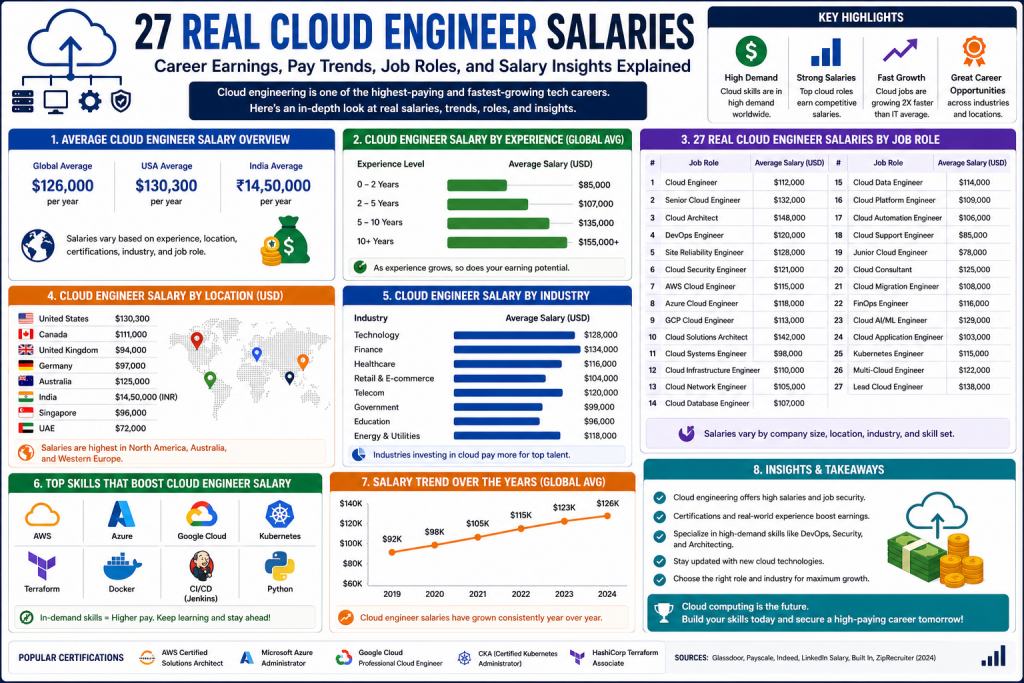
Cloud engineering has become one of the most influential and financially rewarding career paths in modern information technology, yet it remains one of the least clearly defined professional roles in the digital workforce. Unlike traditional IT jobs such as network administrator, systems analyst, or database manager—roles that often come with established responsibilities and predictable salary structures—the title “cloud engineer” can mean very different things depending on the organization, industry, and technological environment involved. This ambiguity creates both opportunity and confusion. For aspiring professionals, the lack of a universal definition can make career planning difficult. For experienced technologists, however, it opens the door to specialization, negotiation, and substantial earning potential.
The rise of cloud computing fundamentally changed how businesses build, operate, and scale their digital infrastructure. Organizations no longer rely solely on local servers or on-premises systems. Instead, they increasingly use cloud platforms to host applications, store data, secure networks, automate workflows, and improve business agility. This transformation has made cloud engineers essential to nearly every sector, from healthcare and education to finance, manufacturing, and government. As a result, cloud engineering salaries often reflect not only technical skill but also business impact, platform expertise, and strategic value.
Defining the Cloud Engineer Role in a Complex Technology Landscape
At its core, a cloud engineer is responsible for designing, implementing, managing, and optimizing cloud-based solutions that support business operations. However, that broad definition barely scratches the surface. In practice, cloud engineers may serve as architects, administrators, migration specialists, security engineers, DevOps professionals, automation experts, or infrastructure strategists.
In one organization, a cloud engineer may primarily manage virtual machines, storage systems, and network configurations. In another, the same title may involve building scalable application environments, configuring infrastructure as code, deploying containers, or securing multi-cloud ecosystems. Some cloud engineers focus heavily on operational efficiency, while others concentrate on innovation and digital transformation.
This diversity in responsibilities is one of the main reasons salaries vary so widely. A cloud engineer handling basic cloud support tasks may earn significantly less than one leading enterprise cloud migrations or designing secure architectures for regulated industries. The title alone does not determine compensation—scope, complexity, and specialization do.
Because cloud computing touches nearly every digital function, employers often shape the role according to immediate business needs. Startups may expect cloud engineers to wear multiple hats, balancing architecture, deployment, and troubleshooting. Large enterprises may divide responsibilities into highly specialized teams, allowing cloud engineers to focus deeply on infrastructure, automation, governance, or security. This flexibility can make the profession highly adaptable, but it also means salary expectations must be informed by more than job titles.
National Salary Averages and Why They Only Tell Part of the Story
Across the broader market, cloud engineers are commonly associated with six-figure salaries. National averages frequently suggest compensation in the low-to-mid six figures, creating the impression that cloud engineering guarantees a lucrative career. While this is often true, averages can be misleading.
Salary averages combine entry-level, mid-career, and senior-level roles into one broad figure, often masking important distinctions. A junior cloud engineer entering the field may earn considerably less than the average, while a highly experienced engineer with advanced certifications and architectural responsibilities may far exceed it.
This broad salary spread reveals an important truth: cloud engineering is not a single salary bracket but rather a career spectrum. Early-career professionals may focus on deployment, support, and systems integration, while seasoned cloud engineers often transition into strategic planning, security leadership, or architecture. The broader and deeper your expertise becomes, the more likely your compensation rises sharply.
Another major factor is company maturity. Organizations in the early stages of cloud adoption may hire cloud engineers primarily for migration and setup. In contrast, companies with advanced cloud ecosystems may need experts in optimization, governance, disaster recovery, and automation at scale—roles that command significantly higher salaries.
Why Geography Has a Massive Impact on Cloud Engineer Earnings
One of the most dramatic influences on cloud engineer salaries is geography. Compensation can differ substantially depending on where you live and work, even when job responsibilities appear similar.
Major technology hubs and innovation-heavy regions tend to offer the highest salaries because they compete aggressively for specialized talent. These areas often include regions with large concentrations of enterprise software firms, cloud providers, AI companies, and high-growth startups. Employers in these markets may offer elevated compensation due to cost of living, competitive labor markets, and the strategic importance of cloud infrastructure.
By contrast, smaller cities or lower-density markets may offer lower average salaries, even when demand for cloud skills remains strong. In these locations, cloud engineers may still earn excellent incomes relative to local living costs, but headline salary figures may appear less impressive than those in premium technology corridors.
This geographic disparity presents a strategic career question: should cloud engineers relocate for higher salaries? In many cases, moving to a larger market can substantially increase earnings, but compensation should always be weighed against housing, taxes, transportation, and quality of life. A significantly higher salary in a major metropolitan area may not always produce a better financial outcome than a lower salary in a more affordable region.
Remote work has also changed this equation. Increasingly, cloud engineers can access high-paying opportunities without physically relocating, though compensation models vary. Some companies still align pay with employee location, while others compensate based on role value regardless of geography.
The Wide Salary Gap Between Entry-Level and Elite Cloud Engineers
Perhaps the most revealing insight about cloud engineering salaries is not the average salary itself, but the growing gap between low-end and high-end earners. In many markets, entry-level cloud engineers may earn respectable but moderate salaries, while top-tier professionals can command dramatically higher compensation.
This widening gap often reflects skill scarcity. Basic cloud platform familiarity is increasingly common, but mastery remains rare. Professionals who can design secure enterprise architectures, automate large-scale deployments, optimize cloud spending, and integrate advanced technologies often stand out immediately.
For example, organizations place exceptional value on cloud engineers who can:
- Lead cloud migration strategies
- Design disaster recovery frameworks
- Implement zero-trust cloud security
- Optimize cost efficiency across cloud environments
- Build CI/CD pipelines
- Integrate AI or machine learning cloud services
- Manage hybrid or multi-cloud ecosystems
These advanced capabilities transform cloud engineers from operational staff into strategic business enablers. As a result, salary growth can accelerate rapidly once an engineer moves beyond implementation into optimization and innovation.
Competition and the Credential Economy
Cloud engineering is a field where credentials can heavily influence compensation, but not all credentials carry equal weight. The salary premium associated with cloud expertise often depends on a combination of platform-specific knowledge, certifications, practical experience, and business outcomes.
Many employers seek evidence that a candidate understands not just cloud tools, but also how those tools solve business problems. This means certifications can act as salary multipliers when paired with hands-on expertise.
The increasing competitiveness of higher-paying cloud roles means that salary growth often requires continuous development. Employers frequently compare candidates not just on years of experience, but on:
- Platform mastery
- Automation capabilities
- Security understanding
- Architecture design
- Governance knowledge
- Cross-functional collaboration
In effect, cloud engineering rewards professionals who proactively shape their own value proposition.
Why Cloud Engineering Is More Than a Technical Role
One of the most important shifts in understanding cloud engineer salaries is recognizing that cloud engineering is not purely technical. Businesses rely on cloud engineers not just to maintain systems, but to improve speed, resilience, innovation, and profitability.
A cloud engineer who reduces infrastructure costs, improves deployment speed, strengthens cybersecurity, or enables global scaling can directly impact business performance. This strategic relevance is why many cloud engineers eventually transition into leadership pathways such as cloud architect, solutions architect, site reliability engineer, or cloud security specialist.
The more closely a cloud engineer’s work aligns with organizational success, the greater their salary leverage becomes.
Career Planning in a Profession Without a Fixed Definition
For newcomers, the vague definition of cloud engineering may seem frustrating. Yet this ambiguity can actually be an advantage. Because the profession remains flexible, individuals can shape their expertise around market needs.
Some may specialize in security and compliance. Others may pursue DevOps, automation, infrastructure, cost management, or AI integration. This means cloud engineering can be molded into a career that aligns with both passion and profitability.
Rather than asking, “What does a cloud engineer do?” a better question may be, “What business problems can I solve through cloud expertise?”
This mindset can significantly affect salary trajectory. Professionals who define themselves narrowly may limit earnings, while those who build specialized, business-relevant expertise often command stronger compensation.
The Strategic Outlook for Future Cloud Engineers
Cloud adoption continues to expand across industries, making cloud engineering one of the most resilient technology career paths. Businesses increasingly depend on digital transformation, remote infrastructure, cybersecurity, and scalable computing. These trends suggest that cloud engineers will remain in high demand for years to come.
However, demand alone does not guarantee maximum earnings. The most successful cloud engineers are often those who:
- Understand evolving business needs
- Learn continuously
- Build platform depth
- Specialize strategically
- Combine technical and operational thinking
The salary potential in cloud engineering is substantial, but the profession rewards initiative. Simply entering the field may provide strong earnings, but building expertise intentionally can create exceptional career outcomes.
Cloud Platforms, Certifications, and Specializations That Shape Cloud Engineer Salaries
While geography, industry demand, and company size all influence cloud engineer compensation, one of the most powerful factors shaping salary growth is specialization. In cloud engineering, knowledge alone is valuable—but platform mastery, certification credibility, and strategic technical depth are what often separate average earners from top-tier professionals. The cloud ecosystem is vast, competitive, and constantly evolving, and because businesses increasingly rely on cloud systems for mission-critical operations, they place exceptional value on professionals who can confidently navigate major platforms and apply them to real business challenges.
For cloud engineers, this means salary potential is often directly connected to which technologies they master, how deeply they understand them, and whether they can prove that expertise through recognized credentials. Employers are not simply hiring people who “know the cloud.” They are investing in specialists who can design, optimize, secure, automate, and transform cloud environments in ways that improve organizational performance.
Understanding how cloud platforms, certifications, and specialization paths influence earning power is essential for anyone hoping to maximize both career opportunities and compensation.
Why Platform Expertise Has Become a Major Salary Multiplier
Cloud computing is not one monolithic technology. It is an ecosystem of services, providers, architectures, and operational models. Different organizations choose cloud vendors based on their size, industry, security requirements, software stack, budget, and strategic priorities. As a result, cloud engineers who deeply understand the leading platforms often command higher salaries because they can immediately create value in environments where those tools are essential.
At a broad level, three major platforms dominate cloud engineering discussions:
- Amazon Web Services (AWS)
- Microsoft Azure
- Google Cloud Platform (GCP)
Each of these ecosystems offers infrastructure, compute, storage, networking, security, analytics, and development tools. Yet each also has unique strengths, integrations, and strategic advantages that can significantly shape career paths.
The market often rewards cloud engineers who specialize in one major ecosystem while maintaining enough broad understanding to adapt across others. This creates a balance between depth and versatility that can greatly influence salary negotiation.
Amazon Web Services: The Foundation of Broad Cloud Dominance
Amazon Web Services remains one of the most widely recognized and extensively adopted cloud ecosystems in the world. For many businesses, AWS represents not just a cloud provider but the backbone of digital operations. Its extensive catalog of services spans infrastructure, storage, networking, databases, analytics, machine learning, content delivery, security, and enterprise scalability.
For cloud engineers, AWS expertise often acts as a foundational salary driver because of how many organizations depend on its services. From startups deploying web applications to multinational enterprises managing global digital infrastructure, AWS appears in countless technology stacks.
The financial advantage of AWS knowledge often comes from:
- Breadth of adoption across industries
- Extensive service portfolio
- Enterprise migration demand
- Scalability expertise
- Security architecture complexity
Cloud engineers with advanced AWS capabilities are often expected to understand not only deployment but also architectural optimization, automation, governance, and cost control. This is important because cloud spending can quickly spiral without strategic oversight, making engineers who can optimize environments especially valuable.
Professionals who can bridge AWS technical implementation with business efficiency often position themselves for stronger compensation because they are not simply maintaining infrastructure—they are actively improving business economics.
Microsoft Azure: Enterprise Integration and Corporate Relevance
While AWS often dominates broad cloud discussions, Microsoft Azure has carved out extraordinary value in enterprise environments. Azure’s strength is closely tied to organizational familiarity with Microsoft ecosystems. Businesses already using Windows Server, Active Directory, Office productivity tools, enterprise identity systems, and Microsoft business software often find Azure highly attractive because of its interoperability.
This means cloud engineers with Azure expertise frequently work in environments where cloud adoption is closely linked to large-scale enterprise modernization rather than startup-style infrastructure design.
Azure specialization can be particularly lucrative in:
- Corporate IT transformation
- Hybrid cloud deployments
- Identity and access management
- Microsoft ecosystem optimization
- Compliance-heavy enterprise sectors
Azure often appeals strongly to organizations transitioning from traditional infrastructure into cloud-based operations while maintaining legacy compatibility. This creates opportunities for cloud engineers who understand both traditional enterprise systems and modern cloud frameworks.
Because many large enterprises move gradually rather than radically, Azure engineers are often involved in strategic modernization efforts, which can increase their perceived value beyond technical implementation alone.
Google Cloud Platform: Innovation, Data, and Advanced Computing
Google Cloud often occupies a unique position in cloud engineering because of its strong reputation in data, analytics, artificial intelligence, machine learning, and containerization. While not always the first choice for every enterprise, Google Cloud can become highly strategic for businesses prioritizing advanced computing models.
Cloud engineers specializing in Google Cloud may find salary advantages in organizations focused on:
- AI and machine learning
- Big data analytics
- Kubernetes and container orchestration
- Modern application development
- High-performance digital innovation
Google’s strengths often align with companies pursuing highly technical, future-facing goals rather than purely operational infrastructure expansion. This can create premium opportunities for engineers who combine cloud knowledge with specialized computational expertise.
For example, cloud engineers who can implement data pipelines, optimize machine learning infrastructure, or deploy advanced analytics systems may command stronger salaries because they bridge multiple high-value technical domains.
Vendor-Neutral Knowledge vs Vendor-Specific Depth
A critical strategic decision for cloud engineers is whether to prioritize broad, vendor-neutral cloud understanding or deep platform-specific specialization.
Vendor-neutral expertise often includes:
- Cloud architecture principles
- Security models
- Networking fundamentals
- Virtualization
- Governance
- Cost optimization
- Multi-cloud strategy
This broad knowledge creates adaptability and resilience, especially in changing job markets.
Vendor-specific expertise, by contrast, focuses deeply on mastering a particular platform’s tools, architecture, and certifications. This can often create faster salary growth in targeted roles.
The highest earners often combine both. They understand universal cloud principles while also demonstrating elite capability within one or more dominant ecosystems.
Certifications as Career Accelerators Rather Than Resume Decorations
Certifications are among the most visible salary-shaping tools in cloud engineering, but their value depends heavily on how they are used. Employers increasingly recognize that certifications alone do not guarantee competence. However, respected certifications can validate expertise, reduce hiring uncertainty, and strengthen salary negotiations when paired with practical experience.
Cloud certifications generally serve several functions:
- Prove baseline competency
- Demonstrate commitment
- Increase recruiter visibility
- Qualify candidates for specialized roles
- Improve promotion potential
For newer professionals, certifications can help break into cloud roles. For experienced engineers, advanced certifications can signal readiness for leadership, architecture, or strategic implementation.
AWS Certified Solutions Architect – Professional: High-Level Strategic Validation
This certification is often viewed as a premium credential because it validates broad and advanced AWS architectural capability. Rather than focusing narrowly on one operational area, it reflects strategic understanding of designing scalable, secure, and efficient cloud solutions.
Salary influence often stems from the certification’s alignment with business-critical decision-making. Professionals holding advanced AWS credentials may be perceived not just as engineers but as infrastructure strategists.
Google Professional Cloud Architect: Strategic Innovation Credential
Google’s Professional Cloud Architect certification often carries strong market value due to its association with advanced planning, architecture, and implementation. It is particularly relevant for engineers pursuing innovation-heavy organizations. This certification can strengthen salary prospects by demonstrating capability in designing transformative digital ecosystems rather than merely maintaining systems.
Professionals who earn this credential often validate expertise in infrastructure scalability, cloud-native application design, security frameworks, data solutions, and strategic resource optimization. Because Google Cloud is frequently associated with machine learning, analytics, Kubernetes, and modern software innovation, certified architects may become especially attractive to organizations building advanced digital products or pursuing competitive technological transformation. The certification also signals to employers that an engineer can align technical architecture with business goals, helping companies modernize operations, improve agility, and unlock new technological capabilities rather than simply sustaining existing infrastructure.
Microsoft DevOps Engineer Expert: Process Optimization and Delivery
This certification reflects a blend of cloud knowledge, automation, and operational process excellence. Because DevOps practices increasingly shape enterprise agility, professionals with this expertise often influence both technical and business efficiency.
Salary gains here often come from process transformation, continuous integration, and deployment modernization.
CompTIA Cloud+: Foundational Versatility
CompTIA Cloud+ is often especially useful for early-career professionals because it establishes broad credibility without locking candidates into a single vendor ecosystem.
While not typically as salary-defining as elite professional certifications, it can provide a valuable launchpad into cloud roles.
Specialization Beyond Core Platforms
Modern cloud engineering increasingly rewards specialization beyond infrastructure basics. Some of the highest-paying cloud professionals focus on areas such as:
- Cloud security
- DevSecOps
- Site reliability engineering
- Infrastructure as code
- FinOps
- Cloud governance
- Container orchestration
- Disaster recovery
These specializations matter because businesses increasingly need not just cloud deployment, but optimized cloud maturity.
For example, security-focused cloud engineers are often highly compensated because cloud security failures can create catastrophic business consequences. Similarly, professionals skilled in cost optimization may directly save organizations millions.
The Strategic Importance of Tool Ecosystems
Cloud engineering salaries are also shaped by supporting technologies beyond primary cloud vendors. Skills in tools such as:
- Terraform
- Kubernetes
- Docker
- Ansible
- Jenkins
- GitHub Actions
- CI/CD pipelines
can significantly increase earning power by expanding a cloud engineer’s operational value.
Employers increasingly seek engineers who can automate, orchestrate, and secure systems holistically.
Building a Long-Term Certification Strategy
One of the biggest mistakes cloud professionals make is collecting certifications without strategic alignment. More certifications do not automatically equal better salaries.
A stronger strategy is role-based credential planning:
- Entry-level: Build broad cloud fundamentals
- Mid-level: Deepen platform specialization
- Advanced: Pursue architecture, security, or leadership credentials
This approach often creates stronger salary progression because it aligns learning with market relevance.
From Engineer to Architect: Why Advanced Credentials Often Shift Career Tier
Many cloud engineers eventually discover that the greatest salary leaps often come not from becoming a better operator, but from becoming a strategic designer. Architectural and leadership certifications often signal transition from implementation to business planning.
This shift can dramatically change compensation because organizations increasingly pay premiums for those who can shape systems, not just support them.
Industries, Career Growth, and Salary Acceleration Strategies for Cloud Engineers
Cloud engineering is often discussed through the lens of technology platforms, certifications, and salary averages, but one of the most powerful forces shaping long-term income and career growth is industry choice. A cloud engineer’s earning potential is not determined solely by technical ability or platform expertise—it is also deeply influenced by where those skills are applied, which business problems they solve, and how directly they impact organizational strategy. The same technical professional may earn dramatically different salaries depending on whether they support a university’s digital infrastructure, secure a financial institution’s cloud ecosystem, optimize healthcare compliance systems, or scale a global SaaS platform. Industry context shapes how cloud expertise is valued because different sectors prioritize different outcomes such as security, speed, compliance, innovation, or customer experience. Engineers who align their skills with industries where cloud directly drives revenue, operational resilience, or competitive advantage often position themselves for stronger compensation, faster advancement, and broader leadership opportunities.
compensation depending on whether they work in education, finance, healthcare, manufacturing, SaaS, consulting, or enterprise infrastructure.
This reality makes cloud engineering more than a technical path—it is a strategic career architecture. Choosing the right industries, building specialized expertise, aligning with business-critical functions, and deliberately shaping one’s professional niche can significantly accelerate salary growth beyond what certifications or years of experience alone might achieve.
As cloud computing continues to evolve from optional infrastructure to mission-critical business architecture, cloud engineers who understand market dynamics and position themselves intelligently often move from technical contributors to highly compensated strategic assets.
Why Industry Selection Has a Massive Impact on Cloud Engineer Salaries
Not all industries use cloud technology in the same way. Some industries view cloud primarily as a cost-saving infrastructure modernization strategy, while others see it as a competitive weapon. This distinction matters because industries that treat cloud as central to innovation, speed, security, or profitability often pay more aggressively for top-tier talent.
For example, a company using cloud services simply to store records may value cloud reliability. But a financial institution using cloud to process secure transactions, predictive analytics, and real-time decision-making may treat cloud engineering as a direct profit enabler.
Industries generally influence salaries through:
- Budget size
- Security demands
- Regulatory complexity
- Innovation speed
- Digital transformation maturity
- Dependence on uptime and scalability
Cloud engineers working where cloud directly impacts revenue or mission-critical performance often command higher salaries because their role becomes more strategically valuable.
Higher Education: Digital Modernization with Strategic Stability
Higher education is not always the first industry associated with high-paying cloud engineering roles, but it represents an increasingly important sector for digital transformation. Universities, colleges, and research institutions manage enormous amounts of data, student systems, administrative workflows, research applications, and distributed access needs. As educational institutions expand online learning, hybrid classrooms, remote collaboration, and digital student services, their reliance on scalable cloud platforms continues to grow. Cloud engineers in this sector may help modernize outdated campus infrastructure, migrate learning management systems, secure student records, and improve accessibility for global learners. Research universities, in particular, often require advanced cloud solutions for big data analysis, AI experimentation, and collaborative scientific computing. These projects can provide cloud engineers with valuable experience in governance, compliance, and innovation while contributing to large-scale academic modernization.
As institutions modernize, cloud engineers may support:
- Student information systems
- Learning platforms
- Identity management
- Digital collaboration tools
- Research computing
- Data storage modernization
While higher education may not always offer startup-level compensation or elite private-sector salary ceilings, it can provide stable career growth, long-term infrastructure projects, and strategic transformation opportunities.
Cloud engineers in education often gain experience balancing budget constraints with innovation, which can build strong governance, architecture, and modernization skills. These experiences can later translate into broader enterprise opportunities.
Financial Services: Security, Speed, and High Compensation
Finance remains one of the most lucrative industries for cloud engineers because of the sheer importance of performance, security, compliance, and transaction integrity. Banks, investment firms, fintech companies, payment processors, and insurance providers all depend on secure, scalable digital systems.
Cloud engineers in finance may be involved in:
- Secure transaction architecture
- Fraud detection systems
- Compliance frameworks
- Real-time analytics
- Disaster recovery
- Data encryption
- High-frequency infrastructure optimization
Because financial consequences of downtime or breaches can be severe, companies often pay premiums for cloud engineers who can protect systems while accelerating business performance.
This sector frequently rewards professionals who combine cloud engineering with:
- Security expertise
- Regulatory awareness
- Data engineering
- DevSecOps
- Performance architecture
For cloud engineers who can balance innovation with security and compliance, finance can become one of the highest-paying long-term sectors.
Healthcare: Compliance-Driven Cloud Expansion
Healthcare increasingly relies on cloud systems for patient data, telemedicine, operational systems, analytics, and digital service delivery. This creates growing demand for cloud engineers who understand both technical infrastructure and regulatory frameworks.
Healthcare cloud professionals may focus on:
- HIPAA-aligned architectures
- Patient system security
- Medical analytics platforms
- Data interoperability
- Remote healthcare systems
- Disaster recovery for critical records
Because healthcare systems often involve life-critical services, reliability and security are especially important. Salaries can become particularly strong for cloud engineers who specialize in compliance-heavy cloud systems.
Technology and SaaS: Innovation, Scale, and Fast Salary Growth
Software-as-a-service companies, cloud-native startups, and enterprise software providers often represent some of the fastest-moving and highest-upside environments for cloud engineers. These companies frequently depend entirely on cloud systems for product delivery. Unlike traditional organizations that may use cloud primarily as an operational enhancement, SaaS businesses are often built from the ground up around cloud infrastructure. Their applications, customer platforms, databases, deployment pipelines, and service reliability all rely on cloud performance. This means cloud engineers are not merely supporting IT functions—they are directly influencing product success, customer retention, uptime, scalability, and revenue generation.
In these environments, cloud engineers often work at the center of innovation, helping organizations deploy applications globally, optimize latency, manage microservices, automate infrastructure, and secure highly dynamic digital ecosystems. Because SaaS and cloud-native companies frequently scale rapidly, cloud engineers may face challenges involving traffic spikes, international expansion, container orchestration, and cost-efficiency at scale. These demands create opportunities for engineers to develop advanced expertise in DevOps, Kubernetes, site reliability engineering, and automation frameworks.
Additionally, cloud-native startups may offer compensation packages that include equity, bonuses, or rapid promotion opportunities, creating long-term upside beyond salary alone. For ambitious professionals, these organizations can provide accelerated technical growth, exposure to cutting-edge architectures, and the chance to shape foundational systems during periods of explosive expansion.
Cloud engineers in SaaS environments often work on:
- Global infrastructure scaling
- Containerization
- CI/CD
- Reliability engineering
- Product deployment
- Customer-facing uptime
- Cloud cost optimization
Because cloud performance often directly shapes customer experience and revenue, these roles can command premium salaries, equity opportunities, and accelerated promotions.
However, these environments may also demand broader technical versatility and faster adaptation than traditional sectors.
Government and Public Sector: Security, Scale, and Stability
Governments increasingly modernize digital systems, creating opportunities for cloud engineers focused on:
- Public infrastructure
- Security modernization
- Citizen services
- Digital records
- National cybersecurity
While compensation structures may differ from private enterprise, certain public-sector or defense-adjacent cloud roles can offer substantial salaries, especially when security clearance or compliance expertise is involved.
Consulting: Broad Exposure and Accelerated Skill Expansion
Cloud consulting can be one of the fastest ways for cloud engineers to rapidly expand skills, industries, and salary leverage. Consultants often work across multiple sectors, helping organizations migrate, optimize, secure, or redesign cloud systems.
Advantages include:
- Diverse project exposure
- Faster learning
- Broad architecture understanding
- Industry versatility
- Leadership opportunities
Consulting may also accelerate movement into senior architecture or advisory roles, though workload intensity can be higher.
The Power of Career Niche Development
One of the biggest salary accelerators in cloud engineering is niche specialization. General cloud engineers may earn strong salaries, but niche experts often command exceptional compensation.
High-value niches include:
- Cloud security engineering
- Cloud governance
- FinOps
- DevSecOps
- Kubernetes architecture
- Multi-cloud strategy
- AI/ML cloud infrastructure
- Site reliability engineering
The reason niche specialization matters is scarcity. Businesses often struggle to find professionals who combine broad cloud knowledge with highly specific expertise.
For example:
A cloud engineer can deploy systems.
A cloud security specialist can secure enterprise ecosystems.
A FinOps engineer can save millions.
A site reliability engineer can protect global uptime.
The more directly your specialization affects business risk or profitability, the stronger your salary leverage often becomes.
Why Business Understanding Accelerates Technical Salaries
Many cloud engineers focus exclusively on technical growth, but one of the most overlooked salary drivers is business fluency. Engineers who understand:
- Cost efficiency
- Strategic scaling
- Risk management
- Digital transformation
- Compliance
- Revenue enablement
often rise faster because leadership increasingly views them as strategic partners rather than technical operators.
The cloud engineer who can explain how infrastructure decisions affect growth, customer experience, and business resilience often has greater promotion potential.
Remote Work and Global Salary Arbitrage
Remote work has transformed cloud engineering. Many companies now recruit cloud talent globally, which can either increase or complicate salary potential.
For some engineers, remote access means:
- Access to premium employers
- Broader market competition
- Geographic flexibility
- Better lifestyle design
However, compensation models vary:
- Location-adjusted salaries
- National benchmark salaries
- Global contractor rates
Cloud engineers who strategically market niche expertise may benefit significantly from remote ecosystems.
Continuous Learning as a Salary Survival Strategy
Cloud evolves rapidly. Technologies, architectures, compliance requirements, and tooling can shift quickly. This means salary growth often depends on continuous relevance.
Professionals who stagnate may see compensation plateau, while those who adapt to:
- New platforms
- Automation tools
- Security trends
- AI integration
- Governance evolution
often remain competitive.
Long-term salary acceleration often belongs to professionals who treat learning not as occasional certification chasing, but as strategic market adaptation.
The Transition from Engineer to Leadership
For many cloud engineers, the largest salary increases occur when moving beyond implementation into:
- Cloud architect
- Principal engineer
- DevOps lead
- Cloud security lead
- Director of cloud operations
- CTO pathways
These transitions typically require:
- Technical mastery
- Communication
- Strategy
- Leadership
- Business understanding
This is why some of the highest-paid cloud professionals are not necessarily the most technically narrow—they are the most strategically broad.
Building a Personal Brand in Cloud Engineering
In increasingly competitive markets, reputation matters. Engineers who build visible expertise through:
- Public speaking
- Open-source work
- Technical blogging
- Community leadership
- Architecture excellence
may improve opportunities beyond traditional hiring channels.
Personal branding can increase access to:
- Consulting
- Leadership
- Recruiting visibility
- Premium offers
Salary Growth Requires Intentional Career Design
Perhaps the most important truth in cloud engineering is that salary rarely scales automatically. Time in role alone does not guarantee maximum compensation.
Strong salary acceleration often requires:
- Strategic certification
- Platform depth
- Industry targeting
- Niche specialization
- Leadership development
- Market awareness
Professionals who intentionally design careers often outperform equally talented peers who rely solely on experience accumulation.
Conclusion
Cloud engineering is one of the most flexible, scalable, and financially promising careers in modern technology—but its greatest rewards often go to those who approach it strategically. Beyond technical competence, salary growth is shaped by industry choice, specialization, business alignment, and continuous adaptation.
The cloud engineer who simply manages systems may build a solid career. The cloud engineer who chooses the right industries, develops niche expertise, understands business priorities, and evolves into a strategic architect can build extraordinary earning power.
Cloud technology now underpins global business, education, healthcare, finance, and innovation. As dependence on digital infrastructure grows, so too does the value of professionals who can secure, optimize, and transform that infrastructure.
For aspiring or current cloud engineers, the path forward is clear: learn broadly, specialize intelligently, choose industries carefully, and continually align technical growth with business value.
In the end, the highest salaries in cloud engineering are rarely earned by those who only understand technology—they are earned by those who understand how technology drives the future.
Continue exploring the technologies and certification concepts that matter most to you.