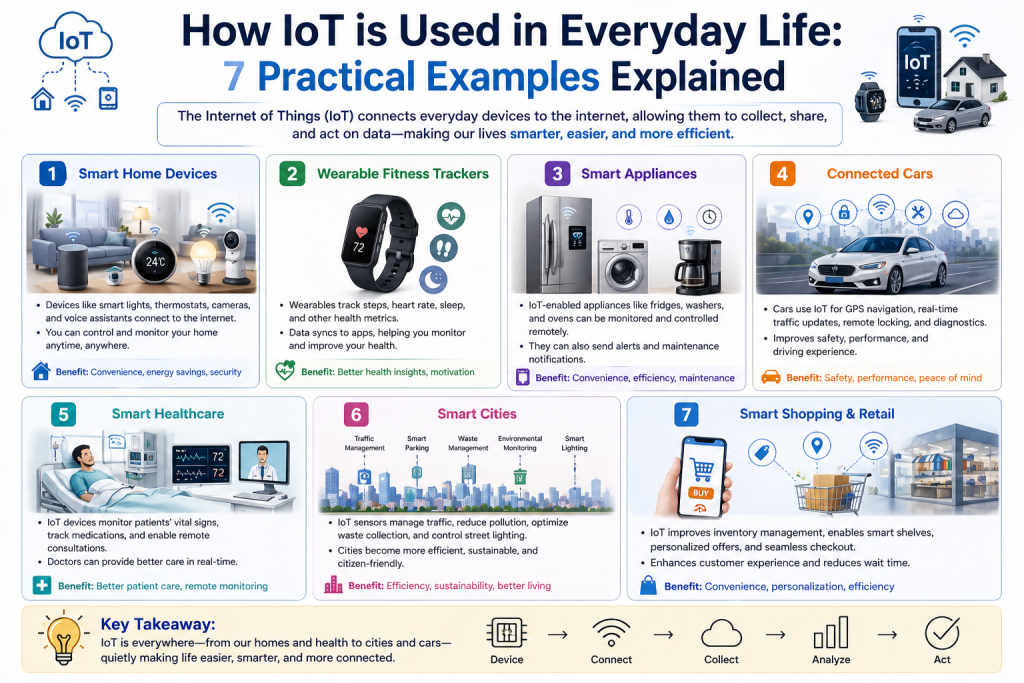
The Internet of Things, often referred to as IoT, represents a major shift in how people interact with technology in their daily lives. Instead of computers and smartphones being the only devices connected to the internet, IoT allows ordinary objects to communicate, collect data, and perform actions intelligently. These objects can include home appliances, vehicles, wearable devices, and even large industrial machines. The idea behind IoT is simple but powerful. Devices equipped with sensors and connectivity can gather information from their environment and share it through the internet, enabling automation and smarter decision making.
As IoT continues to expand, it is changing the way people manage everyday tasks and routines. In a connected environment, devices no longer operate in isolation but work together to create a more efficient system. For example, a smart home can automatically adjust lighting, temperature, and security settings based on the habits and preferences of its occupants. This level of automation reduces the need for manual control and helps save time and energy.
IoT also plays a significant role in improving efficiency across various industries. In manufacturing, connected machines can monitor their own performance and detect faults before they lead to major breakdowns. This helps reduce downtime and improves productivity. In agriculture, IoT devices can monitor soil conditions, weather patterns, and crop health, allowing farmers to make better decisions and increase yield. These examples show how IoT is not only convenient but also highly practical in solving real world problems.
Another important aspect of IoT is data. The information collected by connected devices is valuable because it provides insights into patterns and behavior. This data can be analyzed to improve systems, predict outcomes, and make informed decisions. For instance, traffic management systems can use data from connected vehicles to reduce congestion and improve road safety. Similarly, healthcare providers can use data from wearable devices to monitor patient health and provide timely treatment.
As more devices become connected, the impact of IoT will continue to grow. It is expected to play an even greater role in shaping the future, making environments smarter, more responsive, and more efficient.
Early Development of IoT
The journey of IoT began with small experiments that demonstrated the potential of connecting devices to networks. One of the earliest examples dates back to the late twentieth century when researchers connected a simple appliance to a network, allowing it to be controlled remotely. This experiment showed that even basic devices could be integrated into a digital system and managed from a distance.
Another significant milestone was the creation of a network connected vending machine by university students. This machine was capable of reporting its inventory status and whether the items inside were cold. It used an early form of the internet to transmit this information to users. Although the system was limited in scope, it proved that real world objects could communicate valuable data over a network.
The term Internet of Things was later introduced to describe this concept more clearly. Around the same time, companies began exploring ways to bring connected devices into homes. One early attempt was a smart refrigerator that could interact with users through a network connection. While these early products were not widely adopted, they played an important role in shaping the future of IoT technology.
Technologies That Enabled IoT
The rapid growth of IoT would not have been possible without several key technological advancements. One of the most important factors was the expansion of the internet. As internet access became more widespread and reliable, it became easier for devices to connect and communicate with each other.
Another crucial development was the improvement of microprocessors. These small computing components became more powerful and affordable over time, making it possible to embed them into everyday objects. This allowed devices to process data locally and perform basic operations without relying entirely on external systems.
Operating systems designed for embedded devices also contributed to the rise of IoT. These systems provided a stable platform for running applications on small devices with limited resources. As a result, manufacturers could create smarter and more efficient products that were capable of performing complex tasks.
Sensors are another essential component of IoT systems. These devices collect data from the environment, such as temperature, motion, light, and humidity. The data collected by sensors is then transmitted to other systems where it can be analyzed and used to trigger actions. Without sensors, IoT devices would not be able to gather the information needed to function intelligently.
Role of the Cloud in IoT
The cloud plays a central role in the functioning of IoT systems. It acts as a storage and processing center where data from connected devices is collected and analyzed. Instead of storing data locally on each device, IoT systems send information to remote servers where it can be accessed from anywhere.
This approach offers several advantages. First, it allows users to monitor and control devices remotely through mobile applications or web interfaces. For example, a person can check their home security system or adjust the temperature of their house while they are away. Second, the cloud enables large scale data analysis, which helps improve the performance and efficiency of IoT systems.
Cloud computing also supports the integration of multiple devices into a single system. This means that different devices can work together seamlessly, sharing data and coordinating actions. For instance, a smart home system can connect lighting, heating, and security devices, allowing them to operate as a unified network.
Growth of IoT in Modern Life
In recent years, IoT has become an integral part of everyday life. It is used in a wide range of industries, including manufacturing, agriculture, healthcare, and transportation. Businesses use IoT to monitor operations, track assets, and improve productivity. In agriculture, IoT devices help farmers manage irrigation systems and monitor crop conditions. In cities, IoT supports smart infrastructure such as traffic management and energy distribution.
The number of connected devices continues to grow rapidly. Experts predict that there will be billions of IoT devices worldwide in the coming years. This growth is driven by increasing demand for automation, efficiency, and convenience. As more devices become connected, the impact of IoT on society will continue to expand.
Consumers are also embracing IoT technology in their homes. Smart appliances, wearable devices, and connected entertainment systems are becoming more common. These devices offer greater control and convenience, allowing users to manage their environment with ease. As technology becomes more advanced, IoT devices are expected to become even more intelligent and user friendly.
Smart Home Security Systems
One of the most important applications of IoT in everyday life is smart home security. These systems use a combination of connected devices and sensors to protect homes from potential threats. Common components include motion detectors, door and window sensors, cameras, and alarm systems.
When a sensor detects unusual activity, it sends a signal to a central controller, which then communicates with the cloud. The system processes the information and sends an alert to the homeowner through a mobile application. This allows the user to respond quickly, even if they are not physically present at home.
Smart home security systems provide more than just alerts. They allow users to monitor their property in real time through live video feeds. Users can also review recorded footage to understand what happened during a specific event. This level of visibility enhances security and provides peace of mind.
Another key feature of these systems is remote access control. Homeowners can lock or unlock doors, enable or disable alarms, and manage user access from their smartphones. This is particularly useful for granting temporary access to guests or service providers. Some systems also support advanced authentication methods such as facial recognition and voice identification, which further enhance security.
Geofencing is another useful feature in smart security systems. It uses location data from the user’s mobile device to determine whether they are near or far from home. If the system detects that the user has left a designated area without activating the security system, it can send a reminder to do so. This helps prevent situations where the home is left unprotected.
Smart Heating and Cooling Systems
Heating and cooling systems have also been transformed by IoT technology. Traditional systems allowed users to set a fixed temperature, but modern smart systems offer much greater flexibility and control. These systems use sensors and connectivity to adjust temperature and humidity levels based on user preferences and environmental conditions.
Smart thermostats are a key component of these systems. They can learn from user behavior and automatically adjust settings to maintain comfort while minimizing energy consumption. For example, the system can lower the temperature when the house is empty and raise it before the occupants return.
Remote access is another important feature of smart heating and cooling systems. Users can control their home environment from anywhere using a mobile application. This means they can adjust the temperature while traveling or on their way home, ensuring a comfortable environment upon arrival.
Sensors placed in different areas of the home allow the system to monitor conditions in real time. This enables more precise control of temperature and humidity levels. For instance, the system can increase ventilation in a room that becomes too humid or adjust heating in a colder area of the house.
Smart systems also provide alerts when something goes wrong. If the temperature drops suddenly or rises beyond a safe level, the system can notify the user. This is especially important in extreme weather conditions, where system failure could lead to serious problems such as frozen pipes or overheating.
For homes without central heating or cooling, IoT offers alternative solutions. Smart air conditioners and heaters can be installed in individual rooms and controlled through mobile applications or voice commands. This provides flexibility and allows users to create a comfortable environment without major renovations.
Smart Kitchen and Connected Appliances
The kitchen has become one of the most technologically advanced areas of the modern home due to the rapid adoption of IoT devices. What was once a space filled with basic appliances has now transformed into a connected environment where devices communicate with each other and with the user. Smart kitchen appliances are designed to improve convenience, save time, and enhance efficiency in daily cooking and household tasks.
One of the most notable examples of IoT in the kitchen is the smart refrigerator. These refrigerators are equipped with internal cameras, touchscreens, and internet connectivity. Users can view the contents of their fridge remotely through a mobile application, which is especially useful while shopping. Instead of guessing what items are needed, they can check in real time and make informed decisions. Some smart refrigerators also allow users to create shopping lists, store recipes, and even suggest meals based on available ingredients.
In addition to refrigerators, many other kitchen appliances have become connected. Smart ovens can be controlled remotely, allowing users to preheat or adjust cooking settings using their smartphones. This means that meals can be prepared more efficiently, even when the user is not physically present in the kitchen. Similarly, smart microwaves, coffee makers, and dishwashers can be programmed and monitored through mobile applications, making everyday tasks more manageable.
Voice control has further enhanced the usability of smart kitchen devices. Many appliances are compatible with voice assistants, enabling users to operate them through simple voice commands. For example, a user can ask a virtual assistant to start the coffee maker, set a timer, or turn on the oven. This hands free interaction is particularly useful when multitasking in the kitchen.
Another important aspect of smart kitchen technology is automation. Devices can be programmed to perform tasks at specific times or under certain conditions. For instance, a coffee maker can automatically start brewing at a set time in the morning, ensuring that fresh coffee is ready when the user wakes up. Dishwashers can be scheduled to run during off peak hours to save energy, and ovens can adjust cooking temperatures based on the type of food being prepared.
Smart kitchen appliances also contribute to energy efficiency. By monitoring usage patterns and optimizing performance, these devices help reduce energy consumption. Some appliances provide feedback on energy usage, allowing users to make more informed decisions about how they use their devices. This not only reduces utility costs but also supports environmental sustainability.
Overall, the integration of IoT in the kitchen has made cooking and household management more convenient and efficient. As technology continues to advance, smart kitchen devices are expected to become even more intelligent, offering new features and capabilities that further simplify daily life.
Smart Driving and Connected Vehicles
Transportation is another area where IoT has made a significant impact. Modern vehicles are equipped with a wide range of sensors and connectivity features that enhance safety, efficiency, and convenience. These connected vehicles are capable of collecting and transmitting data in real time, allowing for better decision making and improved driving experiences.
One of the key features of IoT in driving is vehicle diagnostics. Sensors within the car monitor various components such as the engine, brakes, and fuel system. If a problem is detected, the system can alert the driver and provide information about the issue. In some cases, the data is sent to service centers, allowing technicians to prepare for repairs before the vehicle arrives. This reduces downtime and ensures that problems are addressed quickly.
Connected vehicles also play an important role in safety. In the event of an accident, sensors can detect the impact and automatically send an alert to emergency services. The system can provide the location of the vehicle and other relevant information, enabling a faster response. This feature can be life saving in situations where the driver is unable to call for help.
Navigation systems have also been greatly improved by IoT technology. Modern navigation applications use real time data from multiple sources to provide accurate directions and traffic updates. These systems collect information from other vehicles, road sensors, and user reports to identify traffic conditions, road hazards, and construction zones. Based on this data, the system can suggest alternative routes to avoid delays and ensure a smoother journey.
Another advantage of connected vehicles is the ability to integrate with other devices. Drivers can connect their smartphones to the car’s system, allowing them to access music, messages, and applications safely while driving. This integration enhances convenience and reduces distractions by enabling hands free operation.
The future of smart driving includes the development of autonomous vehicles. These vehicles use advanced sensors, cameras, and artificial intelligence to navigate without human intervention. While fully autonomous vehicles are still being developed, many modern cars already include features such as adaptive cruise control, lane keeping assistance, and automatic parking. These features rely on IoT technology to function effectively.
In summary, IoT has transformed the way people interact with vehicles. By providing real time data, enhancing safety, and improving navigation, connected vehicles offer a more efficient and enjoyable driving experience.
Smart Toll Collection Systems
Another practical application of IoT in transportation is smart toll collection. Traditional toll systems required drivers to stop and pay manually, which often caused delays and congestion. IoT has revolutionized this process by introducing electronic toll collection systems that allow vehicles to pass through toll points without stopping.
These systems use small electronic devices, often referred to as transponders, that are attached to the vehicle. When the vehicle passes through a toll point, sensors detect the transponder and automatically deduct the toll amount from the user’s account. This process is fast and efficient, allowing vehicles to maintain their speed and reducing traffic congestion.
In cases where a vehicle does not have a transponder, cameras are used to capture the license plate number. The system then matches the plate with a database and sends a bill to the registered owner. This ensures that all vehicles are accounted for, even if they are not enrolled in the electronic toll system.
Smart toll systems also use advanced sensors to classify vehicles based on their size and type. For example, a vehicle with additional axles, such as a truck pulling a trailer, may be charged a higher toll. The system can detect these differences automatically and apply the appropriate charges.
One of the main benefits of smart toll collection is improved traffic flow. By eliminating the need for vehicles to stop, these systems reduce delays and make travel more efficient. They also reduce fuel consumption and emissions, as vehicles spend less time idling at toll booths.
Additionally, smart toll systems provide valuable data that can be used for traffic management and planning. Authorities can analyze traffic patterns, identify peak travel times, and make informed decisions about infrastructure improvements. This data driven approach helps create more efficient and sustainable transportation systems.
Overall, smart toll collection is a clear example of how IoT can simplify everyday processes and improve efficiency on a large scale.
Wearable Devices and Personal Technology
Wearable technology is one of the most visible and widely used applications of IoT in everyday life. These devices are designed to be worn on the body and provide continuous monitoring of various activities and health metrics. Common examples include smartwatches, fitness trackers, and health monitoring devices.
Wearable devices are equipped with sensors that collect data such as heart rate, steps taken, calories burned, and sleep patterns. This data is then transmitted to mobile applications or cloud platforms, where it can be analyzed and presented to the user in an easy to understand format. This allows individuals to track their health and fitness goals more effectively.
One of the key features of wearable devices is their ability to provide real time feedback. For example, a fitness tracker can alert the user if they have been inactive for too long, encouraging them to move. It can also provide insights into workout performance, helping users improve their exercise routines.
Wearable devices also include features such as location tracking and motion detection. Using global positioning systems, these devices can measure distance traveled and map routes during activities such as running or cycling. Motion sensors can detect specific movements, such as steps or even falls, which can be particularly useful for elderly users.
In addition to fitness and health tracking, wearable devices offer various convenience features. Users can receive notifications, answer calls, and control other smart devices directly from their wearable device. This reduces the need to constantly check a smartphone and allows for more seamless interaction with technology.
Another important aspect of wearable technology is its role in preventive healthcare. By continuously monitoring vital signs, these devices can detect unusual patterns that may indicate potential health issues. Early detection allows users to seek medical attention before conditions become more serious.
As wearable technology continues to evolve, new features and capabilities are being introduced. Devices are becoming more accurate, more comfortable to wear, and more integrated with other IoT systems. This makes them an essential part of the connected lifestyle.
Healthcare and the Internet of Medical Things
Healthcare is one of the most impactful areas where the Internet of Things has brought significant change. The integration of connected devices into medical systems has improved patient care, enhanced monitoring, and enabled more efficient healthcare delivery. This specialized branch of IoT is often referred to as the Internet of Medical Things. It focuses on using smart devices and sensors to collect health related data and share it with healthcare providers in real time.
One of the most common applications in this field is remote patient monitoring. Patients no longer need to stay in hospitals for continuous observation, as wearable and connected medical devices can track their vital signs from home. These devices measure important indicators such as heart rate, body temperature, blood pressure, and blood oxygen levels. The collected data is sent to cloud based systems where it can be analyzed and accessed by doctors.
This real time monitoring allows healthcare professionals to detect potential health issues at an early stage. If any abnormal readings are observed, alerts can be generated and appropriate action can be taken quickly. This not only improves patient outcomes but also reduces the burden on hospitals and healthcare facilities.
Another important application is the use of smart medical devices for chronic disease management. Patients with long term conditions such as diabetes or heart disease can benefit from continuous monitoring and personalized care. For example, connected glucose monitors help diabetic patients keep track of their blood sugar levels and receive recommendations for managing their condition. This level of support helps patients maintain better control over their health.
Smart pillboxes are also becoming increasingly popular. These devices are designed to ensure that patients take their medication on time. When a dose is taken, the device records the information and sends it to a cloud system. If a patient misses a dose, they receive a reminder through a mobile application or text message. This reduces the risk of missed medications and improves treatment effectiveness.
In addition to external devices, IoT has also made its way into implantable medical technologies. Devices such as connected pacemakers can monitor heart activity and send data directly to healthcare providers. This allows doctors to track the performance of the device and make adjustments if necessary. Such innovations have significantly improved the quality of life for patients with serious medical conditions.
IoT in healthcare also supports better coordination between different parts of the healthcare system. Hospitals can use connected devices to manage equipment, track patient movement, and optimize resource allocation. This leads to more efficient operations and improved patient care.
Despite its many benefits, the use of IoT in healthcare also raises important concerns related to data privacy and security. Medical data is highly sensitive, and it is essential to ensure that it is protected from unauthorized access. As a result, strong security measures and regulations are necessary to maintain trust in these systems.
Overall, the Internet of Medical Things represents a major advancement in healthcare. By enabling continuous monitoring, early detection, and personalized treatment, IoT is helping to create a more efficient and patient centered healthcare system.
The Role of IoT in Everyday Life Expansion
Beyond individual applications, IoT is continuously expanding into new areas of daily life. It is no longer limited to specific devices or industries. Instead, it is becoming a foundational technology that supports a wide range of activities and services. As more devices become connected, the boundaries between different systems are beginning to disappear, creating a more integrated and intelligent environment.
In homes, IoT devices are working together to create smart ecosystems. Lighting systems can adjust automatically based on time of day or occupancy. Security systems can communicate with other devices to respond to potential threats. Entertainment systems can be controlled through a single interface, providing a seamless user experience.
In workplaces, IoT is improving productivity and efficiency. Connected devices can monitor equipment performance, track inventory, and automate routine tasks. This reduces the need for manual intervention and allows employees to focus on more important activities. IoT also supports remote work by enabling access to systems and data from anywhere.
In urban environments, IoT is playing a key role in the development of smart cities. Connected sensors and devices are used to manage traffic, monitor air quality, and optimize energy usage. For example, smart traffic systems can adjust signal timings based on real time traffic conditions, reducing congestion and improving travel times. Similarly, smart energy systems can balance supply and demand, ensuring efficient use of resources.
Agriculture is another area where IoT is making a difference. Farmers are using connected devices to monitor soil conditions, weather patterns, and crop health. This information helps them make better decisions about irrigation, fertilization, and harvesting. As a result, agricultural productivity is increasing while resource usage is being optimized.
The expansion of IoT is also driving innovation in new technologies. Artificial intelligence and machine learning are being integrated with IoT systems to enable advanced data analysis and decision making. These technologies allow devices to learn from data and improve their performance over time. This combination of IoT and intelligent systems is opening up new possibilities for automation and efficiency.
Preparing for a Future with IoT
As IoT continues to grow, it is becoming increasingly important for individuals and organizations to prepare for its impact. Understanding how IoT works and how to use it effectively can provide significant advantages in both personal and professional contexts.
One of the key areas of focus is cloud computing. Since most IoT systems rely on cloud infrastructure for data storage and processing, knowledge of cloud technologies is essential. Learning about different cloud platforms and their capabilities can help individuals build and manage IoT applications.
Networking is another important aspect. IoT devices need to communicate with each other and with central systems, which requires a strong understanding of network protocols and communication methods. This includes knowledge of how data is transmitted, how devices are connected, and how networks are secured.
Security is perhaps the most critical consideration. As more devices become connected, the risk of cyber threats increases. It is essential to implement strong security measures to protect data and ensure the safe operation of IoT systems. This includes using encryption, authentication, and regular updates to prevent unauthorized access.
Education and training play a vital role in preparing for an IoT driven future. Many organizations offer courses and certifications that focus on cloud computing, networking, and security. By gaining these skills, individuals can position themselves for careers in the growing field of IoT.
In addition to technical skills, it is also important to understand the broader implications of IoT. This includes considering ethical issues, such as data privacy and the impact of automation on jobs. By addressing these challenges, society can ensure that the benefits of IoT are realized while minimizing potential risks.
The Future of IoT in Everyday Life
The future of IoT is full of possibilities. As technology continues to advance, IoT systems are expected to become more intelligent, more efficient, and more widely adopted. The number of connected devices is likely to increase significantly, creating a highly interconnected world where information flows seamlessly between devices.
One of the key trends in the future of IoT is increased automation. Devices will be able to perform tasks with minimal human intervention, making daily life more convenient. For example, homes may automatically adjust lighting, temperature, and security settings based on user preferences and behavior.
Another trend is the integration of IoT with artificial intelligence. This will enable devices to analyze data more effectively and make smarter decisions. For instance, a smart home system could learn the habits of its occupants and adjust settings accordingly, creating a personalized environment.
Connectivity will also continue to improve with advancements in communication technologies. Faster and more reliable networks will allow devices to exchange data more quickly and efficiently. This will support the development of more complex and responsive IoT systems.
In healthcare, IoT is expected to play an even greater role in patient care. New devices and technologies will enable more accurate monitoring and more effective treatments. This will lead to improved health outcomes and a higher quality of life for patients.
However, the growth of IoT also presents challenges. Issues related to data privacy, security, and standardization need to be addressed to ensure the safe and reliable operation of IoT systems. Governments, organizations, and individuals must work together to develop policies and practices that support the responsible use of this technology.
Conclusion
The Internet of Things has transformed the way people live, work, and interact with technology. From smart homes and connected vehicles to wearable devices and advanced healthcare systems, IoT has become an essential part of everyday life. It enables devices to communicate, collect data, and perform tasks in ways that were once considered impossible.
Throughout this discussion, it is clear that IoT offers numerous benefits. It improves convenience by allowing users to control devices remotely. It enhances efficiency by automating routine tasks and optimizing resource usage. It also increases safety by providing real time monitoring and alerts.
At the same time, the rapid growth of IoT highlights the importance of addressing challenges such as security and privacy. As more devices become connected, it is essential to ensure that data is protected and systems are secure. This requires a combination of technological solutions, regulations, and user awareness.
Looking ahead, the future of IoT is promising. Continued advancements in technology will lead to more innovative applications and greater integration of connected devices into daily life. By understanding and embracing IoT, individuals and organizations can take full advantage of its potential and contribute to a more connected and intelligent world.
As innovation continues, IoT systems are expected to become more advanced and capable of handling complex tasks with minimal human involvement. Devices will not only collect and share data but also analyze it and make decisions in real time. This will lead to smarter environments where systems can adapt automatically based on user behavior and changing conditions. For example, homes may adjust lighting, temperature, and security settings without manual input, creating a more comfortable and energy efficient living space.
In addition, the integration of IoT with emerging technologies such as artificial intelligence and machine learning will further enhance its capabilities. These technologies will allow devices to learn from past data and improve their performance over time. As a result, IoT systems will become more personalized and responsive to individual needs. This will be particularly useful in areas such as healthcare, where personalized monitoring and treatment can significantly improve patient outcomes.
The expansion of high speed internet and improved connectivity will also play a key role in the future of IoT. Faster and more reliable networks will enable seamless communication between devices, supporting the growth of large scale IoT systems. This will open up new opportunities in fields such as smart cities, where connected infrastructure can improve transportation, energy management, and public safety.
However, as IoT continues to grow, it will be important to address challenges related to data security and privacy. Ensuring that systems are secure and that user data is protected will be essential for building trust and encouraging widespread adoption. With the right balance of innovation and responsibility, IoT will continue to shape a smarter and more efficient future.
In conclusion, IoT is not just a technological trend but a fundamental shift in how the world operates. Its influence will continue to grow, shaping the future in ways that are both exciting and transformative.
Continue exploring the technologies and certification concepts that matter most to you.