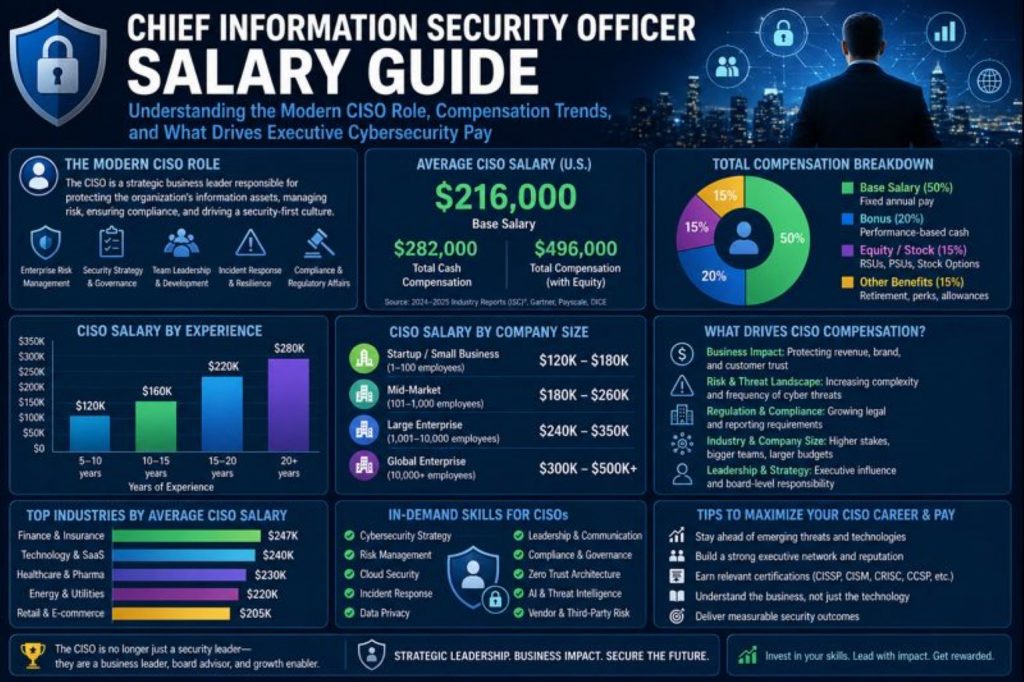
As cybercrime continues to evolve into one of the most significant operational and financial threats facing organizations, the position of Chief Information Security Officer has become one of the most strategically important roles in modern business. No longer viewed solely as technical guardians of firewalls and endpoint defenses, CISOs are now executive leaders responsible for aligning cybersecurity strategy with business resilience, regulatory obligations, digital transformation, and long-term corporate survival.
Organizations across nearly every sector—from finance and healthcare to manufacturing, government, and technology—depend on strong security leadership to navigate a landscape filled with ransomware, nation-state attacks, insider threats, third-party risks, and increasingly complex compliance demands. This elevated responsibility has transformed the CISO role from a niche technical leadership position into a boardroom-level executive function.
With that rise in strategic importance comes a major question for both aspiring cybersecurity leaders and organizations hiring them: how much is a CISO truly worth?
Chief Information Security Officer salaries have grown dramatically over the past decade, but compensation varies widely based on geography, industry, company maturity, risk profile, leadership scope, and executive influence. In some organizations, a first-time CISO may earn compensation comparable to a senior IT director, while in global enterprises or heavily regulated sectors, seasoned CISOs may command compensation packages rivaling other C-suite executives.
Understanding this salary landscape is essential for several reasons. Professionals need salary transparency to negotiate effectively, benchmark their value, and plan career progression. Employers need competitive compensation insights to attract and retain top-tier leadership in a market where qualified cybersecurity executives remain in limited supply.
This guide explores the realities behind Chief Information Security Officer salaries, beginning with a deep understanding of the role itself, its strategic responsibilities, and the major market trends shaping compensation across the United States.
What a Chief Information Security Officer Actually Does
At its core, the Chief Information Security Officer is the senior executive responsible for developing, implementing, and overseeing an organization’s information security and cybersecurity strategy. However, the scope of that responsibility has expanded significantly.
In earlier years, many security leaders focused primarily on technical controls such as firewalls, antivirus systems, and network protection. Today’s CISO must think far beyond technical infrastructure. They are expected to manage enterprise risk, guide digital trust, support innovation, protect intellectual property, and ensure regulatory compliance while enabling business growth.
This means the modern CISO sits at the intersection of technology, governance, law, finance, and corporate strategy.
Strategic Security Leadership
A major responsibility of the CISO is defining a long-term security roadmap that aligns with business goals. Rather than simply blocking threats, CISOs determine how security enables expansion, protects mergers and acquisitions, supports cloud adoption, and secures customer trust.
This includes:
- Designing enterprise-wide cybersecurity programs
- Developing governance frameworks
- Setting security priorities based on business risk
- Aligning investments with strategic objectives
- Building resilience for future threats
Security is no longer a back-office technical concern. It is now a business enabler, and CISOs are expected to lead accordingly.
Risk Management and Threat Reduction
One of the most critical functions of a CISO is understanding and reducing organizational risk.
This involves identifying:
- Internal vulnerabilities
- External attack vectors
- Supply chain weaknesses
- Cloud security gaps
- Insider threats
- Regulatory failures
CISOs work with security teams, legal departments, and executive stakeholders to determine acceptable risk thresholds and implement controls to reduce exposure.
Rather than aiming for impossible “perfect security,” successful CISOs focus on risk optimization—balancing protection, usability, cost, and business agility.
Incident Response and Crisis Leadership
When security incidents occur, CISOs often become crisis managers.
Whether facing ransomware, phishing campaigns, insider data theft, or cloud breaches, the CISO is typically responsible for:
- Coordinating incident response teams
- Leading forensic investigations
- Communicating with legal counsel
- Briefing executive leadership
- Supporting regulatory disclosure requirements
- Managing reputational protection
This level of responsibility places CISOs under enormous pressure, especially in publicly traded companies where breaches may impact stock prices, customer trust, and legal standing.
Compliance, Governance, and Regulatory Oversight
Modern organizations must comply with a growing list of regulatory frameworks depending on sector and geography.
Examples include:
- HIPAA for healthcare
- PCI-DSS for payment systems
- SOX for public companies
- GDPR for data privacy
- NIST for government and defense
- ISO 27001 for international security governance
CISOs frequently lead or oversee these initiatives, ensuring the organization meets legal obligations while reducing liability.
Compliance expertise often significantly increases salary potential because regulatory failure can result in massive financial penalties.
Why the CISO Role Commands High Salaries
CISO compensation reflects more than technical knowledge. It reflects the financial consequences of failure.
A major data breach can cost millions—or even billions—through:
- Regulatory fines
- Lawsuits
- Customer churn
- Downtime
- Brand damage
- Recovery costs
Because of this, companies increasingly view experienced CISOs as revenue protectors, not just security leaders.
Security Leadership as Financial Protection
A strong CISO can prevent:
- Breach escalation
- Audit failures
- Compliance penalties
- Operational disruption
- Third-party compromises
This preventative value makes compensation packages much easier to justify.
For example, paying a CISO $300,000 annually may seem expensive, but compared to a multimillion-dollar ransomware event, it can represent substantial business value.
Executive-Level Decision Making
CISOs often influence:
- Cyber insurance strategy
- Vendor risk
- Corporate acquisitions
- Digital transformation
- AI security governance
- Crisis communication
This executive influence pushes salaries higher, especially when CISOs report directly to CEOs, boards, or risk committees.
How CISO Titles Can Differ Across Organizations
Not all organizations use the same title, even when responsibilities are similar.
Alternative titles include:
- Vice President of Information Security
- Director of Cybersecurity
- Head of Security
- Global Information Security Officer
- Chief Security Officer
In smaller companies, a Director of Security may function like a CISO. In larger enterprises, a CISO may oversee multiple regional security leaders.
Title alone does not determine salary—scope, influence, and business complexity matter more.
CISO Salary Trends Across Major U.S. Markets
Location remains one of the biggest drivers of compensation due to cost of living, talent competition, and industry concentration.
High-Paying Markets
Major technology and financial centers often lead compensation:
- San Francisco
- New York
- Seattle
- Washington, D.C.
- Boston
These markets often feature:
- Large enterprise headquarters
- High-value digital assets
- Intense regulatory pressure
- Greater breach exposure
- Competitive executive hiring
CISOs in these cities frequently command salaries exceeding a quarter-million dollars, with total compensation often increasing further through bonuses and stock incentives.
Emerging Mid-Tier Markets
Cities such as Austin, Denver, Dallas, Atlanta, and Chicago have become increasingly attractive for cybersecurity leadership.
These markets often provide:
- Lower living costs
- Strong salaries
- Growing tech ecosystems
- Expanding healthcare or fintech sectors
For many professionals, these regions offer better lifestyle-to-income ratios.
Smaller Markets with Growing Demand
Even less traditional markets now require cybersecurity leadership due to digital transformation.
Government contractors, universities, regional hospitals, and manufacturing hubs all need experienced CISOs.
While salaries may be lower than coastal hubs, they still frequently remain well into six figures.
Why Salary Ranges Vary So Widely
CISO compensation can differ dramatically even within the same city because salary is influenced by several overlapping variables.
Company Size
A startup CISO may build programs from scratch with limited staff, while a Fortune 500 CISO may oversee:
- Global teams
- Security engineering
- Compliance
- Threat intelligence
- Vendor governance
- Crisis response
Larger organizations generally pay more due to complexity.
Industry Risk Profile
Industries with higher breach costs often pay premium salaries:
- Banking
- Healthcare
- Defense
- Cloud computing
- SaaS
- Government contracting
These sectors demand specialized leadership.
Board Access
CISOs who present directly to boards or executive committees often earn significantly more than technically focused leaders without strategic governance roles.
The Shift from Technical Expert to Business Executive
One of the most important salary differentiators is whether a CISO operates tactically or strategically.
Lower-paid security leaders may focus on operational execution.
Higher-paid CISOs shape:
- Enterprise resilience
- Risk tolerance
- Business continuity
- Public trust
- Strategic investment
This evolution explains why communication skills, business literacy, and leadership often matter as much as technical certifications.
The Growing Pressure of Modern Cybersecurity Leadership
Today’s CISO faces a uniquely difficult challenge: protect the organization while enabling innovation.
This includes securing:
- Cloud migration
- Remote work
- SaaS ecosystems
- AI integration
- Mergers
- IoT infrastructure
Each business initiative introduces new risks, and CISOs are expected to support growth without becoming obstacles.
This balancing act significantly contributes to executive compensation.
Why Some CISOs Earn Significantly More Than Others
While the title of Chief Information Security Officer may sound consistent across organizations, compensation for this role can vary dramatically depending on far more than job title alone. Two executives may both hold the CISO designation, yet one could earn under $180,000 while another commands a compensation package exceeding $400,000. This gap exists because salary is shaped not only by technical capability, but by business complexity, governance demands, executive visibility, industry pressures, and the measurable value a security leader brings to an organization.
Cybersecurity has become a board-level issue because the financial consequences of poor security leadership can be catastrophic. Data breaches, ransomware attacks, compliance failures, and third-party compromises now carry financial, operational, and reputational costs that can threaten an entire business. As a result, organizations are increasingly willing to pay top-tier compensation for leaders who can manage security not just as a technical function, but as a business-critical discipline.
Understanding what drives CISO salary growth is essential for professionals planning their executive path. Compensation is often determined by strategic influence, specialized industry experience, certifications, geographic leverage, and leadership maturity. Organizations reward CISOs who can reduce risk while enabling innovation, satisfy regulators while supporting growth, and communicate effectively with both engineers and boards.
This section explores the primary factors that determine CISO salary, including company size, industry sector, regulatory expertise, certifications, leadership capabilities, and evolving market demand.
Company Size and Organizational Complexity
One of the most significant influences on CISO compensation is the size and complexity of the organization itself.
A security executive leading cybersecurity for a mid-sized regional business faces a very different challenge than one protecting a multinational enterprise operating across multiple jurisdictions. Larger organizations naturally carry broader attack surfaces, more users, more infrastructure, more third-party vendors, and greater public scrutiny.
Small and Mid-Sized Organizations
In smaller companies, CISOs may be highly operational. They may directly oversee:
- Security operations
- Endpoint controls
- Cloud governance
- Vendor security
- Incident response
- Basic compliance
These organizations may still offer strong salaries, but budget limitations often reduce executive compensation ceilings.
In many cases, first-time CISOs or Directors of Security in smaller firms may focus on building foundational governance, implementing security frameworks, and creating incident response plans.
Enterprise-Level Organizations
Large enterprises demand far broader strategic leadership.
Enterprise CISOs may oversee:
- Global security teams
- Regional security leaders
- Governance and risk committees
- Security architecture
- Threat intelligence divisions
- Privacy integration
- Third-party risk
- Crisis communications
At this scale, security leadership often resembles business transformation leadership rather than purely technical oversight.
Because larger enterprises face larger financial consequences from breaches, compensation tends to increase accordingly.
Industry Sector and Risk Profile
Not all industries carry equal cybersecurity risk. A company’s sector can dramatically affect how much it is willing to pay a CISO.
Finance and Banking
Financial institutions often pay among the highest salaries because they face:
- Strict regulations
- Sensitive financial data exposure
- Fraud threats
- Nation-state targeting
- Payment security obligations
Security failures in banking can immediately impact consumer trust and regulatory scrutiny, making experienced CISOs extremely valuable.
Healthcare
Healthcare organizations manage protected medical data, patient safety systems, and compliance obligations.
Healthcare CISOs must often navigate:
- HIPAA requirements
- Ransomware risks
- Medical device vulnerabilities
- Privacy mandates
Because operational downtime can affect patient care, healthcare security leadership carries substantial responsibility.
Defense and Government Contracting
Government agencies and defense contractors often require leaders with expertise in:
- National security standards
- Zero trust mandates
- Classified systems
- NIST frameworks
- Supply chain controls
These sectors may pay premium salaries for professionals with highly specialized governance knowledge.
Technology and SaaS
Cloud providers, SaaS firms, and enterprise software companies often offer aggressive compensation due to:
- Intellectual property protection
- Customer trust requirements
- Global infrastructure
- Cloud-native threats
- Identity security challenges
Technology-sector CISOs are often expected to support innovation at speed, increasing complexity.
Geographic Influence Beyond Cost of Living
While location often affects salary, geography influences more than housing prices.
Competitive Talent Markets
Cities with intense executive competition often pay more due to talent scarcity.
Examples include:
- Silicon Valley
- New York
- Seattle
- Boston
- Washington, D.C.
These regions combine regulatory pressure, capital concentration, and advanced digital ecosystems.
Regional Growth Markets
Cities such as Austin, Atlanta, Denver, and Dallas may offer slightly lower salaries but often feature strong upward mobility due to expanding cybersecurity ecosystems.
Remote Leadership and National Compensation Trends
Remote executive work has also changed compensation models. Some organizations now recruit CISOs nationally, creating broader opportunities but also increasing competition.
In certain cases, remote leadership can reduce location-based salary premiums, while in others, exceptional candidates can negotiate enterprise-level compensation regardless of residence.
Regulatory, Governance, and Compliance Expertise
Compliance expertise is one of the most overlooked but powerful salary accelerators for security leaders.
Modern CISOs are often expected to manage regulatory alignment across multiple frameworks.
High-Value Framework Expertise
Security leaders who demonstrate success with:
- NIST
- ISO 27001
- SOC 2
- HIPAA
- PCI-DSS
- SOX
- GDPR
often command higher salaries because they reduce organizational liability.
Why Compliance Expertise Pays More
Regulatory failures can trigger:
- Fines
- Legal actions
- Revenue loss
- Customer distrust
- Operational restrictions
A CISO who can proactively guide compliance is often seen as a legal and strategic asset, not merely a technical executive.
Certifications That Increase CISO Salary Potential
While certifications alone do not guarantee executive success, they often strengthen marketability and negotiation leverage.
CISSP
Often considered foundational for senior security leadership, this certification demonstrates broad mastery across cybersecurity domains.
Value
- Industry credibility
- Executive trust
- Broad technical validation
- Common enterprise requirement
CISM
Focused more on governance and leadership, CISM is particularly relevant for business-aligned CISOs.
Value
- Security governance
- Program management
- Risk oversight
- Executive strategy
CGEIT and CRISC
These credentials can significantly improve compensation for leaders focused on governance, enterprise IT strategy, and risk management.
Value
- Boardroom credibility
- Risk governance
- Audit strength
- Strategic oversight
Executive Education
Many high-earning CISOs supplement technical credentials with business education, such as MBAs or executive leadership programs.
This combination often strengthens:
- Financial fluency
- Corporate communication
- Strategic planning
- Board interaction
Leadership and Communication Skills
One of the greatest salary differentiators is communication.
A technically brilliant security leader may still earn less than a strategically persuasive executive who can translate cyber risk into business language.
Boardroom Communication
High-earning CISOs frequently:
- Present risk metrics
- Explain investment needs
- Influence budgets
- Guide governance decisions
- Shape strategic planning
This ability to bridge security and business often separates operational leaders from executive powerhouses.
Public Presence and Industry Influence
Speaking at conferences, serving on advisory boards, and contributing to policy discussions can also increase earning potential by strengthening visibility and authority.
Experience Level and Salary Evolution
Years of experience matter, but quality of experience matters more.
Early Executive Stage
Professionals transitioning from Director or VP roles into first-time CISO positions often focus on:
- Team development
- Governance creation
- Policy formalization
Mid-Career CISO
At this stage, leaders often manage:
- Enterprise programs
- Audit leadership
- Vendor ecosystems
- Cross-functional influence
Elite Enterprise CISO
Veteran CISOs may oversee:
- Public company security
- Global compliance
- Major breaches
- M&A security integration
- Corporate resilience
This level of complexity often commands the highest compensation.
Modern Technical Priorities That Increase Market Value
Today’s highest-paid CISOs are often fluent in emerging security domains.
Cloud Security
Understanding cloud ecosystems is now essential.
Key areas include:
- AWS governance
- Azure security
- Identity architecture
- Cloud-native defense
Zero Trust
Organizations increasingly value leaders capable of implementing zero trust principles across identity, endpoint, and network architecture.. As cyber threats become more sophisticated and organizations continue shifting toward hybrid work, cloud computing, and decentralized digital ecosystems, traditional perimeter-based security models are proving insufficient. The older concept of “trust but verify,” where users and devices inside a corporate network were often assumed safe, has become dangerously outdated. Modern enterprises now recognize that threats can emerge from virtually anywhere—compromised employee credentials, malicious insiders, third-party vendors, unsecured endpoints, cloud misconfigurations, or AI-enhanced social engineering attacks. Because of this evolving threat environment, zero trust has emerged not just as a security framework, but as a strategic business imperative, and CISOs who can successfully design, implement, and govern zero trust initiatives are increasingly seen as high-value executive leaders.
Zero trust operates on a foundational principle: never trust, always verify. Rather than granting broad access based on network location alone, zero trust assumes every access request—whether internal or external—must be continuously authenticated, authorized, and validated. This approach dramatically reduces the risk of lateral movement, privilege escalation, and unauthorized access, all of which are common characteristics of modern breaches. For CISOs, understanding zero trust is no longer optional. It is quickly becoming one of the defining competencies that separates operational security leaders from strategic executives capable of driving enterprise resilience.
At the identity level, zero trust begins with strict verification of users, devices, applications, and service accounts. Identity has become the new security perimeter because compromised credentials remain one of the most common breach vectors. Attackers frequently exploit weak passwords, stolen tokens, session hijacking, or phishing campaigns to impersonate legitimate users. Zero trust identity architecture addresses this by emphasizing strong identity governance, multi-factor authentication, conditional access policies, least privilege principles, and continuous authentication.
For CISOs, implementing identity-centric zero trust means ensuring that no user automatically receives broad access simply because they successfully log in once. Instead, access decisions should consider contextual factors such as user role, device health, geographic location, behavioral anomalies, and real-time threat intelligence. A finance executive logging in from a managed corporate laptop during normal business hours may receive different access permissions than the same user attempting access from an unknown device in another country. This adaptive approach significantly improves organizational security posture.
Privileged access management is also central to identity-focused zero trust. Administrative accounts represent especially valuable targets for attackers because they often provide broad control over infrastructure. CISOs who implement strong privileged access controls, session monitoring, credential vaulting, and just-in-time access can drastically reduce the blast radius of compromised credentials. Because board members increasingly understand the consequences of identity compromise, security leaders who demonstrate maturity in identity governance often gain stronger executive trust and larger budgets.
Endpoint security is another critical pillar of zero trust architecture. In a world of remote workforces, bring-your-own-device policies, mobile endpoints, and distributed branch environments, every device becomes a potential attack surface. Traditional endpoint security often focused on antivirus or signature-based protection, but zero trust requires far more dynamic controls. Every endpoint—whether a laptop, smartphone, virtual desktop, IoT system, or contractor device—must be continuously assessed for trustworthiness before being granted access to organizational resources.
AI and Emerging Threats
As AI reshapes both attack and defense, CISOs with expertise in AI governance, adversarial risk, and automation may gain compensation advantages.
Operational vs Strategic Security Leadership
CISO compensation often depends on whether a leader is perceived as tactical or transformational.
Operational Focus
- Incident response
- Tool management
- Team oversight
Strategic Focus
- Business continuity
- Governance architecture
- Revenue protection
- Digital trust
The closer a CISO operates to enterprise strategy, the greater the earning potential.
Negotiation Power and Career Positioning
Salary growth is not only about qualifications—it is also about leverage.
Professionals can often improve compensation by:
- Moving into higher-risk sectors
- Expanding board exposure
- Leading major compliance programs
- Building public credibility
- Managing larger teams
Negotiation often improves when a CISO demonstrates measurable business impact.
Moving Beyond Salary Data Into Long-Term CISO Success
Understanding what Chief Information Security Officers earn is only part of the larger career equation. Compensation benchmarks can reveal market trends, regional opportunities, and industry value, but salary alone does not define executive success. For current and aspiring CISOs, the bigger challenge is learning how to continuously increase market value, remain relevant in an evolving threat landscape, and transition from technical leadership into transformative business influence.
Cybersecurity leadership has become one of the most demanding executive functions in modern organizations. CISOs are expected to defend infrastructure, guide governance, influence enterprise strategy, support digital transformation, manage regulatory obligations, and maintain resilience during crises. The role is no longer static. Security leaders who remain operationally focused may secure respectable salaries, but those who evolve into strategic business leaders often unlock dramatically higher compensation, broader influence, and more sustainable career longevity.
To maximize salary and executive impact, a CISO must master more than technology. Success increasingly depends on leadership positioning, business fluency, advanced governance, industry visibility, strategic certifications, and understanding of future risks such as AI-driven threats, supply chain attacks, and cloud-native vulnerabilities.
In today’s executive landscape, technical expertise alone rarely determines compensation at the highest levels. Organizations reward CISOs who can connect cybersecurity priorities directly to business growth, regulatory stability, investor confidence, and operational resilience. This means a CISO must often think like a strategist, risk officer, communicator, and transformation leader rather than solely a security practitioner.
Leadership positioning plays a major role because CISOs who report directly to CEOs or boards often carry greater strategic influence and compensation potential than those limited to technical departments. Business fluency is equally critical, as executives must translate cyber threats into financial, legal, and reputational terms that stakeholders can understand. Advanced governance expertise allows CISOs to lead enterprise frameworks, regulatory readiness, and policy alignment across global operations. Industry visibility through conference speaking, advisory roles, and thought leadership can further strengthen market reputation and open higher-paying opportunities. Additionally, staying ahead of emerging risks such as AI-enabled attacks, software supply chain compromise, and complex cloud security challenges ensures a CISO remains relevant in a constantly shifting environment, positioning them as a forward-looking leader capable of protecting both present operations and future innovation.
This section explores how CISOs can expand earning potential, the technologies and tools that shape executive security leadership, career strategies for reaching elite compensation tiers, and what the future may hold for one of business’s most important roles.
The Transition From Security Operator to Business Strategist
One of the biggest differences between mid-level and top-tier CISO compensation is whether the executive is viewed as a security operator or a strategic business leader.
The Operational Security Leader
Operationally focused CISOs often excel in:
- Security operations center management
- Threat response
- Endpoint visibility
- SIEM optimization
- Policy enforcement
- Compliance execution
These skills are critical, but they often anchor leaders to tactical responsibilities rather than strategic influence.
The Strategic Security Executive
High-earning CISOs increasingly shape enterprise direction by influencing:
- Business continuity strategy
- Mergers and acquisitions security integration
- Board governance
- Digital trust frameworks
- Customer confidence
- Product security roadmaps
- Regulatory forecasting
This strategic evolution often creates the largest salary increases because it positions the CISO as a protector of enterprise value rather than solely a manager of cyber defense.
Essential Technologies Every Modern CISO Must Understand
While CISOs are not always configuring tools directly, executive credibility often depends on understanding the technologies their teams deploy and the strategic implications of those tools.
. A modern CISO must be able to evaluate whether security investments align with business objectives, reduce measurable risk, and support operational resilience. This means understanding not only what a tool does, but how it fits into the broader security ecosystem. For example, knowing the difference between preventive, detective, and responsive technologies helps CISOs prioritize budgets and justify expenditures to executive leadership. They must also assess vendor reliability, integration challenges, scalability, and compliance implications before approving major security platforms.
A CISO who understands technologies such as SIEM, EDR, IAM, cloud security posture management, vulnerability assessment tools, and threat intelligence platforms can ask better strategic questions, identify gaps faster, and avoid costly procurement mistakes. This knowledge also improves communication with security engineers, IT teams, and board members because the CISO can translate technical capabilities into business outcomes such as reduced breach probability, stronger compliance posture, or improved incident response speed. In many organizations, the CISO serves as the bridge between technical implementation and executive oversight, ensuring that security tools are not just purchased, but effectively aligned with enterprise risk strategy, governance frameworks, and long-term digital transformation goals.
Security Information and Event Management (SIEM)
SIEM platforms remain central to enterprise visibility.
Common strategic capabilities include:
- Threat detection
- Log aggregation
- Behavioral analytics
- Compliance reporting
- Security monitoring
A CISO who understands SIEM architecture can better assess investment priorities, response maturity, and operational blind spots.
Endpoint Detection and Response (EDR)
Endpoint security has evolved dramatically as remote work, cloud access, and identity-based attacks expand.Traditional antivirus solutions are no longer enough to defend laptops, mobile devices, servers, and remote endpoints that constantly connect from outside traditional corporate perimeters. Today’s endpoint strategy must account for ransomware, credential theft, zero-day exploits, phishing-based compromise, and unauthorized access across distributed environments. Modern organizations increasingly rely on advanced endpoint detection and response platforms that provide real-time visibility, behavioral analytics, threat hunting, automated containment, and forensic investigation capabilities.
CISOs must understand how endpoint protection integrates with identity systems, zero trust frameworks, and broader incident response plans to reduce organizational exposure. Strong endpoint governance now plays a central role in protecting workforce productivity, securing sensitive data, and maintaining resilience in hybrid work ecosystems.
Modern CISO priorities include:
- Ransomware containment
- Endpoint telemetry
- Threat hunting
- Device policy enforcement
- Incident visibility
Understanding EDR strategy is often critical for board-level ransomware preparedness.
Identity and Access Management (IAM)
Identity security has become foundational in a zero trust world.
Strategic IAM oversight includes:
- Privileged access management
- Multi-factor authentication
- Federation
- Identity governance
- Insider risk reduction
Because identity compromise remains a major breach vector, CISOs with IAM fluency often bring greater enterprise value.
Cloud Security and Hybrid Infrastructure
Cloud transformation has fundamentally changed the CISO role.
Security leaders must increasingly understand:
- Multi-cloud governance
- SaaS risk
- Container security
- Cloud configuration management
- Shared responsibility models
Cloud-savvy CISOs are often compensated more aggressively because cloud adoption directly impacts organizational agility and risk.
Risk Visualization and Executive Reporting
Boards rarely want raw technical detail. They want business insight.
CISOs who can effectively use dashboards and reporting platforms to communicate:
- Risk posture
- Audit readiness
- Security maturity
- Incident trends
- Vendor exposure
are often more successful in budget negotiations and strategic influence.
Certifications and Education for Long-Term Salary Growth
Executive compensation often increases when CISOs demonstrate both technical mastery and governance maturity.
Advanced Certification Strategy
While foundational certifications remain valuable, strategic credential combinations can strengthen leadership profiles.
Technical Leadership
- CISSP
- CCSP
- Advanced cloud security programs
Governance and Risk
- CISM
- CGEIT
- CRISC
Executive Business Development
- MBA
- Board governance programs
- Risk leadership academies
The most competitive CISOs often combine technical, governance, and business education rather than relying on one dimension alone.
How Public Visibility Can Increase CISO Compensation
Executive presence extends beyond internal leadership.
CISOs who build authority externally often improve both salary opportunities and career mobility.
Industry Speaking Engagements
Presenting on topics such as:
- Zero trust
- Compliance
- Cloud governance
- Incident response
- AI security
can elevate professional credibility.
Advisory Roles
Participation in:
- Security councils
- Industry consortiums
- Nonprofit boards
- Vendor advisory boards
can expand network reach and executive influence.
Thought Leadership
Publishing insights on governance, resilience, and security strategy can strengthen market positioning.
Visibility often creates leverage for salary negotiation.
Negotiating Higher CISO Compensation
Salary progression is not solely performance-based; negotiation strategy matters significantly.
Quantifying Value
CISOs often negotiate more effectively when they demonstrate measurable outcomes such as:
- Reduced incident costs
- Successful audits
- Insurance savings
- Vendor consolidation
- Security maturity improvements
- Compliance success
Business impact creates stronger negotiation leverage than technical effort alone.
Negotiating Total Compensation
Executive compensation often extends beyond base salary.
Important components include:
- Annual bonuses
- Equity
- Long-term incentives
- Retention packages
- Performance multipliers
- Board advisory compensation
Elite CISOs often focus on total package design, not salary alone.
Industry Switching as a Salary Accelerator
One of the fastest ways to increase earning potential may involve strategic sector transitions.
High-Growth Paths
Professionals may increase compensation by moving from:
- Education to healthcare
- Regional business to fintech
- Mid-size retail to SaaS
- General IT to defense
Sector shifts often create larger salary jumps than incremental promotions.
The Importance of Crisis Experience
Organizations highly value CISOs who have successfully navigated serious incidents.
Examples include:
- Major ransomware recovery
- Public breach disclosure
- Regulatory investigations
- Cloud compromise
- Third-party supply chain attacks
Crisis-tested CISOs often command premium compensation because experience under pressure is difficult to replicate.
Future Trends That Will Shape CISO Salaries
The cybersecurity landscape is evolving rapidly, and future salary growth will likely favor leaders prepared for next-generation challenges.
AI-Driven Threats
Artificial intelligence is reshaping attack methodologies through:
- Automated phishing
- Deepfakes
- Adversarial models
- Social engineering at scale
CISOs who understand AI governance may become increasingly valuable.
Supply Chain and Third-Party Risk
As vendor ecosystems expand, third-party risk management is becoming a larger executive priority.
Future-focused CISOs will need stronger capabilities in:
- Vendor assurance
- Contract security
- Software supply chain governance
- External attack surface management
Cyber Resilience Over Cyber Defense
Organizations are shifting from prevention-only models to resilience strategies.
This includes:
- Business continuity
- Disaster recovery
- Operational resilience
- Cyber insurance alignment
CISOs who can lead resilience strategies may hold greater board influence.
Boardroom Evolution of the CISO Role
The future CISO may increasingly resemble a Chief Risk Officer with specialized cybersecurity expertise.
This evolution may include:
- Expanded fiduciary responsibility
- Corporate governance leadership
- Strategic transformation
- Policy influence
As the role broadens, salaries may increasingly align with other top-tier C-suite executives.
Avoiding Career Stagnation as a CISO
High salaries can plateau if leaders fail to evolve.
Common stagnation risks include:
- Overreliance on technical expertise
- Weak communication
- Poor business literacy
- Limited regulatory depth
- Inability to scale teams
Career longevity often depends on adaptability.
Building a Legacy Beyond Compensation
The most successful CISOs often think beyond salary and focus on enterprise impact.
This includes:
- Building resilient teams
- Creating sustainable governance
- Developing future leaders
- Strengthening digital trust
- Influencing industry standards
Long-term influence can create opportunities in consulting, board leadership, venture advising, and policy.
The CISO Role as a Defining Executive Career Path
The Chief Information Security Officer position has become one of the most strategically significant leadership roles in the digital economy. What began as a technical security function has transformed into a complex executive discipline that blends cybersecurity expertise, governance, business strategy, crisis leadership, and organizational transformation.
For professionals seeking to maximize CISO compensation, the path is clear: technical capability is essential, but executive success requires much more. The highest-paid CISOs are not simply defenders of infrastructure. They are architects of trust, protectors of enterprise value, and strategic advisors to boards navigating an increasingly volatile digital landscape.
Career growth depends on continuously expanding beyond operations into governance, communication, resilience, and innovation. Certifications, advanced education, public visibility, industry specialization, and measurable business outcomes all contribute to stronger earning power.
As cyber threats become more sophisticated and business dependence on secure digital systems deepens, organizations will continue investing heavily in security leaders who can protect growth while enabling transformation. For those prepared to evolve, the CISO pathway offers not only exceptional compensation but also the opportunity to shape the future of modern business itself.
Continue exploring the technologies and certification concepts that matter most to you.