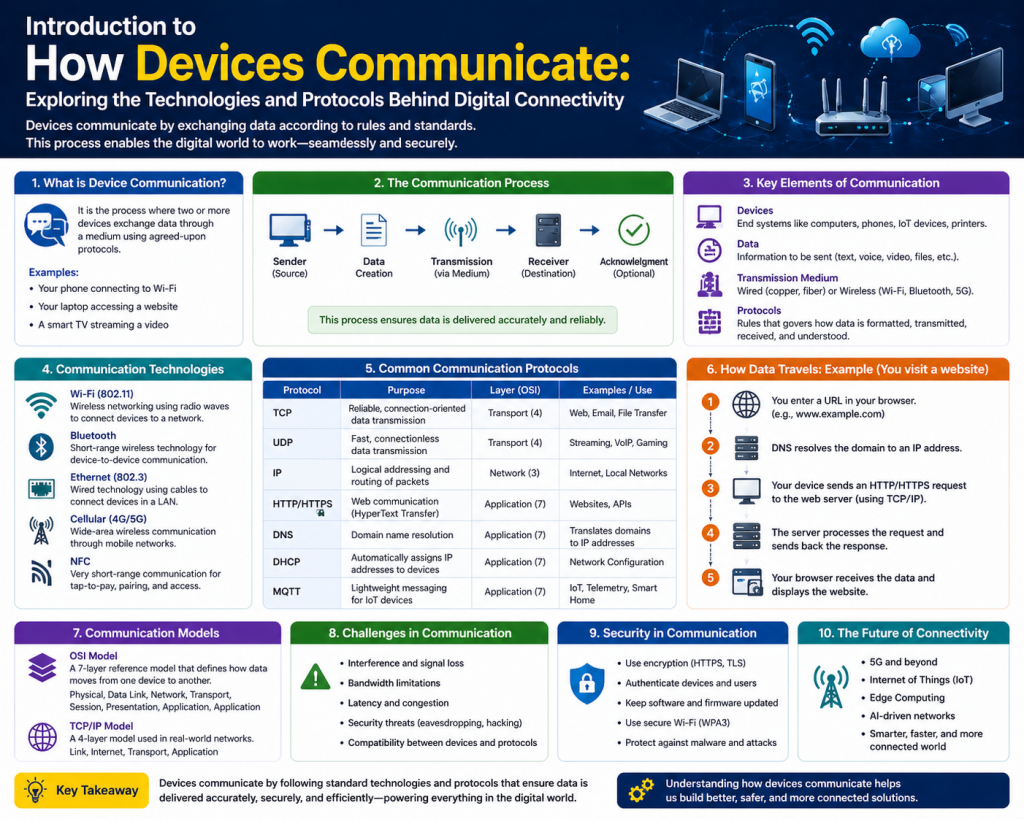
Every time you open a browser and type in a website address, you trigger a chain of events that happens in a fraction of a second. It feels simple, almost effortless, but underneath that simplicity lies a highly organized system that ensures your request reaches exactly where it needs to go. Without this system, the internet as we know it would not function.
At the core of this communication process are identifiers that allow devices to recognize each other and exchange information correctly. These identifiers are known as IP addresses and MAC addresses. While most users never interact with them directly, they are constantly working in the background to make sure data flows smoothly between devices.
To understand how networks operate, it is important to first understand these two types of addresses. They serve different purposes, but together they form the foundation of modern networking. One represents a device’s identity in a network, while the other represents its physical existence.
Imagine trying to send a package without a proper address or trying to locate a house without a unique identifier. The process would fail almost immediately. In the same way, networks rely on structured addressing systems to ensure that every piece of data reaches the correct destination.
The Concept of Network Identification
In any network, whether small or large, devices need a way to identify themselves and others. This identification allows them to send and receive data accurately. Without it, communication would become chaotic, with data being sent randomly and rarely reaching the intended recipient.
There are two main levels of identification in networking. The first is physical identification, which is tied directly to the hardware. The second is logical identification, which is assigned based on the network a device is connected to.
These two levels exist because networks operate in layers. Some tasks are handled at a local level, while others are handled across larger, more complex systems. By separating these responsibilities, networks can operate more efficiently and scale to support billions of devices worldwide.
Physical identification ensures that devices within the same local network can communicate directly. Logical identification allows devices to communicate across different networks, even if they are located on opposite sides of the world.
Understanding this layered approach is key to understanding why both MAC and IP addresses are necessary. Each serves a unique role, and together they create a complete system for device communication.
What is a MAC Address
A MAC address is the physical address of a device. It is assigned to the network interface card by the manufacturer and is intended to be unique for every device produced. This uniqueness ensures that no two devices on a network share the same physical identity.
The structure of a MAC address is based on a 48-bit number. It is usually written as a series of twelve hexadecimal digits, grouped into pairs. These pairs are separated by colons or dashes to make the address easier to read.
Each MAC address is divided into two main parts. The first part identifies the manufacturer of the network interface card. This portion is assigned by an international organization that ensures no two manufacturers use the same identifier. The second part is assigned by the manufacturer and is unique to each device they produce.
Because of this structure, the total number of possible MAC addresses is extremely large. This makes it highly unlikely that two devices will ever share the same address.
MAC addresses are generally permanent. Once assigned, they remain with the device for its entire lifetime. While it is technically possible to change a MAC address through software, this is not something most users do, and in standard operation, the address remains fixed.
Why MAC Addresses Are Important
MAC addresses play a critical role in local network communication. When devices are connected to the same network, they use MAC addresses to identify each other and exchange data.
For example, when one device sends data to another within the same network, it does not rely solely on logical addressing. Instead, it uses the MAC address to ensure that the data reaches the correct physical destination.
This process is handled at a lower level of networking, often referred to as the data link layer. At this level, communication is focused on direct connections between devices that share the same network environment.
Because MAC addresses are tied to hardware, they provide a reliable way to identify devices. Even if a device changes networks or receives a new logical address, its MAC address remains the same.
This stability makes MAC addresses essential for certain networking functions, such as managing access to a network or tracking devices within a local environment.
What is an IP Address
An IP address is a logical address assigned to a device when it connects to a network. Unlike a MAC address, it is not permanently tied to the hardware. Instead, it can change depending on the network the device is using.
IP addresses are used to identify devices across different networks. They allow data to be routed from one network to another, making global communication possible.
The most common type of IP address is based on IPv4. This format uses four numbers separated by dots. Each number can range from zero to 255, creating a wide range of possible addresses.
When a device connects to a network, it is typically assigned an IP address automatically. This process is handled by a system that ensures each device receives a unique address within that network.
There are also cases where devices are assigned permanent IP addresses. These are known as static IP addresses and are often used for servers or systems that need to be consistently accessible.
The Role of IP Addresses in Communication
IP addresses are responsible for guiding data across networks. When you send a request, such as opening a website, your device includes the destination IP address in the request.
This address tells the network where the data needs to go. Routers and other networking devices use this information to determine the best path for the data to travel.
As the data moves through different networks, each router examines the destination IP address and forwards the data accordingly. This process continues until the data reaches the network where the destination device is located.
Once the data arrives at the correct network, another system takes over to deliver it to the exact device. This is where MAC addresses come back into play.
Differences Between MAC and IP Addresses
Although MAC and IP addresses both identify devices, they do so in very different ways. A MAC address is tied to the hardware and remains constant, while an IP address is assigned dynamically and can change over time.
MAC addresses operate within local networks, ensuring that data reaches the correct device within that environment. IP addresses operate across networks, guiding data from one network to another.
Another key difference is how these addresses are assigned. MAC addresses are assigned by manufacturers, while IP addresses are assigned by network systems or administrators.
These differences highlight why both types of addresses are necessary. One provides a stable identity at the hardware level, while the other provides flexibility for communication across different networks.
How Devices Use Both Addresses Together
When a device sends data, it uses both IP and MAC addresses as part of the process. The IP address identifies the destination network, while the MAC address identifies the specific device within that network.
This dual addressing system allows networks to function efficiently. Data can be routed across long distances using IP addresses and then delivered locally using MAC addresses.
For example, when you send data to a device on the same network, your device uses the MAC address to deliver the data directly. When you send data to a device on a different network, your device sends the data to a router, which then uses IP addresses to forward it toward its destination.
Once the data reaches the destination network, MAC addresses are used again to complete the delivery.
The Importance of Layered Networking
The use of both MAC and IP addresses is part of a layered approach to networking. Each layer has a specific role, and together they create a complete system for communication.
The lower layers handle direct communication between devices, while the higher layers handle communication across networks. This separation of responsibilities makes networks more efficient and easier to manage.
It also allows for greater flexibility. Devices can move between networks, change their IP addresses, and still maintain their identity through their MAC addresses.
This layered design is one of the reasons why modern networks are able to support such a large number of devices and handle vast amounts of data.
Real World Analogy for Better Understanding
A helpful way to understand the relationship between MAC and IP addresses is to think about how mail is delivered. The IP address is like the city and street name, guiding the mail to the correct area. The MAC address is like the exact house number, ensuring the mail reaches the correct recipient.
Without the broader address, the mail would not reach the correct location. Without the specific identifier, it would not reach the correct house.
This analogy highlights the importance of both types of addresses and how they work together to ensure accurate delivery.
Why Understanding These Basics Matters
Even for everyday users, having a basic understanding of MAC and IP addresses can be useful. It can help you troubleshoot network issues, set up devices more effectively, and understand how your internet connection works.
For those interested in technology or pursuing a career in IT, this knowledge is essential. It forms the foundation for more advanced topics such as routing, network security, and system administration.
By understanding how devices are identified and how data is delivered, you gain insight into the core principles that make modern communication possible.
Closing Thoughts on Networking Fundamentals
Networking may seem complex at first, but it becomes much easier to understand when broken down into its fundamental components. MAC addresses and IP addresses are two of the most important pieces of this system.
They serve different purposes but work together seamlessly to ensure that data reaches the correct destination. One provides a permanent identity, while the other provides a flexible way to locate devices within and across networks.
This combination allows networks to function efficiently, adapt to changing conditions, and support the vast number of devices connected today.
Understanding these basics is the first step toward mastering networking. It provides a solid foundation that you can build upon as you explore more advanced concepts and technologies.
Understanding Subnet Masks and Network Organization
Once you understand how IP and MAC addresses identify devices, the next step is to see how networks organize those devices. A network is not just a random collection of connected systems. It follows a structured approach that allows devices to communicate efficiently without confusion or unnecessary traffic.
This structure is made possible through subnetting, a method used to divide networks into smaller, manageable sections. At the center of subnetting is the subnet mask, a tool that helps define how an IP address is interpreted within a network.
Without subnet masks, devices would struggle to determine whether another device is part of the same network or located somewhere else. This would lead to inefficient communication and increased network congestion.
Subnet masks provide clarity. They tell devices how to read IP addresses and how to decide the best way to send data.
What is a Subnet Mask
A subnet mask is a numerical value that works alongside an IP address. It looks very similar in format, consisting of four numbers separated by dots. Each number ranges from 0 to 255, just like an IP address.
An example of a subnet mask is:
255.255.255.0
Although it may appear confusing at first, its purpose is straightforward. A subnet mask determines which part of an IP address represents the network and which part represents the individual device, also known as the host.
This distinction is critical because it allows devices to understand whether they can communicate directly with another device or need to send data through a router.
Breaking Down Network and Host Portions
Every IPv4 address is divided into two parts:
- The network portion
- The host portion
The subnet mask defines where this division occurs.
For example, consider the IP address:
192.168.1.25
With a subnet mask of:
255.255.255.0
The subnet mask indicates that the first three numbers belong to the network portion. This means that 192.168.1 identifies the network, while 25 identifies the specific device within that network.
All devices that share the same network portion are considered part of the same local network. They can communicate directly without needing a router.
How Subnet Masks Work Internally
Subnet masks operate using binary logic. Each number in the subnet mask corresponds to a series of bits. When combined with an IP address, these bits help determine which portion belongs to the network and which belongs to the host.
A value of 255 in the subnet mask represents a fully allocated network portion, while a value of 0 represents a host portion. Intermediate values can be used for more complex subnetting, but in most basic networks, you will encounter masks like 255.255.255.0.
This binary interpretation allows devices to quickly analyze addresses and make routing decisions.
Why Subnetting is Necessary
Subnetting is not just a technical detail. It plays a vital role in how networks operate efficiently.
In a large network without subnetting, every device would need to communicate with every other device. This would create excessive traffic, slow down communication, and increase the chances of errors.
By dividing a network into smaller subnets, communication becomes more organized. Devices only interact with others within their subnet unless necessary. This reduces unnecessary data transmission and improves performance.
Subnetting also enhances security. By isolating different parts of a network, administrators can control access and limit potential risks.
Common Subnet Mask in Home Networks
Most home networks use a default subnet mask of:
255.255.255.0
This setup is simple and effective for small networks. It allows up to 254 devices to exist within the same network, which is more than enough for typical household use.
In this configuration, all devices share the same first three numbers in their IP addresses. The final number is unique for each device.
For example:
192.168.1.2
192.168.1.3
192.168.1.4
192.168.1.5
Each of these devices belongs to the same network but has a different host identifier.
How Devices Determine Where to Send Data
When a device wants to communicate with another device, it first checks the destination IP address. Using its subnet mask, it determines whether the destination is on the same network.
If the destination is within the same network, the device sends the data directly using local communication methods.
If the destination is outside the network, the device sends the data to a router. The router then forwards the data toward its destination.
This decision-making process happens automatically and very quickly, allowing seamless communication.
Role of Routers in Network Communication
Routers are essential components in networking. They connect different networks and manage the flow of data between them.
When a device sends data to a destination outside its subnet, the router acts as an intermediary. It receives the data, examines the destination IP address, and determines the best path to forward it.
Routers maintain routing tables that help them make these decisions. These tables contain information about different networks and how to reach them.
Without routers, communication would be limited to devices within the same subnet.
Dynamic IP Address Assignment
In most networks, IP addresses are assigned dynamically. This means that devices receive an IP address automatically when they connect to the network.
This process is handled by a system called Dynamic Host Configuration Protocol. It simplifies network management by eliminating the need for manual configuration.
When a device joins a network, it sends a request for an IP address. The network responds by assigning an available address from a predefined range.
This ensures that each device has a unique address and prevents conflicts.
Static IP Addresses and Their Uses
While dynamic addressing is common, some devices use static IP addresses. These addresses are manually assigned and remain constant over time.
Static IP addresses are often used for servers, printers, and other devices that need to be consistently accessible. Because their address does not change, other devices can reliably connect to them.
However, managing static IP addresses requires careful planning to avoid conflicts.
Subnetting Beyond Basic Networks
In larger networks, subnetting becomes more complex. Instead of using a single subnet mask for the entire network, administrators create multiple subnets to organize devices more effectively.
For example, a company might divide its network into separate subnets for different departments. This allows each department to operate independently while still being connected to the overall network.
Advanced subnetting uses different subnet masks to create smaller or larger subnets as needed. This flexibility allows networks to be tailored to specific requirements.
Benefits of Subnetting
Subnetting offers several important advantages:
It improves performance by reducing unnecessary traffic. Devices only communicate within their subnet unless required.
It enhances security by isolating different parts of the network. Sensitive systems can be placed in separate subnets to limit access.
It simplifies management by organizing devices into logical groups. This makes it easier to monitor and maintain the network.
It supports scalability by allowing networks to grow without becoming inefficient.
Real World Example of Network Segmentation
Consider an office environment with multiple departments. Without subnetting, all devices would be part of the same network. This could lead to excessive traffic and potential security risks.
By creating separate subnets for each department, the network becomes more efficient. Devices within a department can communicate freely, while communication between departments is controlled through routers.
This approach reduces congestion and improves overall performance.
Interaction Between Subnet Masks and IP Addresses
Subnet masks and IP addresses work together to define the structure of a network. The subnet mask determines how the IP address is interpreted, which in turn influences how devices communicate.
When a device processes an IP address, it applies the subnet mask to determine the network portion. This allows it to identify whether the destination is local or remote.
This interaction is fundamental to networking and occurs every time data is sent.
Importance of Understanding Subnetting
Understanding subnetting is essential for anyone working with networks. It provides insight into how networks are organized and how data flows between devices.
Even in everyday situations, this knowledge can be useful. It can help you configure routers, troubleshoot connectivity issues, and optimize network performance.
For those pursuing a career in technology, subnetting is a foundational skill. It is a key component of networking concepts and is widely used in professional environments.
Challenges in Learning Subnetting
Subnetting can seem complex at first, especially when dealing with binary calculations and advanced configurations. However, with practice, it becomes easier to understand.
Starting with simple examples and gradually moving to more complex scenarios can help build confidence. Visualizing networks and breaking down addresses into smaller parts can also make the process more manageable.
Over time, subnetting becomes an intuitive part of understanding how networks function.
Closing Thoughts on Network Organization
Subnet masks play a crucial role in defining how networks operate. They provide the structure needed for devices to communicate efficiently and accurately.
By dividing networks into smaller segments, subnetting improves performance, enhances security, and simplifies management. It allows networks to scale and adapt to changing needs.
Understanding how subnet masks work alongside IP addresses is an important step in mastering networking fundamentals. It builds on the concepts of device identification and prepares you for more advanced topics.
With this knowledge, you gain a deeper appreciation of the systems that enable seamless communication in modern networks.
How IP and MAC Addresses Work Together in Real Networks
Understanding individual networking components is useful, but the real value comes from seeing how they work together in actual communication. IP addresses, MAC addresses, and subnet masks are not isolated concepts. They operate as part of a coordinated system that ensures data travels from one device to another accurately and efficiently.
Every time you send a message, stream a video, or open a webpage, this system is in action. It handles everything from identifying the destination to delivering the data to the correct device. This process happens so quickly that users rarely notice it, yet it is essential for all digital communication.
To fully understand networking, it is important to explore how these elements interact during real data transmission. This involves examining both local communication within a network and communication across different networks.
A Typical Home Network Environment
Consider a common home setup where multiple devices are connected to a single router. These devices might include a laptop, a smartphone, a smart television, and a gaming console.
Each of these devices has two important identifiers. The first is a MAC address, which is permanently assigned to its network interface. The second is an IP address, which is assigned by the router when the device connects to the network.
The router acts as the central point of communication. It connects all devices within the home network and also provides access to external networks such as the internet.
In this environment, all devices share the same network portion of their IP addresses, which allows them to communicate directly with each other when needed.
Communication Within the Same Network
When one device wants to send data to another device on the same network, the process begins with the IP address. The sending device identifies the destination using its IP address and checks whether it belongs to the same network.
This determination is made using the subnet mask. If the destination IP address falls within the same network range, the sending device knows it can communicate directly.
However, to actually deliver the data, the device needs the MAC address of the destination. This is because local communication relies on physical addressing rather than logical addressing.
If the sending device already knows the MAC address, it can send the data immediately. If not, it must first discover it.
The Role of Address Resolution Protocol
Address Resolution Protocol, commonly known as ARP, is responsible for mapping IP addresses to MAC addresses within a local network.
When a device needs to find the MAC address associated with a specific IP address, it sends out a broadcast message to all devices on the network. This message essentially asks which device owns the requested IP address.
Every device on the network receives this broadcast, but only the device with the matching IP address responds. It sends back its MAC address, allowing the requesting device to complete the communication.
This process ensures that data is delivered to the correct physical device without confusion.
ARP Cache and Efficiency
To improve efficiency, devices store the results of ARP requests in a table known as the ARP cache. This table contains mappings between IP addresses and MAC addresses that have been previously resolved.
By using the ARP cache, devices can avoid sending repeated broadcast messages for the same information. This reduces network traffic and speeds up communication.
Entries in the ARP cache are not permanent. They are updated periodically to ensure accuracy, especially in environments where devices may join or leave the network.
Sending Data Across Different Networks
When a device needs to communicate with a device on a different network, the process changes. Instead of sending data directly to the destination device, the sending device forwards the data to its default gateway, which is usually the router.
The router is responsible for handling communication between networks. It examines the destination IP address and determines where the data should be sent next.
This process may involve multiple routers, each forwarding the data closer to its final destination. Throughout this journey, IP addresses are used to guide the data across networks.
Transition from IP to MAC at the Destination
Once the data reaches the destination network, the final step is local delivery. At this point, MAC addresses are used again to ensure the data reaches the correct device.
The router on the destination network performs a similar ARP process to determine the MAC address associated with the destination IP address. Once this mapping is known, the data is delivered to the intended device.
This combination of long-distance routing using IP addresses and local delivery using MAC addresses is what makes network communication both flexible and efficient.
The Role of Routers in Detail
Routers play a critical role in the entire communication process. They act as intermediaries that connect different networks and manage the flow of data between them.
When a router receives data, it analyzes the destination IP address and consults its routing table. This table contains information about various networks and the best paths to reach them.
Based on this information, the router forwards the data to the next hop in the network. This process continues until the data reaches its destination network.
Routers also perform additional functions such as network address translation, which allows multiple devices to share a single public IP address.
Network Address Translation and Its Importance
Network address translation, often referred to as NAT, is commonly used in home and business networks. It allows multiple devices within a private network to access external networks using a single public IP address.
When a device sends data to the internet, the router replaces the private IP address with its public IP address. It also keeps track of the connection so that responses can be directed back to the correct device.
This process enhances security by hiding internal network details and conserves the limited number of available public IP addresses.
How Data Packets Travel
Data is transmitted across networks in small units called packets. Each packet contains both the source and destination IP addresses, as well as other information needed for proper delivery.
As packets travel through the network, routers examine their headers and determine where to send them next. This process is repeated at each step until the packets reach their destination.
Once all packets arrive, they are reassembled into the original data.
This method of transmission allows networks to handle large amounts of data efficiently and ensures reliability even if some packets are delayed or lost.
Importance of Layered Communication
The interaction between IP addresses and MAC addresses is part of a layered networking model. Each layer has a specific function, and together they create a complete communication system.
The network layer is responsible for routing data using IP addresses. The data link layer is responsible for local delivery using MAC addresses.
This separation of responsibilities allows networks to operate more efficiently and makes it easier to troubleshoot issues when they arise.
Real World Scenario of Data Transmission
Imagine you are streaming a video from an online service. Your device sends a request to the server hosting the video. This request includes the server’s IP address.
The request travels through multiple routers across the internet until it reaches the server’s network. Once there, MAC addressing ensures the request is delivered to the correct server.
The server then sends the video data back to your device using the same process in reverse. Throughout this exchange, both IP and MAC addresses are used at different stages to ensure accurate delivery.
Common Issues and Troubleshooting
Understanding how IP and MAC addresses work together can help identify and resolve network issues. For example, if a device cannot communicate with another device on the same network, the problem may be related to ARP resolution or incorrect IP configuration.
If a device cannot access external networks, the issue may involve the router or incorrect gateway settings.
By analyzing how data should flow, it becomes easier to pinpoint where the problem is occurring and take appropriate action.
Security Considerations in Networking
While MAC and IP addressing are essential for communication, they also play a role in network security. Administrators can use MAC addresses to control which devices are allowed to connect to a network.
IP addresses can be used to monitor traffic and identify suspicious activity. Combined with other security measures, these tools help protect networks from unauthorized access and potential threats.
However, it is important to note that neither MAC nor IP addresses alone provide complete security. They must be used as part of a broader security strategy.
The Importance of Learning These Concepts
Understanding how IP and MAC addresses work together is fundamental for anyone interested in networking. These concepts form the basis for more advanced topics such as routing protocols, network design, and cybersecurity.
Even for everyday users, this knowledge can be valuable. It provides insight into how devices communicate and helps in setting up and maintaining networks.
As technology continues to evolve, the importance of networking knowledge will only increase.
Conclusion
Networking relies on a coordinated system where multiple components work together to ensure smooth communication. IP addresses, MAC addresses, and subnet masks each serve a specific purpose, but their true strength lies in how they interact.
IP addresses guide data across networks, allowing communication over long distances. MAC addresses ensure that data is delivered to the correct device within a local network. Subnet masks define network boundaries and help devices determine how to route data.
Together, these elements create a system that is both efficient and scalable. They allow billions of devices to connect and communicate without confusion, making modern digital life possible.
By understanding how these components function and interact, you gain a deeper appreciation for the technology that powers everyday communication. This knowledge not only helps in troubleshooting and network setup but also serves as a strong foundation for further learning in the field of networking.
Continue exploring the technologies and certification concepts that matter most to you.