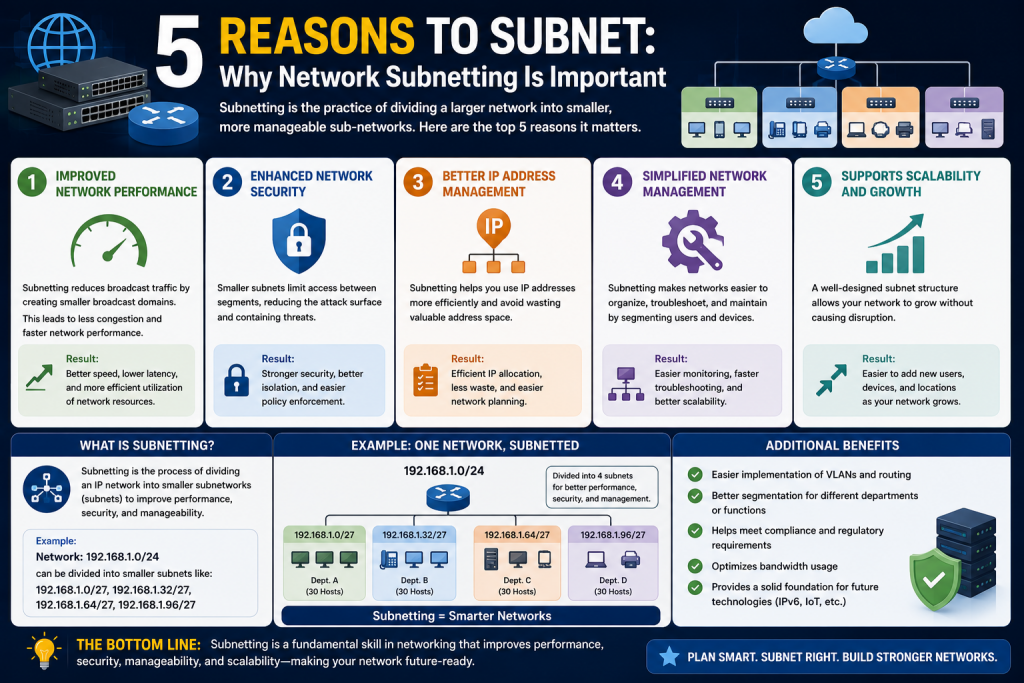
Subnetting is one of the most important concepts in computer networking, yet it is often misunderstood or underestimated by beginners. At its core, subnetting is the process of dividing a large network into smaller, more manageable segments called subnets. This technique is widely used in modern IT infrastructure to improve performance, enhance security, and simplify network management.
Subnetting also helps in reducing network congestion by limiting broadcast traffic within smaller groups of devices. Instead of every device on a network receiving all broadcast messages, only the devices within the same subnet are affected. This significantly reduces unnecessary data flow and improves overall efficiency. As a result, network speed becomes more stable and predictable, especially in large organizations where thousands of devices may be connected at the same time.
Another important benefit of subnetting is better control over network design. Administrators can plan IP addressing in a structured way, assigning specific ranges to different departments, branches, or services. This logical separation makes troubleshooting easier because issues can be quickly isolated to a particular subnet without affecting the entire network. It also supports scalability, allowing organizations to expand their infrastructure without redesigning the whole system.
In addition, subnetting enhances security by creating boundaries between different parts of the network. Sensitive data and critical systems can be isolated, reducing the risk of unauthorized access or lateral movement by attackers. Overall, subnetting is a fundamental skill that ensures networks remain efficient, secure, and easy to manage as they grow.
As organizations continue to grow and rely more heavily on digital systems, the need for efficient network design becomes critical. Without proper subnetting, networks can become slow, difficult to manage, and vulnerable to security threats. In this article, we will explore five powerful reasons why subnetting is essential for any modern network environment.
- Improved Network Security
One of the biggest advantages of subnetting is improved security. When an entire organization operates on a single large network, every device is essentially part of the same broadcast domain. This means that if a single device is compromised, attackers may potentially gain visibility into the entire network.
Subnetting reduces this risk by dividing the network into smaller, isolated segments. Each subnet acts like a separate security boundary, limiting how far an attacker can move if they gain access to one part of the system. This concept is often referred to as network segmentation, and it is a key principle in modern cybersecurity practices.
With subnetting in place, administrators can apply different security policies to different subnets based on their sensitivity level. For example, critical systems such as finance servers or database servers can be placed in highly restricted subnets, while general user devices can be placed in more open segments. This layered security approach ensures that even if one subnet is compromised, the damage remains contained and does not spread across the entire infrastructure.
Subnetting also makes it easier to monitor suspicious activity. Since traffic is divided into smaller groups, unusual behavior can be detected more quickly within a specific subnet. Security tools like firewalls and intrusion detection systems can be configured more effectively when network boundaries are clearly defined. Overall, subnetting significantly strengthens network defense and reduces the potential impact of cyberattacks.
Subnetting helps solve this issue by dividing the network into smaller segments. Each subnet can be isolated and protected using security rules such as access control policies. This makes it much harder for unauthorized users to move freely across the network.
For example, sensitive departments such as finance or human resources can be placed in separate subnets with restricted access. Employees in other departments will not have direct access to these systems unless explicitly allowed. This segmentation significantly reduces the risk of internal threats and limits the damage that can be caused by external attacks.
In addition, network administrators can apply different security rules to different subnets based on their function. This layered approach to security helps create a more controlled and secure environment overall.
- Better Network Performance and Speed
Subnetting also plays a major role in improving network performance. In a large network without subnetting, broadcast traffic is sent to every device. This creates unnecessary network congestion and consumes valuable bandwidth.
When a network is divided into subnets, broadcast traffic is limited to each individual subnet. This means that devices only receive relevant data, reducing unnecessary network load. As a result, overall network performance improves significantly, leading to faster communication and more efficient data handling across the entire system.
In addition to performance improvements, this segmentation also helps in creating a more stable and predictable network environment. Since broadcast traffic does not spread across the entire infrastructure, the chances of network storms and congestion are greatly reduced. This ensures that critical applications such as VoIP calls, video conferencing, and cloud-based services continue to function smoothly without interruptions. It also allows network devices like routers and switches to operate more efficiently because they are processing smaller, more controlled traffic domains instead of a large, unorganized stream of data.
Furthermore, subnetting makes it easier for IT administrators to monitor and analyze network behavior. When traffic is confined within smaller segments, identifying unusual patterns, bottlenecks, or potential security threats becomes much simpler. Troubleshooting is also more efficient because issues can be isolated to a specific subnet rather than searching through the entire network. This targeted approach saves time and improves response speed during network failures or performance degradation. Overall, limiting broadcast traffic through subnetting is a key factor in building scalable, high-performing, and reliable modern network infrastructures.
Smaller subnets also reduce the number of devices competing for bandwidth. This leads to faster data transfer speeds and lower latency. Applications such as video conferencing, cloud services, and real-time communication tools benefit greatly from this improved performance.
Additionally, network devices such as switches and routers can operate more efficiently when they are handling smaller, well-organized traffic segments. This reduces processing overhead and improves the stability of the entire network infrastructure.
- Easier Network Administration
Another major benefit of subnetting is simplified network administration. Managing a large flat network with hundreds or thousands of devices can be extremely complex and time-consuming. Troubleshooting issues in such an environment is often difficult because everything is interconnected.
Subnetting allows administrators to organize the network into logical sections. Each subnet can represent a department, location, or function. This makes it much easier to monitor and manage network activity.
For example, if an issue occurs in one subnet, administrators can quickly isolate the problem without affecting the rest of the network. This reduces downtime and speeds up troubleshooting.
Subnetting also makes IP address management more efficient. Instead of wasting large blocks of IP addresses, administrators can allocate addresses based on actual requirements. This structured approach prevents IP exhaustion and ensures better utilization of available resources.
Overall, subnetting gives network administrators greater control and visibility, making day-to-day operations much more manageable.
- Controlled Network Growth and Scalability
As organizations grow, their network requirements also increase. Without proper planning, networks can quickly become disorganized and inefficient. Subnetting provides a scalable framework that supports controlled growth.
By designing a network with subnetting in mind, administrators can allocate IP address ranges based on expected future expansion. This prevents the need for major redesigns later on and ensures that the network can grow smoothly.
Subnetting also allows organizations to expand in phases. New departments, branches, or services can be added as separate subnets without disrupting the existing infrastructure. This modular approach makes scaling much easier and more cost-effective.
Additionally, subnetting helps organizations avoid wasting IP addresses. Instead of assigning large blocks of unused addresses, administrators can allocate only what is needed. This efficient use of resources is especially important in large enterprise environments where IP address management is critical.
In short, subnetting provides the flexibility needed to support both current requirements and future growth.
- Reduced Network Congestion
Network congestion is a common problem in large unstructured networks. When too many devices communicate on the same network, traffic collisions and delays become more frequent. This leads to slower performance and reduced reliability.
Subnetting helps reduce congestion by dividing traffic into smaller segments. Each subnet handles its own internal traffic, which reduces the load on the overall network. This ensures that data flows more efficiently and that network resources are used effectively.
Routers play an important role in managing traffic between subnets. They only forward data that is intended for other networks, while keeping local traffic within the same subnet. This reduces unnecessary data movement and improves overall efficiency.
By minimizing broadcast traffic and limiting unnecessary data transmission, subnetting creates a more stable and responsive network environment. Users experience faster response times and fewer interruptions, even during peak usage periods.
Conclusion
Subnetting is a fundamental concept that brings structure, efficiency, and security to modern computer networks. It is not just a theoretical networking technique but a practical solution used in real-world environments of all sizes.
By improving network security, enhancing performance, simplifying administration, supporting scalability, and reducing congestion, subnetting plays a vital role in maintaining a healthy and efficient network infrastructure.
As networks continue to grow in size and complexity, the importance of subnetting will only increase. Organizations that implement proper subnetting strategies are better equipped to handle future demands, protect their data, and deliver reliable network performance.
In summary, subnetting is not optional in modern networking—it is essential.
Continue exploring the technologies and certification concepts that matter most to you.